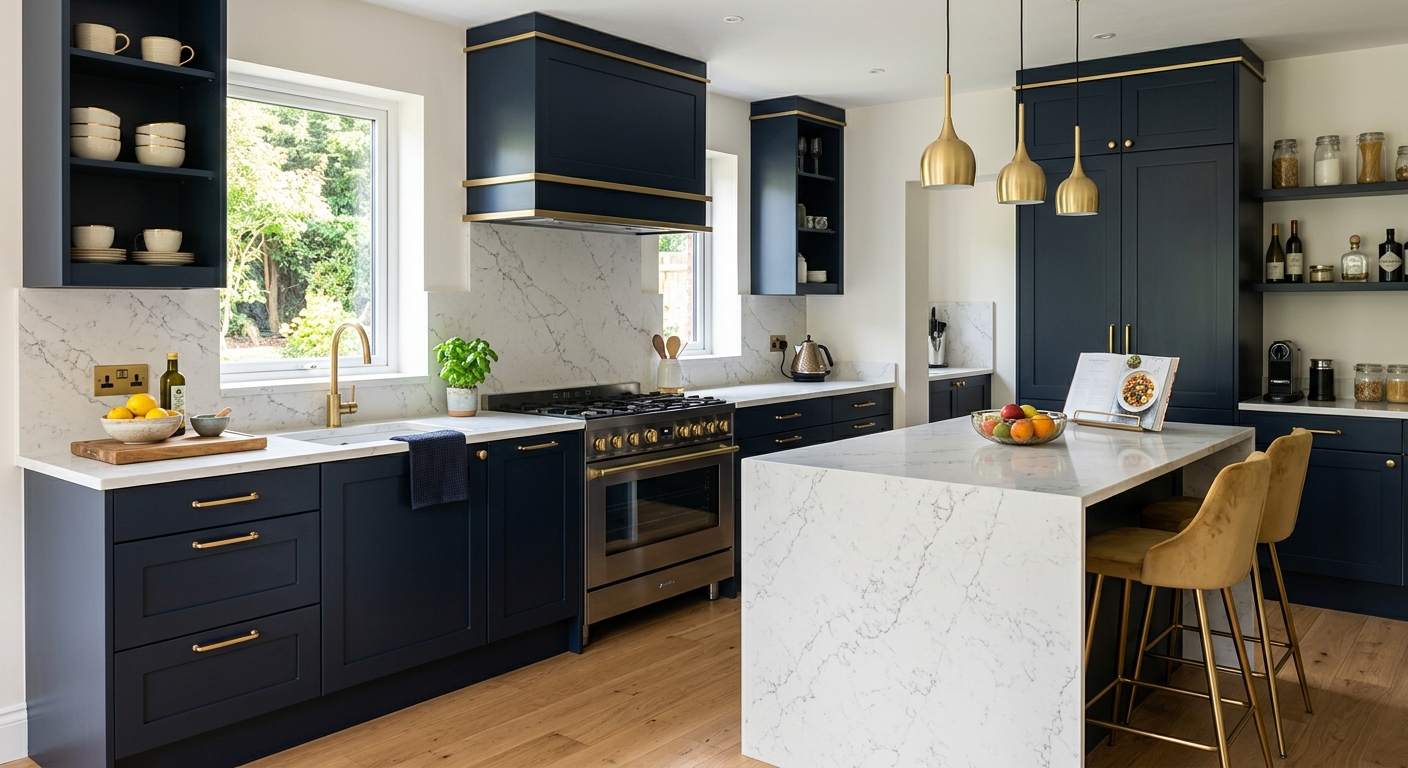
Spring kitchen renovation prices by scope — 2026
In Spring, where the median household income stands at $95,573 and the homeownership rate is a solid 76.5% (U.S. Census Bureau, ACS 2024), kitchen renovations are a major investment matched to rising home values. Most Berks County kitchens were built before 1980, so it's common to find compact galley layouts ready for updates or full reconfiguration. These mid-century kitchens mean that many Spring remodels turn into more than just a cabinet swap—often, walls and utilities need moving to create both space and function.
A kitchen project in this area can range from simple surface updates to full gut renovations, and the fastest way to break your budget is by pricing for a lower scope and then specifying bigger changes late in the process. Always match your budget to the work you truly want done.
| Scope |
What's included |
Duration |
Price range |
| Full gut remodel, same layout |
cabinets, counters, appliances, flooring, lighting, fixtures |
6–10 weeks |
$31,500–$126,000 |
| Gut plus layout change |
all of the above plus moved plumbing, electrical, walls |
10–16 weeks |
$68,500–$126,000 |
| Cabinet replacement (stock to semi-custom) |
remove and install cabinets, hardware, patching |
1–3 weeks |
$7,400–$31,500 |
| Cabinet refacing |
new doors and drawer fronts, veneer, hardware |
3–6 days |
$7,400–$21,000 |
| Countertop replacement only |
template, fabricate, install, reconnect sink |
1–3 weeks |
$4,200–$17,000 |
| Kitchen flooring only |
remove existing, install new flooring |
3–6 days |
$5,300–$21,000 |
Estimates for a typical Spring kitchen. Cabinet grade and whether the layout changes move these figures more than square footage.
What's behind the walls in a Spring kitchen
With 57.3% of Spring homes built before 1980 (U.S. Census Bureau, ACS 2024), chance is high that kitchen demolition will uncover surprises that drive both cost and schedule. It’s common in these mid-century homes to find walls out-of-plumb or floors out-of-level, requiring extra labor and meticulous shimming when fitting new cabinets. If yours is a galley kitchen, reconfiguring the layout can mean reframing and patching plaster or old drywall—a task that can easily add several days of work.
Older wiring—sometimes ungrounded or undersized for modern appliances—often needs updating, putting electrical upgrades closer to $4,200–$17,000 when bundled with other work. Galvanized water lines and cast iron drains are frequent finds; replacing these addresses both code requirements and long-term reliability. Exterior kitchen walls without insulation show up in pre-1970s stock, raising both comfort and efficiency issues that are best fixed during a gut renovation.
If your home predates 1978, federal rules require contractors to check for lead paint before disturbing painted surfaces. If it's present, it must be handled per the EPA's Renovation, Repair and Painting (RRP) Rule. Likewise, asbestos-containing flooring is possible in homes from the 1950s through early 1980s, and should be tested before removal. Unpermitted modifications—odd wiring, patched plumbing, or nonstandard structural fixes—are also typical, each requiring a legit, code-compliant correction.
In newer homes in Spring and nearby Spring Township, you’re more likely to find aging particleboard cabinets, limited circuit counts, and original laminate counters reaching the end of their useful lives. The temptation is to just “cover it up,” but these shortcuts become liabilities by the next renovation cycle.
Practical survival during the work
Living through a kitchen renovation in Spring requires more planning than most homeowners expect. The biggest adjustment is losing your main cooking and cleaning space for weeks at a time. In Berks County’s compact homes, it’s common to set up a temporary kitchen in the dining room or basement. Plug the fridge into an outlet nearby, put a microwave and kettle on a folding table, and expect to use a laundry or bathroom sink for washing up. Stock up on paper plates, because dishwashing is going to be even less appealing than usual.
The food budget will go up. Eating out for eight weeks can be a bigger expense than new flooring—figure it could easily run to $5,300–$21,000 over the length of a gut remodel, depending on family size and habits.
Dust control is crucial—plastic sheeting and zip walls keep renovation dust out of the rest of the house, but expect fine dust to find a way. Ask your contractor how they’ll seal the work zone. Dumpsters need a driveway spot, and pallet staging means loss of outdoor or garage space for materials. Pets require special attention, as doors will be propped open and workers are coming in and out. Most families in Spring stay home during the work, but moving out during demolition week is worth considering if you have young kids, health conditions, or no workable backup kitchen.
Appliance choices and the decisions they force
Appliances are the most common reason Spring renovations get derailed at the last minute. Cabinets are measured and built to fit specific appliance sizes, so choosing your refrigerator, range, and dishwasher after ordering cabinets is how people end up with appliances that simply don’t fit. Counter-depth refrigerators give a cleaner look but require careful planning for cabinet depth. Slide-in versus freestanding ranges: a slide-in creates a flush look with counters but determines the exact cabinet sizing needed. If you want gas or induction, know that an induction cooktop may require an upgraded 240V circuit, and an upgraded gas stove can mean running new supply lines.
Panel-ready dishwashers blend into cabinetry, requiring precise door sizing—again, pick appliances before the cabinet order. Hoods vented to the exterior are always better at clearing kitchen odors and moisture than recirculating models, though exterior venting may trigger extra mechanical work in Spring homes with exterior walls far from the kitchen.
Professional-grade appliances in Berks County deliver power and presence, but most of the cost is about aesthetics and brand. Expect that some high-end appliance models now take longer to arrive than cabinets do — so check lead times up front. Don’t finalize cabinet plans until every model and size is selected and confirmed—this is the only way to make sure everything actually fits by installation day.
What requires a permit in a kitchen renovation
Berks County municipalities draw a clear line: no permit is typically needed in Reading or Spring Township for surface-level kitchen changes—painting, swapping out cabinet doors, fixtures, or laying a new counter with no changes to plumbing or layout. But replace or move plumbing, add or alter electrical circuits, shift any walls, or make structural changes, and a permit is triggered. Full remodels with these changes in Reading undergo plan review before the permit is issued. A new vent hood, if vented outside, sometimes triggers a mechanical review as well.
After permit approval, inspections are required throughout. Electrical inspections in Reading and Muhlenberg Township, for example, are generally performed by third-party agencies like Approved Code Services—not the town itself. This surprises many homeowners, so confirm your inspector early.
Contractors must hold a valid Home Improvement Contractor (HIC) registration from the Pennsylvania Office of Attorney General for work over $500. You can verify this at hic.attorneygeneral.gov. All contractors employing workers must maintain workers’ compensation, verifiable via WCAIS (wcais.pa.gov).
If you skip permits on work requiring them, you risk headaches at resale. Buyers and real estate agents in Spring are increasingly asking for evidence of permits and code compliance—missing them can undercut your sale or stall it outright.
Four kinds of kitchen project, four budgets
In Spring, “kitchen remodel” means anything from a few weekend upgrades to a months-long rebuilding. The project you actually want to undertake falls into one of four tiers—each with a very different budget and impact.
-
Cosmetic refresh: Paint, cabinet hardware, backsplash tile, maybe new lighting. No changes to cabinets or layout—just freshening what’s already there. This is the limit if you want a quick upgrade and have a tight budget.
-
Pull and replace: New cabinets and countertops, but everything stays in its original position—plumbing and electrical untouched. Most popular for Berks County’s mid-century kitchens when the layout still works but the old cabinets are done for. Prices from $7,400–$31,500 for cabinet and counter replacement only, with project duration 1–3 weeks.
-
Gut, same layout: Everything down to the studs—demo back to framing, update insulation, wiring, and plumbing, but keep the layout. Budget starts at $31,500 and moves upward; duration is longer, but you’re left with a kitchen modernized behind the walls as well as at eye level.
-
Layout change: Moving walls, relocating the sink or range, running new plumbing and electrical—this is a much larger scope, triggering permits, potential engineering, and a major jump in complexity. Prices jump to $68,500–$126,000 and often take two to four months start to finish.
The cost cliff sits between gutting the existing layout and moving things around. Moving a sink or range means permits, plan review, and more specialized labor—not just a cabinet crew. Decide your project tier up front. No contractor in Spring can give a real number before you determine which category your project fits. Stay honest about what you're hoping to achieve in your first call.
Cabinets are the critical path
One of the main reasons homeowners in Spring underestimate kitchen renovation duration is that they don’t realize how much of the schedule rides on the cabinets and countertops. With moderate suburban demand and some labor tightness around Berks County, it’s common to see finish schedules slip a week or two before anyone swings a hammer.
Here’s how the sequence runs: First, the design is finalized and the contractor takes site measurements. Cabinets are then ordered—a step that often takes four to eight weeks, depending on supply chain and material choices. Demolition usually doesn’t start until cabinets are confirmed, since delays here leave you with an empty kitchen and no path forward.
Once demolition is done, rough-in electrical and plumbing changes happen, followed by any necessary inspections. Only then are cabinets installed. After cabinets are in place, the countertop fabricator can create a template. This cannot be done from drawings—measurements must happen on-site to match whatever the walls and floors actually are, not what the plans say. That means there’s always a lag of at least a week (often more) between cabinet install and counter templating, followed by fabrication (which can mean another two weeks).
Flooring, tile, and trim work finish things off. In Spring’s market, failing to order cabinets ahead of demolition can turn a 10-week project into a 16-week ordeal. Start ordering cabinets as soon as layout decisions are made and designs are locked, not after the old ones are out. This prevents dead time, helps contain costs, and keeps your home livable.
Frequently asked questions — kitchen renovation in Spring
Should I choose plywood or particleboard cabinet boxes?
In Spring’s market, plywood cabinet boxes offer better moisture resistance and long-term durability, especially useful in our many older homes with less-than-perfect floors and plumbing history. Particleboard (sometimes called furniture board) is less expensive, and modern versions are sturdy enough for basic use—but they can swell if exposed to repeated moisture, like from a leak under the sink. Plywood cabinets typically add $2,000–$4,000 to a mid-range kitchen project. If you're planning a full gut remodel or know there’s a high chance of floor unevenness (common in Berks County's mid-century homes), plywood boxes help with shimming and take more abuse during installation. For light-use or budget projects, particleboard is perfectly serviceable, but if you plan to stay long-term, plywood is the choice most local contractors prefer.
Can I cancel a renovation contract in Pennsylvania?
Yes. Under the Home Improvement Consumer Protection Act (HICPA), every written contract for work over $500 in Pennsylvania—including Spring—must give homeowners a three business-day right to cancel. This cooling-off window starts once you receive a fully executed copy of the contract. You do not have to give a reason. It’s illegal for a contractor to try to waive this right or pressure you to start earlier; likewise, you cannot sign away this cancellation period in the contract’s terms. If a contractor asks otherwise, walk. If you do cancel during the three-day window, you cannot be made to pay penalties. For a kitchen project in the $7,400–$126,000 band, review every page before you commit—and check for the cancellation clause.
What is the cheapest way to update a Spring kitchen?
The most affordable Spring kitchen upgrades are cosmetic. Painting cabinets, swapping hardware, updating light fixtures, and adding a tile backsplash can transform the look for a fraction of a full remodel cost. Many Spring homes have solid cabinet boxes from the 60s or 70s—if the structure is sound, refacing (new doors and fronts, new veneer) runs $7,400–$21,000 and leaves the layout intact. Adding a new laminate countertop and tile can often be done for under $10,000, especially if you handle demo yourself. Avoid layout changes and keep appliances in place to save on plumbing and electrical. For owners with basic skills, repainting cabinets and installing simple tile is do-it-yourself friendly. Don’t spend on high-end upgrades if your cabinets and floors are fundamentally fine.
Why are kitchen quotes in Spring so far apart?
Kitchen quotes in Spring and the broader Berks County area are often wide-ranging because houses vary so much in age, construction, and previous work. Older homes can hide wiring, plumbing, or structural issues, pushing a “simple” project into a higher scope. Labor costs are also affected by a tighter finish-trade labor pool in our county, leading to longer lead times and some crews charging more for urgent schedules. Some contractors quote based strictly on square footage, while others factor in site conditions and access. Materials make a big swing—semi-custom cabinets, higher-end counters, and composite flooring all push toward the upper end of $31,500–$126,000. The only way to get apples-to-apples bids is to spell out every detail, from appliance models to light fixture counts.
Should I renovate before selling or let the buyer do it?
In Spring, whether you renovate before selling depends on the kitchen’s age and what local buyers expect. If your kitchen is still functional but dated, minor upgrades—paint, new cabinet hardware, and updated lights—will cost little and show well. If cabinets or counters are failing, a basic “pull and replace” can make the home more appealing, but don’t chase trends or over-upgrade for the neighborhood. A full gut remodel in the $31,500–$68,500 range won’t yield full return on resale unless the rest of the house is already renovated. Remember, many buyers want to choose their own finishes; giving a credit or pricing to allow for their remodel often nets more value than investing in a style they might not like.
Why is there a gap after cabinets are installed?
The weeklong (or longer) gap between cabinets and countertops in Spring kitchen projects happens because counters must be templated once cabinets are leveled and secured. This is non-negotiable: stone and quartz fabricators require absolutely accurate, as-built dimensions, especially since older Berks County homes often have walls that aren’t close to square or level. Only after cabinets are in can the fabricator create that template, leading to a fabrication delay that’s built into every project—often a week for laminate and up to three for stone or quartz. This down period is a surprise to most homeowners and can stretch a seven-week schedule to nine. With counter replacement in Spring costing $4,200–$17,000, precision matters more than speed.
How does Spring's housing stock affect cabinet fit?
With more than half of homes in Spring built pre-1980 (U.S. Census Bureau, ACS 2024), walls and floors are rarely straight or level, making cabinet installation a challenge. Even small galley kitchens can require extensive shimming and custom filler pieces to get new cabinets sitting right. A semi-custom cabinet set in the $21,000–$31,500 range includes enough adjustments to fit odd angles, but truly old homes (early 20th-century or earlier) may need on-site carpentry as well. Mass-produced box cabinets are rarely a drop-in solution in these houses. For best results, builders here measure carefully after demolition—even small deviations can ripple through the whole installation and affect countertops, appliance openings, and doors.
How should renovation payments be scheduled?
In Spring and greater Berks County, kitchen renovation contracts typically break payments into three or four stages. A deposit—often 10–15% of the total or a set amount for materials—starts the ordering process. A second payment, usually 35–45%, is due shortly before work begins or upon delivery of cabinets, which for a typical cabinet replacement runs $7,400–$31,500. The next payment comes after rough-in completion or cabinets are set. The final 10–20% is withheld until all punch list work is finished and you’ve walked the space with the contractor. Pennsylvania law doesn’t allow a contractor to collect the entire contract price up front. Use the payment schedule to protect yourself, making sure paperwork follows every payment, and never pay the last dollar before all work passes inspection.
What does a quartz countertop cost in Spring?
Quartz countertops in Spring run from $4,200–$17,000 installed, depending on the kitchen’s size, edge style, and the quality of the specific slab. For an average galley or L-shaped kitchen—a very common layout in Berks County’s mid-century housing—most homeowners spend somewhere in the middle of that range. The price includes templating, sink cut-outs, installation, and reconnecting the plumbing. If your space is unusually shaped, or if you choose waterfall ends or premium colors, you’ll land toward the higher end. Don’t forget that cabinets must be fully installed and leveled before any quartz template is made—a practical consideration that adds at least a week to project timelines.