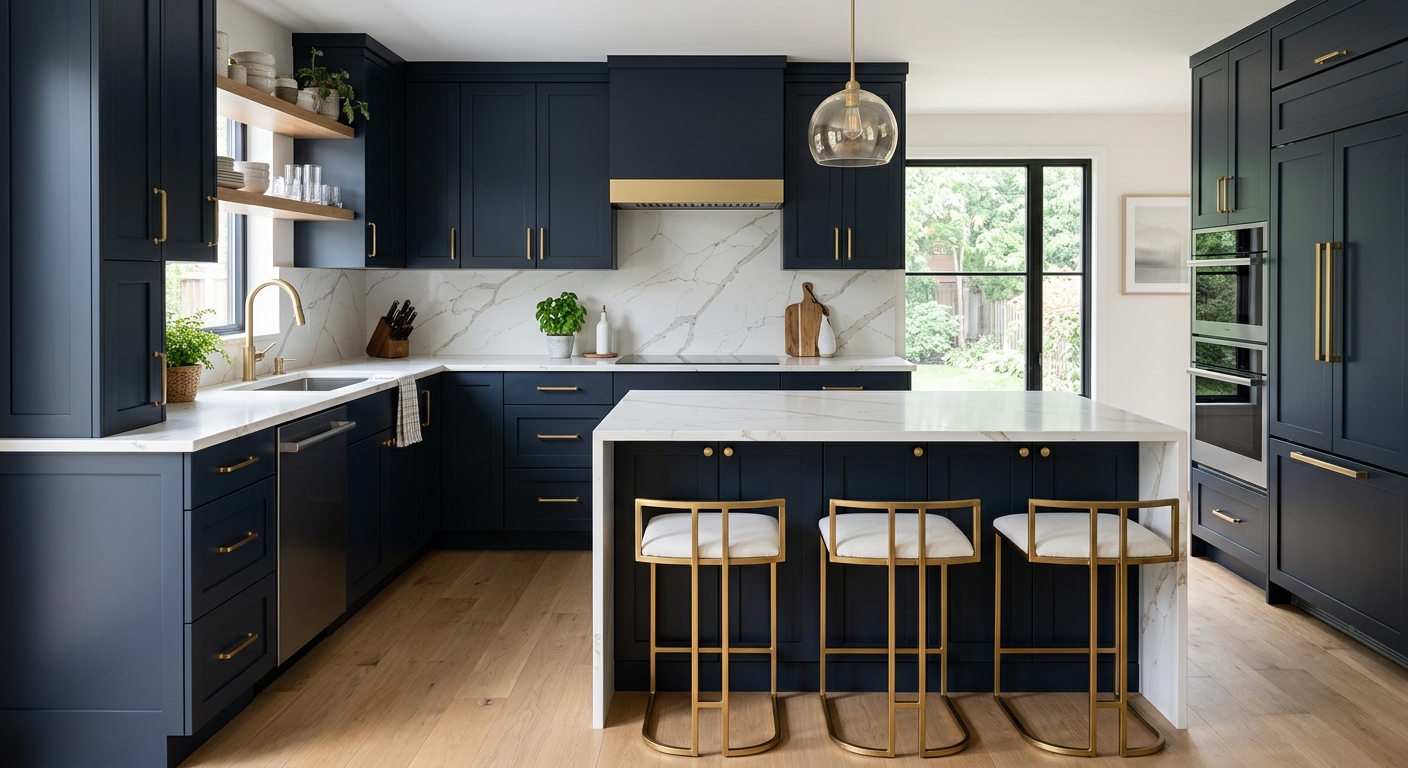
Crafton kitchen renovation prices by scope — 2026
In Crafton, where nearly all homes were built before 1980 and the median household income stands at $72,099 (U.S. Census Bureau, ACS 2024), kitchen renovation costs are determined by both the age of the house and the extent of work involved. With a homeownership rate near 60%, most kitchen projects here are undertaken by owners, not landlords—so the decisions and budgets tend to be tailored to long-term use and resale value. In Crafton’s older stock, gut renovations are common: kitchens originally built as cramped, highly compartmentalized spaces often get opened up or fully reimagined. For these homes, a renovation isn’t just swapping cabinets; it’s usually an overhaul.
One of the most common pitfalls is planning for only a simple "pull and replace," only to discover halfway through that electrical or plumbing upgrades—or even a new layout—are needed. That leap pushes costs into an entirely different bracket, and many budgets run into issues here.
| Scope |
What's included |
Duration |
Price range |
| Full gut remodel, same layout |
cabinets, counters, appliances, flooring, lighting, fixtures |
6–10 weeks |
$29,000–$116,500 |
| Gut plus layout change |
all of the above plus moved plumbing, electrical, walls |
10–16 weeks |
$63,000–$116,500 |
| Cabinet replacement (stock to semi-custom) |
remove and install cabinets, hardware, patching |
1–3 weeks |
$6,800–$29,000 |
| Cabinet refacing |
new doors and drawer fronts, veneer, hardware |
3–6 days |
$6,800–$19,500 |
| Countertop replacement only |
template, fabricate, install, reconnect sink |
1–3 weeks |
$3,900–$15,500 |
| Kitchen flooring only |
remove existing, install new flooring |
3–6 days |
$4,900–$19,500 |
Estimates for a typical Crafton kitchen. Cabinet grade and whether the layout changes move these figures more than square footage.
When a Crafton kitchen needs walls moved
When planning a kitchen renovation in Crafton, the decision to move plumbing, electrical, or walls is what creates a true cost cliff. Keeping everything in its current spot keeps you in the full gut remodel, same layout tier—budgeting between $29,000–$116,500. But the minute you want a sink beneath a new window or an island stove, you jump to the gut plus layout change tier—starting at $63,000 and often running much higher.
The extra cost isn’t just the labor. Relocating drain lines means you need a continuous downward slope; in Crafton’s older homes, this often runs into cast iron hidden inside finished ceilings. New electrical circuits may mean a panel upgrade—if there’s not enough room in the box, costs add up fast, regardless of how near the new outlet is. Removing a wall? That’s often load-bearing in homes built before 1940, which means you’ll need a structural engineer, City or borough plan review, and a permit.
Venting a new range location means cutting a new hole through brick or siding, usually best avoided if the existing route is serviceable.
Before you commit, ask yourself if the current footprint is truly unworkable or just a matter of taste. The expense of moving plumbing and electrical rarely returns dollar for dollar at resale. In most Allegheny County boroughs, you’ll need a permit if you change wall locations or move pipes or wires—it’s not just extra money, but extra steps and extra risk if the work isn’t permitted for future resale. Sometimes, keeping the sink and range where they are saves tens of thousands.
Four kinds of kitchen project, four budgets
In Crafton, "kitchen remodel" means different things to every homeowner, but costs aren’t blurry—you can break them into four clear tiers. First, the cosmetic refresh: you paint the walls, update lighting, maybe swap out a faucet or install a backsplash. No cabinets come out, no plumbing changes, so costs stay way down and most of the work is DIY or handyman-grade.
Second, the "pull and replace": you order new cabinets and counters but keep them where the old ones were. Plumbing and electric stay in place; this is where most clean-house sales-friendly renovations land. It’s also where you’ll almost always avoid permitting headaches.
Third tier, the full gut, same layout—here, you’re down to studs, fixing what’s behind the walls, but the basic layout stays. This is common in Crafton because the original construction is old enough that electrical, plumbing, and insulation all need updating.
The most expensive tier—gut, layout change—includes moving walls, fixtures, or the structure itself. That cost leap isn’t linear; moving the sink or stove means extra inspections, engineering, and significant labor.
If you’re early in the process, make a hard call on which tier you really need. It’s the biggest factor in your project’s final cost. A contractor cannot—and should not—give you a hard number until this decision is made. If you press for a ballpark before the scope is set, any number you get is little more than a guess, and almost always too low.
What requires a permit in a kitchen renovation
In Crafton and across most Allegheny County boroughs, permits are generally not required for simple kitchen updates like painting, replacing hardware, or swapping a countertop as long as you don’t touch plumbing, electrical, or remove walls. Even full cabinet replacement, provided you keep everything in the same positions, can often proceed without a permit.
What does require a permit? In Pittsburgh and similar boroughs, changing the structure—such as adding or removing walls—or physically relocating plumbing or electrical lines triggers a building permit. Many jurisdictions will also ask for plan review if structural or layout changes are involved. Adding new circuits for appliances or GFCI outlets, especially in older wiring scenarios, nearly always demands an inspection.
Electrical inspections in Pittsburgh are handled by the City’s own permitting authority, while some townships and suburbs use approved third-party inspection agencies. Be ready for both if your project involves more than finish swaps.
Any job over $500 needs a written contract by law, and the contractor must be registered with Pennsylvania’s Office of Attorney General—check their status at hic.attorneygeneral.gov. Also required is workers’ compensation for any contractor with employees, which you can check through WCAIS (wcais.pa.gov). Unpermitted renovations can lead to a failed closing or require expensive corrections if flagged at resale, so don’t skip this step even if others say it’s optional.
Surprises in an older Crafton home
With 94.3% of Crafton homes built before 1980, tearing into any kitchen wall is rarely straightforward. Expect these surprises: Out-of-plumb walls and sloping floors are standard in pre-war construction here and require careful, sometimes time-consuming shimming during cabinet installation (add $500–$2,500 for extra labor). Electrical can be a problem—expect to find ungrounded outlets or undersized wiring (updating a kitchen’s wiring runs $2,000–$8,000 depending on panel needs). Plumbing can feature galvanized supply lines or cast iron drains, both at the end of their lifespan—full replacement can easily add $2,500–$8,000.
Exterior walls in older homes were often left uninsulated; adding this while the walls are open is smart, and should run $400–$1,200 for most kitchens. Previous unpermitted renovations—cut joists, hidden junction boxes—are common, especially in houses that changed hands in the 1970s–1980s DIY boom. Cleaning up old messes often tacks on extra days or even weeks of work.
Any home built before 1978 falls under the federal EPA Lead RRP Rule, so certified renovators have to follow protocols to contain and clean up dust—if lead paint is likely, budget extra time and cost for safe demolition and site protection. Test for asbestos in old flooring before demo. Very few jobs in Crafton are truly "straightforward."
Planning appliances before cabinets
In Crafton, the fastest way kitchen renovations go off the rails: ordering cabinets before you’ve chosen your appliances. Cabinet sizes depend on appliance dimensions—guess wrong, and your fridge or oven won’t fit, or you’ll lose storage to make up the gap.
Start with your refrigerator: standard-depth fridges stick out past most base cabinets, while counter-depth models sit flush but reduce usable space. Cabinet makers need to know which you’re picking. For your stove, freestanding ranges are more forgiving, but slide-in or professional models require precise spec sheets. If you’re considering induction or a high-output gas range, make sure you have the appropriate electrical circuit or gas supply—sometimes older homes lack either, and upgrading gets expensive.
Panel-ready dishwashers blend with cabinets, but only if specified up front. Vent hoods are often an afterthought—venting to the outside is always superior to recirculating kits, which trap and return odors, but running new ducts in old houses isn’t always feasible and can add cost.
Professional-grade appliances deliver mostly in looks and prestige these days; for most Crafton kitchens, mid-grade appliances offer 90% of the performance at half to a third the cost. But note: some appliance lead times now exceed those of cabinets, especially for specialty or custom-color orders. Plan appliances first or risk delay, disappointment, or costly rework.
Allowances, exclusions and change orders
Comparing kitchen quotes in Crafton isn’t apples-to-apples if you don’t look at the fine print—most notably, the allowances. An allowance is a placeholder dollar amount for something not yet selected: tile, flooring, lighting, or sometimes even all appliances. Two contractors can give the same project total, but if one uses $2,000 for tile and the other $400, you’ll be paying the difference at the end, not them.
Examine the allowance lines. Are the numbers realistic and itemized, or just generic round numbers? Scrutinize what cabinet brands, lines, and construction methods are specified. For countertops, make sure the quote lists both the material and the thickness; "granite included" with no details often means the cheapest option.
If your contractor runs into hidden issues (like old wiring or lead paint), their quote should explain how those are priced and approved. Change orders—add-ons or substitutions after work starts—should have a written approval process, not just a handshake, to avoid surprise bills. Payments should be tied to milestones (demolition complete, cabinets delivered, countertops installed), not calendar dates, with deposits kept reasonable. Lien waivers protect you from unpaid subcontractors filing claims on your property.
Remember, contracts for kitchen renovations over $500 must be written, and under state law you get a three-day right of cancellation—read every word before signing.
| Line item |
What to look for |
Red flag if… |
| Allowances |
realistic amounts, itemised |
round numbers with no basis |
| Cabinetry |
brand, line, box construction |
'quality cabinets' |
| Countertops |
material, thickness, edge, seams |
material name only |
| Electrical |
circuits to be added, GFCI scope |
'as needed' |
| Unforeseen conditions |
how they are priced and approved |
not addressed |
| Change orders |
written approval before work |
verbal |
| Payment |
milestone-based, modest deposit |
front-loaded |
| Lien waivers |
from subs at each payment |
not offered |
Frequently asked questions — kitchen renovation in Crafton
What does a quartz countertop cost in Crafton?
Quartz countertops for a kitchen in Crafton typically fall within $3,900–$15,500, with most homeowners spending about $8,700 for an average-sized project. The cost depends on the square footage, thickness, color, and whether you choose a builder-grade or premium brand. Installation costs can increase if backsplashes, custom edges, or cutouts for undermount sinks are involved. In older homes, you may have extra charges if the cabinets or walls are out of level and require shimming for a proper fit. Remember, those prices are installed and include both materials and labor. Since most Crafton kitchens aren’t large by national standards, staying at the lower to middle band is common unless you’re selecting high-end or extra-thick slabs.
How much do new kitchen cabinets cost in Crafton?
In Crafton, replacing kitchen cabinets with stock or semi-custom models typically costs $6,800–$29,000, with the average project landing near $19,500. Your final number depends mostly on the number of cabinets, the box material (plywood vs. particleboard), drawer upgrades, and whether you want specialty finishes. If your walls are out of plumb or you need extensive patching, a little extra goes to labor rather than materials. High-gloss modern or inset doors push the price to the upper band, while classic Shaker in painted or stained finishes are more affordable, even semi-custom. Going beyond these levels in Crafton is rare unless you’re bringing in custom millwork.
What adds the most resale value in a kitchen?
In Crafton, projects that recoup the most resale value usually stick to solid functional upgrades and clean style. Fresh cabinets, updated countertops, and modern appliances are the big items. Most buyers want stone or quartz counters, soft-close cabinet hardware, and at least one upgraded appliance. A full gut renovation in Crafton (within $29,000–$116,500) never recoups dollar-for-dollar, but kitchens that look freshly updated—even if the layout isn't moved—make homes much easier to sell. Over-customizing (wine fridges, pot fillers, built-in espresso machines) doesn't pay back on resale as reliably as focusing on the basics: good storage, ample lighting, and durable materials.
How should renovation payments be scheduled?
For kitchen renovations in Crafton, payments should be milestone-based. A typical project breakdown might be a modest deposit (10–20%), a payment after demolition, another after cabinets are delivered, and final completion payment once punch-list items are resolved. Never pay a large percentage up front—a sign of cash flow problems. Make sure your contract ties each payment to progress, not specific dates. Pennsylvania law requires a written contract for jobs over $500 and gives you a three-day right of cancellation. Insist on lien waivers from subcontractors at each payment stage to protect your home from surprise claims if your contractor doesn't pay their subs.
How do I verify a kitchen contractor in Pennsylvania?
In Pennsylvania, any kitchen contractor taking on a project value over $500 must be a Home Improvement Contractor (HIC) registered with the Pennsylvania Office of Attorney General. You can verify this registration at the state’s own online portal, hic.attorneygeneral.gov. For companies with employees, make sure they've got current workers’ compensation coverage, verified through WCAIS (wcais.pa.gov). Always ask to see proof—honest contractors expect this and can produce documents. In Crafton, these registrations matter because unregistered or uninsured work can jeopardize a future sale, especially for kitchen renovations in the $29,000–$116,500 range.
Why is there a gap after cabinets are installed?
Gaps between cabinets and walls or ceilings are especially common in Crafton's older homes, built before 1980, because walls are rarely straight and often not square. Even in professional installations, cabinet installers leave gaps to allow doors and drawers to operate smoothly—filling every edge tight is almost never possible with original plaster and settling in these houses. The solution is custom trim, scribe molding, or a filler strip. In some cases, out-of-level floors require shimming cabinets to get even countertop lines, which exaggerates visible gaps elsewhere. Addressing these challenges adds minor labor costs but is normal in a kitchen project, even those costing $6,800–$29,000 for cabinet replacement in Crafton.
What is the difference between stock and semi-custom cabinets?
Stock cabinets in Crafton are pre-built, come in set sizes, and are the most budget-friendly—best for quick replacement projects within $6,800–$14,000. You’ll pick from a handful of finishes and sizes. Semi-custom cabinets cost more, but allow some adjustments for width, height, and finish, so you get a better fit and look in old houses where walls are rarely plumb. Most projects in Crafton use semi-custom cabinets because they overcome the quirks of pre-1940 homes without the cost of full custom work. Expect to pay toward the middle to upper end of the $6,800–$29,000 band for semi-custom.
Can I renovate a kitchen in stages?
You can absolutely renovate a Crafton kitchen in stages, and it’s often smart if your budget is tight or you want to minimize disruption. Many homeowners start with flooring or appliances, then move on to cabinets and counters. Just remember: making changes later can mean duplicate labor or undoing some finished work—such as removing counters to install cabinets. Most contractors will warn you that repeated stage work runs the risk of costing more than a full project. If you’re planning to split a renovation, prioritize the biggest infrastructure needs (electrical, plumbing, flooring) before cabinets go in. This can keep the total close to the lower bands, such as $6,800–$19,500 for partial upgrades.
Is lead paint a concern in Crafton kitchen renovations?
Yes, it’s a real concern: nearly all Crafton homes predate 1978, the cutoff for federal lead paint rules. If you plan any demolition—like removing old cabinets or opening walls—the work automatically falls under the EPA Lead Renovation, Repair and Painting (RRP) Rule. Renovators in Crafton must use certified lead-safe practices, including dust containment and proper cleanup. This adds some cost and time, but it’s the law and protects your family’s health. Before starting a project, ask your contractor if they are EPA certified for lead safety. For a typical kitchen gut in Crafton, expect RRP compliance to cost up to $1,000–$2,500 extra for containment and cleaning.