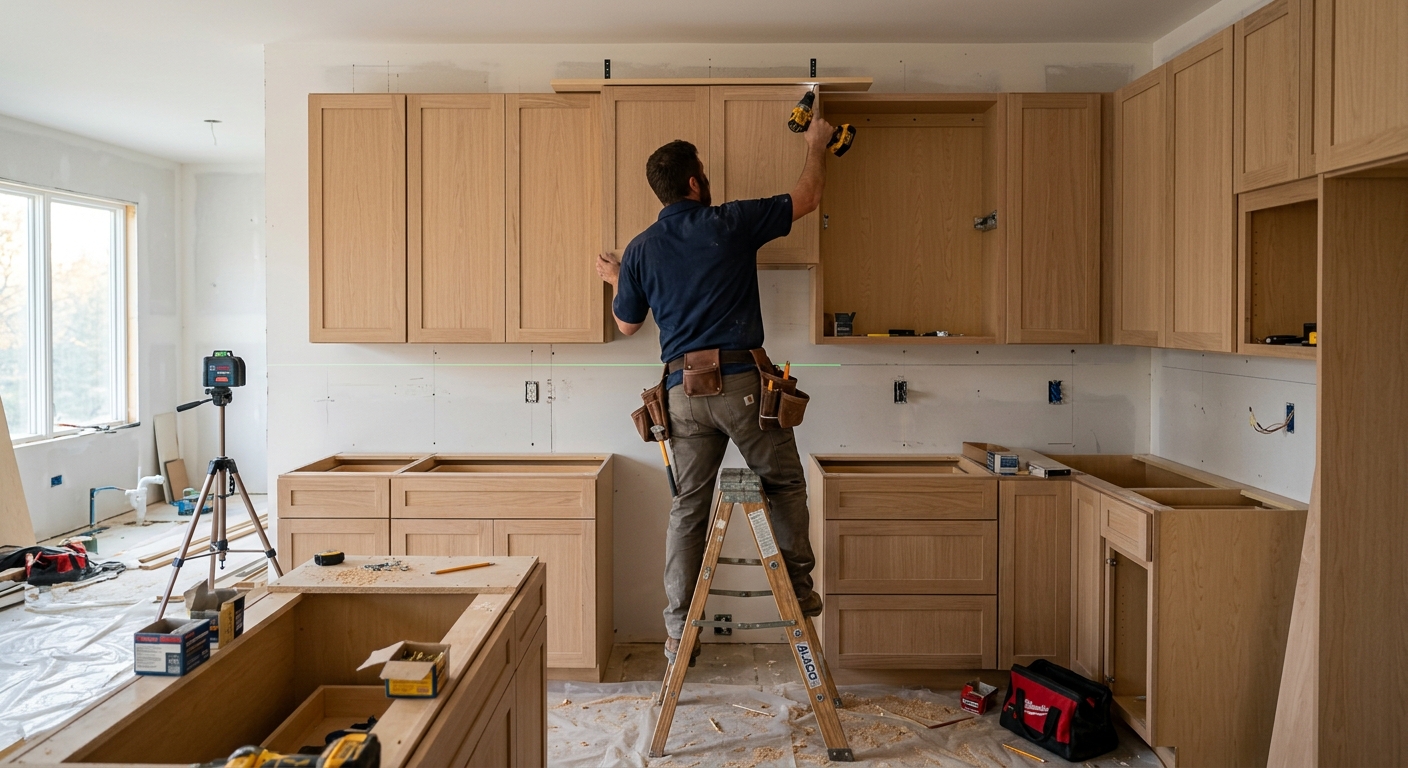
Hampton kitchen renovation prices by scope — 2026
Hampton's high homeownership rate and above-average median income (U.S. Census Bureau, ACS 2024) mean most kitchen projects here are owner-driven and sized to properties that are lived in rather than rented out. The majority of homes in the area were built before 1980, with a significant block of pre-1940 houses influenced by Pittsburgh’s historic building patterns. This puts Hampton on a collision course with older layouts: gut renovations here often mean opening up tight, outdated kitchens that were never set up for an open plan or modern appliances.
Expectations need to track the scope band. The most common blown budget in Hampton starts with a low-tier “pull and replace” estimate and winds up requiring wall moves, new wiring, or plumbing changes typical of a full gut. Each level of complexity resets the price range by tens of thousands, so it’s critical to clarify your project scope up front. The table below reflects realistic timeframes and price bands for Hampton, based on 2026 local estimates:
| Scope |
What's included |
Duration |
Price range |
| Full gut remodel, same layout |
cabinets, counters, appliances, flooring, lighting, fixtures |
6–10 weeks |
$33,000–$132,000 |
| Gut plus layout change |
all of the above plus moved plumbing, electrical, walls |
10–16 weeks |
$71,500–$132,000 |
| Cabinet replacement (stock to semi-custom) |
remove and install cabinets, hardware, patching |
1–3 weeks |
$7,700–$33,000 |
| Cabinet refacing |
new doors and drawer fronts, veneer, hardware |
3–6 days |
$7,700–$22,000 |
| Countertop replacement only |
template, fabricate, install, reconnect sink |
1–3 weeks |
$4,400–$17,500 |
| Kitchen flooring only |
remove existing, install new flooring |
3–6 days |
$5,500–$22,000 |
Estimates for a typical Hampton kitchen. Cabinet grade and whether the layout changes move these figures more than square footage.
General contractor, kitchen firm, or manage it yourself?
The way you structure your Hampton kitchen remodel—design-build firm, general contractor, or DIY—shapes risk, outcome, and cost more than the specific sink or cabinet you pick. A design-build kitchen firm offers the classic turnkey approach: one contract covers design, materials, and labor. This path means the highest sticker price but delivers the smoothest ride and single-call accountability if any issues arise.
Hiring a general contractor (GC) places design and materials selection largely on you—G.C.s quarterback the project, sequence trades, and coordinate permits and inspections. It tends to cost less than a design-build firm but demands more of your attention, especially with approvals and specification details. In Hampton—and really all of Allegheny County, where skilled finish trades are in demand—an established GC is your insurance against endless delays and trades dropping the job for better offers.
Owner-managed renovations are the budget option; you hire each plumber, electrician, and install team yourself, chase after permits, and handle everything from demo debris to setting up inspections. Unless you have significant time, experience, and the ability to work during business hours, you should think hard before going this route—especially with scope that triggers permits. In Hampton’s labor market, expect lengthy lags between trades and an above-average chance contractors will prioritize repeat relationships over an owner-managed one-off.
Surprises in an older Hampton home
More than half of homes in Hampton were built before 1980 (U.S. Census Bureau, ACS 2024), and a sizeable share trace back to the pre-1940s boom that spread outward from Pittsburgh. This old housing stock often delivers headaches once the demo starts. Expect to find out-of-plumb walls and out-of-level floors—adjusting all your plans for “standard” cabinets, appliances, and finishes. Cabinet installation can involve substantial shimming and extra carpentry to secure a solid base, which easily adds $1,000–$3,500 in labor and materials.
Knob-and-tube or ungrounded wiring is common, requiring new circuits (and sometimes panel upgrades), which runs $2,200–$6,600 or more for kitchen rewiring. Galvanized water supply lines and cast iron drains can force a plumbing update, starting at $2,200–$6,600 depending on access. Exterior walls without insulation, prevalent in older construction, are sometimes discovered—and adding insulation bumps up cost and schedule.
Previous owner “improvements” done without permits often mean further demolition and repair to bring everything up to code. Lead paint is a real risk in any pre-1978 home—renovation disturbing painted surfaces falls under the federal EPA Renovation, Repair, and Painting (RRP) Rule, so certified contractors and testing are not optional. Likewise, old vinyl or tile floors may harbor asbestos, though this page explains only what is jurisdictionally required.
Newer suburban homes avoid some of these pitfalls but often present end-of-life particleboard cabinets, failing laminates, and limited electrical circuits—all aging out at once.
Cosmetic, replacement, gut, or layout change?
The term “kitchen remodel” covers a massive range—the right fit for your Hampton home depends on your target investment and tolerance for disruption. Four distinct scopes drive the work and price:
- Cosmetic refresh: Wall paint, hardware swaps, new lighting, and maybe a tile or acrylic backsplash. No cabinet, appliance, or layout changes. Fast and affordable, this is just a fresh coat, typically handled without permits.
- Pull and replace: Full replacement of cabinets and counters within the existing footprint; no moving sinks, appliances, or walls. This is where most “update my kitchen” projects land, and it keeps plumbing and electrical work minor.
- Gut, same layout: Demo to studs or open framing. Everything is replaced but left in place—elec and plumbing updated without moving. Structural elements remain. This scope addresses serious wear, hidden issues, or blueprinting everything for decades of new use.
- Layout change: Walls or room divisions moved, plumbing or wiring relocated—think open-plan, island additions, or flipping the kitchen footprint. This is a whole new kitchen, with all attendant permit and engineering requirements.
The steepest cost jump in Hampton is from tier three to tier four—moving the kitchen sink isn’t just a little extra, it’s the dividing line that triggers additional permitting, engineering input, and raises the caliber of contractor needed. Before you start dialing anyone, pin down which tier you’re in. A reliable contractor can’t give a meaningful bid until the scope of work—especially layout—has been firmly decided.
Cabinets: reface, stock, semi-custom or custom
Cabinet choice sets the tone for your Hampton renovation budget. Refacing—the process of replacing just doors, drawers, and veneer—can look sharp and is genuinely a good option when boxes are solid, level, and the existing layout fits your needs. You can’t add storage or change the arrangement with refacing; if you want more function or a new look entirely, you’re in the market for replacement.
Stock cabinets meet the needs of straight, modern walls, but in Hampton, where many homes predate today’s standard dimensions, semi-custom is often needed to fit off-size walls, odd corners, or work around old mechanicals. Custom cabinets allow any dimension and feature, but cost and lead time climb fast—think six to twelve weeks minimum, plus the highest price bracket.
Regardless of price tier, construction matters. Plywood boxes outperform particleboard long-term, dovetail joinery beats staples, and full-extension soft-close hardware affects daily use. Frameless (European) cabinets give you flush lines and better access, while face-frame (traditional) offer more forgiving installation if walls are imperfect—something common in Hampton’s older homes.
| Option |
Cost |
Best when |
Limitation |
| Painting existing cabinets |
$1,200–$3,500 |
boxes and doors sound, tight budget |
no layout or style change |
| Refacing |
$7,700–$22,000 |
boxes square and layout works |
storage unchanged |
| Stock cabinets |
$7,700–$33,000 |
standard dimensions fit |
filler strips, limited finishes |
| Semi-custom |
$22,000–$33,000 |
non-standard walls or finishes |
6–12 week lead time |
| Full custom |
$22,000–$33,000 |
unusual layout or high-end design |
longest lead, highest cost |
Permits and inspections for a Hampton kitchen
In Hampton and much of Allegheny County, cosmetic kitchen work—paint, lighting swaps, hardware, even cabinet refacing or like-for-like countertop replacement—does not usually require a permit. Once you make structural changes, move plumbing or electrical, or alter the kitchen layout, expect to need a permit. In Pittsburgh, for example, shifting a wall or relocating any utilities in a kitchen triggers both a building permit and plan review.
Inspections depend on your municipality. If you’re inside Pittsburgh, city inspectors handle everything; in other boroughs, third-party inspection agencies may handle electrical sign-offs. This can surprise homeowners accustomed to a single-inspector process. When a project needs a structural or major system change, plan review and one or more inspection visits will be part of the process and should be factored into your schedule, not just your budget.
Pennsylvania mandates Home Improvement Contractor (HIC) registration for any contract over $500; homeowners can check status at hic.attorneygeneral.gov. Proof of workers’ compensation coverage is also required for anyone with employees and can be verified through WCAIS (wcais.pa.gov). All work over $500 needs a written contract, and there’s a mandatory three-day cancellation window. Unpermitted work gets flagged at resale and may need to be torn out or brought up to code before you can close—never assume “nobody will notice.”
Choosing a countertop for a Hampton kitchen
In Hampton, countertop selection should start with how you use your kitchen, not just the look. Quartz is hugely popular for being non-porous, stain-resistant, and consistent, but it does not cope well with intense heat—put a hot pot straight off the stove and you risk permanent damage. Granite is natural, each slab unique, and handles heat better, but it needs resealing every couple of years. Laminate—often dismissed—has improved dramatically; it’s stain-proof, easy to clean, and perfectly respectable in a modest kitchen or rental, especially at a price point far below stone.
Butcher block adds warmth and can be sanded to repair most damage, but is high-maintenance and unsuitable near water-prone zones unless oiled religiously. Solid surface (Corian, etc.) is repairable, seamless at joints, and resists stains, though it isn’t as heat-tolerant as stone.
Hampton fabricators generally use template-and-fabricate: a technician visits after cabinets are installed to create a physical or digital template. Pricing climbs with edge complexity, extra cutouts for sinks or cooktops, long runs that require invisible seams, and premium slabs. Laminate often just uses measurements, but stone and solid surfaces need a template for an exact fit. For most owners in Hampton, a quartz or granite counter—installed at $4,400–$17,500—offers the best balance of function and value, but don’t overlook today's laminate if you’re working within a tighter scope.
Frequently asked questions — kitchen renovation in Hampton
What does a quartz countertop cost in Hampton?
Quartz countertop pricing in Hampton, like the rest of Allegheny County, comes down to quality of the material and details like edge profile or the number of cutouts. For a standard 40–55 square foot kitchen, the 2026 estimate ranges from $4,400–$17,500, with most homeowners spending about $9,900. Labor and fabrication are included in this number, as most Hampton fabricators provide template, delivery, and professional installation as part of the contract. Costs climb for premium brands, extra-thick counters, or waterfall sides. Keep in mind that small shops may require a longer lead time for templating and installation. Laminate and some solid surfaces are less, but the durability and appearance of quartz keep it popular throughout Hampton’s single-family homes.
What are cabinet lead times in Hampton right now?
Cabinet lead times in Hampton follow the regional supply chain for Allegheny County. For stock cabinets, expect delivery in 2–4 weeks once you’ve signed off on designs, sometimes less if local distributors have inventory. Semi-custom and full custom cabinets typically require anywhere from 6 to 12 weeks. Delays are most common with painted finishes or non-standard sizes—very characteristic of older Hampton homes, where semi-custom is more frequently needed due to irregular walls. Local installers often recommend ordering earlier to avoid holding up construction; cabinets are the long pole in the tent for a typical kitchen. On most jobs, you’re looking at replacing cabinets in the range of $7,700–$33,000 including installation.
Which upgrades are not worth the money?
In Hampton’s kitchen market, not every upgrade pays off, either in function or at resale. High-end appliance packages can quickly soak up $7,700–$17,500 without a proportional boost in home value—especially if you’re not a daily gourmet cook. Expensive built-in organizers, smart faucets, or “statement” lighting often look dated within a few years. Waterfall-edge stone counters or full custom cabinetry—while beautiful—make sense only in the highest tier gut remodels. For most Hampton homes, investing in robust cabinets and counters gives a better result than splurging on specialty extras. Owners should focus on solid mid-tier products and save on features that don’t get used regularly, keeping the budget where it offers daily return.
Does replacing cabinets require a permit?
In most boroughs within Allegheny County—including Hampton—replacing existing cabinets with new ones, as long as there is no change to the layout or movement of plumbing or electrical, does not typically require a permit. The same goes for hardware and trim. However, if your project involves layout changes, moving walls, or updating wiring or plumbing, you’ll cross into permit territory, particularly in places like Pittsburgh where inspections and plan review kick in for larger changes. It’s always worth double-checking with the local code office, as your scope and municipality’s interpretation will determine the requirement. Cabinet replacement in a standard Hampton kitchen is usually priced between $7,700–$33,000, depending on options.
What is a realistic contingency for a Hampton kitchen?
For a full kitchen gut renovation in Hampton—especially if the house is pre-1980—a practical contingency is 15–20% of the total project cost. This means that for a typical gut remodel running $71,500, you should plan on having an extra $10,000–$15,000 set aside for surprises. These can include out-of-level floors, hidden wiring issues, previously unpermitted changes, or plumbing that must be replaced once exposed. The older the home and the more walls and ceilings are opened, the more likely you’ll uncover issues not visible during bidding. Talk to your contractor before work starts about likely risks and only commit to changes once costs and scope are fully clear.
What flooring works best in a kitchen?
In Hampton kitchens, the best flooring balances water resistance, durability, and how the material deals with heavy freeze-thaw cycles from Pennsylvania’s climate. Engineered hardwood and top-quality LVP (luxury vinyl plank) hold up well to foot traffic and dropped pans, while porcelain tile delivers on water and heat resistance but can feel cold and creates a challenge on older, uneven floors found in pre-1980 homes. Site-finished wood is not recommended for kitchens here, given humidity swings. Good LVP or tile installations typically fall in the $5,500–$22,000 range for a mid-size layout. The right choice depends on family habits and whether the project includes subfloor leveling, which is common in older Hampton homes.
Should I reface or replace my kitchen cabinets?
If your Hampton kitchen cabinets are solid, square, and laid out the way you want, cabinet refacing is often the smartest way to refresh the look at a lower cost. Refacing replaces doors, drawer fronts, and adds new veneer—delivering a dramatic style change without the cost of tear-out and new cabinets, priced at $7,700–$22,000. However, if your boxes are damaged, the layout is cramped (a common issue in older homes in Hampton), or you want to add storage or change the configuration, replacement is the way to go. Most homeowners opt for replacement when walls are being moved or significant changes are underway, but don’t replace just for aesthetics if refacing can do the job.
Should I hire a general contractor or a kitchen firm?
For most Hampton homeowners—especially with busy work schedules or permit-triggering renovations—a general contractor (GC) or design-build kitchen firm is the right choice. A kitchen firm handles everything under one contract and is best for those seeking a higher-end project or single-point accountability, though costs are higher (plan on $33,000–$132,000 for large renovations). A GC offers flexibility, allows you to pick finishes, and can streamline communication but expects you to be somewhat involved. While self-managing is an option, Hampton’s busy labor market means trades are more likely to prioritize professional clients. If your project will need inspections, plan review, or involves multiple trades, a GC or kitchen firm takes the stress off your plate and delivers predictable results.
Is lead paint a concern in Hampton kitchen renovations?
Yes, lead paint is a significant consideration for Hampton homes built before 1978, which is a large share of the local housing stock. Any demolition, sanding, or disturbance of painted surfaces in these homes falls under the federal EPA Renovation, Repair, and Painting (RRP) Rule, which requires certified contractors and safe work practices. Before work begins, reputable contractors will test for lead—especially in older kitchens with original trim and built-ins. The cost of handling lead-safe practices during a gut renovation is built into the typical Hampton price bands ($33,000–$132,000 for a full gut), and these requirements cannot be waived. Ignoring this not only risks health, but leads to legal problems at resale and during inspections.