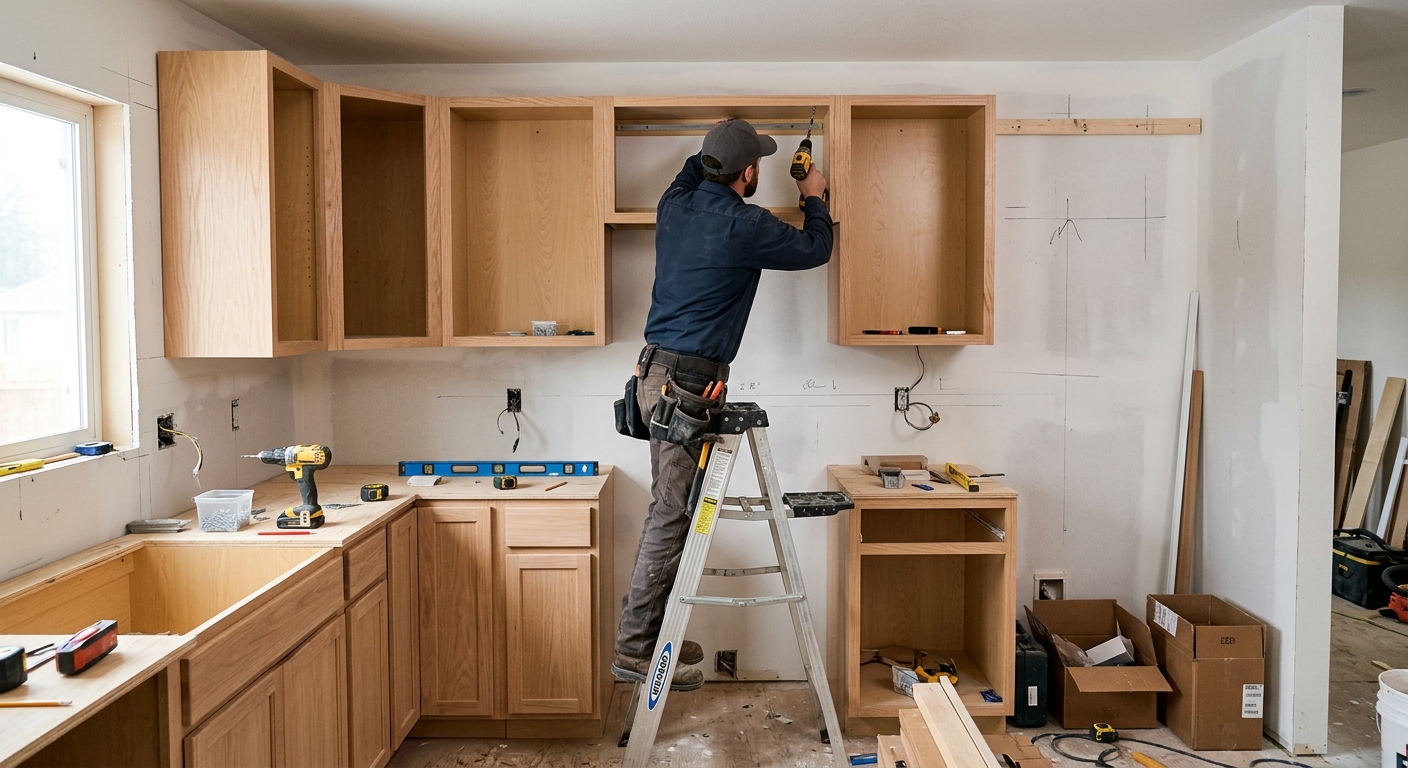
Kitchen renovation costs in Columbia — 2026
In Columbia, homeowners approach kitchen renovation with two key realities: a median household income of $50,309 and a homeownership rate just north of half (U.S. Census Bureau, ACS 2024). That means most clients weigh cost closely—especially in a market dominated by owner-occupied post-WWII homes rather than investor-owned rentals. Most Columbia kitchens sit inside tract homes built between the 1950s and 1980s, driving two common scenarios: the original compact galley that usually demands a layout shake-up, or a light-filled but dated 1990s plan that mainly needs finishes and fixtures. Both cases come through my door but land at very different price points.
The single biggest way Columbia homeowners overspend is by pricing for a quick upgrade—then specifying a gut or layout change once hidden issues or design dreams take hold. If you choose the wrong project tier up front, your budget will not match the work ahead. Also, Columbia’s labor squeeze means lead times and labor costs will easily outstrip savings you might expect in more rural areas of Lancaster County.
| Scope |
What's included |
Duration |
Price range |
| Full gut remodel, same layout |
cabinets, counters, appliances, flooring, lighting, fixtures |
6–10 weeks |
$29,000–$115,500 |
| Gut plus layout change |
all of the above plus moved plumbing, electrical, walls |
10–16 weeks |
$62,500–$115,500 |
| Cabinet replacement (stock to semi-custom) |
remove and install cabinets, hardware, patching |
1–3 weeks |
$6,700–$29,000 |
| Cabinet refacing |
new doors and drawer fronts, veneer, hardware |
3–6 days |
$6,700–$19,000 |
| Countertop replacement only |
template, fabricate, install, reconnect sink |
1–3 weeks |
$3,800–$15,500 |
| Kitchen flooring only |
remove existing, install new flooring |
3–6 days |
$4,800–$19,000 |
Estimates for a typical Columbia kitchen. Cabinet grade and whether the layout changes move these figures more than square footage.
Planning appliances before cabinets
In Columbia, cabinets are always built or ordered around appliance dimensions—not the other way around. If you pick cabinets first and chase appliances later, a fraction of an inch is sometimes all it takes for the refrigerator or range to stick out, not open fully, or not fit at all. This comes up weekly here. Standard refrigerators are much deeper than most expect, while counter-depth models offer a more fitted look but cost more and may shrink usable capacity. That cabinet-row symmetry you see on Pinterest comes from choosing appliances first.
Ranges come as freestanding (finished sides, easier to swap out) or slide-in (more built-in appearance, countertop overlaps). Choosing between gas and induction has real consequences; going from old gas to induction usually needs a 240-volt line and sometimes a panel upgrade—not just a new breaker. Dishwashers can be “panel-ready” for a seamless look, but require a specific door panel size and hinge design from your cabinet supplier.
Ventilation is another trap. A real duct to the outdoors is always superior to a recirculating hood, which only filters and blows air back into the kitchen. Recirculating works in a pinch but doesn’t remove moisture or odors effectively—and it’s one place Pennsylvania’s moderate winters drive the decision, since venting outdoors means careful duct routing and, sometimes, thinking about cold airflow backdraft in February.
Professional-grade appliances bring the heft and look of a chef’s kitchen, but make sure you need the features they offer—a lot of the premium is visual or marketing. And right now, lead times for fridges and specialty downdraft ranges might be three times cabinet delivery in Columbia, so start shopping for appliances first.
Four kinds of kitchen project, four budgets
“Kitchen remodel” can mean anything from swapping the faucet to tearing out walls and starting over, so in Columbia I always walk clients through four project tiers before any dollar amount is even discussed.
- Cosmetic refresh: Just paint, backsplash, new hardware and maybe lighting. Cabinets and layout stay put—nearly all DIY at the lowest price point.
- Pull and replace: Remove and install new cabinets and countertops in the existing footprint. Plumbing and electrical may be updated but don’t move. This is often where aging tract kitchens from the 1960s and 1970s land in Columbia.
- Gut, same layout: Strip it to the studs, update the wiring and plumbing where they sit, rebuild everything in place with new finishes. For many Columbia homes built between 1950 and 1980, this is the first time the kitchen is brought up to modern standards.
- Layout change: Remove or move walls, shift plumbing or electrical, sometimes even expand into a dining room or porch. This is the steep cost jump—permits, engineering, a bigger crew, plan review, and local inspections all add time and money.
The cost cliff is real: moving the sink or range, or taking out a wall, doesn’t just add cost—it changes the whole permitting and inspection process and can double labor and soft costs. Decide what tier your project is before you start calling contractors. If you don’t, anyone giving you a “rough” price is making it up, and you’ll either under-budget and face sticker shock or have quotes all over the map.
What requires a permit in a kitchen renovation
In Columbia, most routine kitchen upgrades—such as painting, changing hardware, cabinet refacing, or replacing a countertop with similar plumbing and no electrical changes—do not trigger a permit. However, once you add new electrical circuits, move plumbing, alter walls, or anything structural, you step into permitted territory, especially within Lancaster city limits. Even just adding a new exhaust hood vent to the outside sometimes prompts a mechanical permit.
Formal plan review is often required if you’re changing the layout, plumbing, or electrical in Lancaster city, and all projects that touch these services are subject to building permit requirements. Within Columbia or any township in Lancaster County, full cabinet replacement (where utilities aren't moved) is often done without a permit, but the moment you change service routes or the structural shell, expect to file paperwork and wait for the go-ahead.
Inspections are not always handled by the municipality! In Lancaster city and many nearby towns, certified third-party agencies such as Middle Department Inspection Agency inspect electrical work, and any final closeout will depend on their sign-off. For a homeowner, this can speed up or slow down the project, depending on the agency’s schedule.
Every contractor working in Columbia must have Home Improvement Contractor (HIC) registration from the Pennsylvania Office of Attorney General for jobs over $500—check them at hic.attorneygeneral.gov. All employers must carry workers' compensation insurance; Pennsylvania uses a private and self-insured market, which you can confirm at WCAIS.
Unpermitted work won’t just cause trouble at resale—it’s a red flag for buyers, insurers, and building officials, and can cost more to fix than to do right the first time.
Allocating a kitchen budget
Most Columbia kitchen projects follow a budget pyramid: cabinetry (the biggest line), then labor, then counters, then everything else. Homeowners consistently underestimate soft costs and contingency, which is how the budget gets eaten alive mid-project—especially since 87.8% of homes here were built pre-1980, making surprise leaks, odd wiring, and mystery chases the norm (U.S. Census Bureau, ACS 2024). Here’s where each dollar typically lands for a $62,500 service-band gut remodel:
- Cabinetry: Still your largest slice, especially with today’s lead times.
- Labor and installation: Jumps if your plan moves walls or plumbing—older homes eat up labor hours with odd framing and code updates.
- Countertops: Can swing widely if you go from laminate to imported stone.
- Appliances: Budget ranges are huge, but pay off only if everything else is quality.
- Flooring, lighting, fixtures: Can look like “small” pieces, but add up fast.
- Soft costs and contingency: If you skip these, you’ll blow through the budget when (not if) something behind the wall surprises you.
Where does an extra thousand dollars count? Upgrading cabinet hardware, better lighting, and quality under-cabinet lighting deliver more satisfaction per dollar than splurging on a pro-brand refrigerator next to stock cabinets. Never skip a real contingency allowance—not optional in a pre-1980 Columbia kitchen.
| Category |
Share of budget |
Notes |
| Cabinetry |
25–35% |
the largest line and the longest lead time |
| Labour and installation |
20–30% |
rises sharply if the layout changes |
| Countertops |
8–15% |
material choice drives the swing |
| Appliances |
10–20% |
widest range of any category |
| Flooring |
5–10% |
|
| Lighting and electrical |
5–10% |
higher in older homes needing circuits |
| Plumbing and fixtures |
4–8% |
|
| Permits, design, disposal |
3–6% |
usually forgotten in early budgets |
| Contingency |
10–15% |
not optional in a pre-1980 house |
Eight weeks without a kitchen
Most Columbia homeowners underestimate what eight weeks of kitchen demolition and build-back actually means day to day. Setting up a temporary kitchen isn’t just a Pinterest hack—it’s an essential survival tactic. Put the fridge into a dining room or hallway, and use a folding table for a microwave, toaster, and kettle. You’ll be washing up in a laundry or bathroom sink, so plan for slow draining and plenty of paper plates. The food bill goes up—eating out adds up fast, often more than your entire new flooring line item.
Expect plastic sheeting, zip walls, and dust containment to matter more than you think. The old house dust and demo noise travel fast, especially through forced-air systems common around postwar Columbia builds. The crew will need a place to stage tools and a dumpster for debris. This usually lands in your driveway—so plan to park on the street.
Pets are an overlooked hazard: exterior doors stand open, traffic comes and goes, and the work zone is not pet-safe. Some families choose to move out for at least the worst of demolition week, especially in smaller homes or with young kids. If you plan to stay, stock up on easy prep foods and give yourself permission to avoid multi-step recipes for a while. The honest truth: living through it always costs more (money, time, and patience) than you expect.
Circuits, GFCI and code compliance
Kitchen electrical is where most Columbia remodel budgets jump mid-project. Building code today expects multiple dedicated small-appliance circuits at the countertop, GFCI protection everywhere water could reach, outlets spaced so no spot is more than 24 inches from one, and separate circuits for microwave, dishwasher, disposal, and usually an electric range (240 volts). That’s a massive difference from what I still find behind the walls of Columbia’s pre-1980 housing stock—often just one or two shared, ungrounded circuits for the whole kitchen.
Postwar tract homes around Lancaster and Manheim Township drive the same issue: moderate square footage, minimal outlets, and panels with little room for expansion. Once open, inspectors here expect full code compliance in the rebuilt area—no grandfathering, especially with any permit in hand. This can require not only new wiring, but sometimes a main service upgrade, new panel, and GFCIs throughout.
Even late-1990s kitchens in Columbia often lack enough circuits by today’s IRC-based Unified Construction Code. Many homeowners are shocked to see labor and electrical material lines add $4,800–$11,000 to a project, just to bring things up to code. It is not optional, and “just patching up” old wiring isn’t approved in permitted work. The only way to avoid this spend is to avoid opening the walls and leaving the layout truly untouched—but most kitchens clients want modernized outgrow quick-fix options, especially with today’s appliance power needs.
Frequently asked questions — kitchen renovation in Columbia
What should I expect in a pre-1980 Columbia kitchen?
Most Columbia kitchens built before 1980, which is nearly 88% of the housing stock (U.S. Census Bureau, ACS 2024), feature small footprints, minimal lighting, and very few electrical outlets—often on shared, outdated wiring. Don’t be surprised by two-wire, ungrounded circuits, asbestos floor tiles, or layers of old linoleum and paint. The most common surprise is behind the walls: water lines without shutoffs, patchwork plumbing, and very little insulation. You should plan for hidden costs during demo or code upgrades. For instance, electrical rewiring and plumbing fixes often run $4,800–$11,000 within a gut remodel budget. If your cabinets have survived this long, you might get away with a gentle refacing—but most original kitchens need a full strip-back to meet today’s safety and code standards.
Is induction worth it over gas?
In Columbia, many kitchens are still set up for gas, but induction has gained ground for safety, speed, and cleanability. Induction ranges heat faster, offer better simmer control, and keep kitchens cooler—solid features for everyday use. However, they may require a new 240-volt circuit, especially in older Columbia homes, which could mean an electrical upgrade. If you’re attracted purely by the environmental or health factors, know that the price premium is partly offset by lower operating costs. Expect to spend more upfront on both the range and sometimes on compatible cookware. If your remodel is already in the $29,000–$115,500 full gut tier, adding induction is a drop in the bucket. But if your wiring and panel are borderline, budget carefully—it’s rarely a simple swap in a pre-1980 Pennsylvania kitchen.
What happens if previous work was unpermitted?
In Columbia and across Pennsylvania, unpermitted work is a common discovery, especially in older homes. At resale, buyers’ inspectors often flag it, which can force you to disclose and, sometimes, open up finished spaces for a retroactive inspection or even full rework. Municipalities in Lancaster County can require new permits and demand everything in the affected area be brought up to today’s Unified Construction Code. That means even “just cabinets” might turn into electrical and plumbing upgrades before you can close. For anyone buying or selling, unpermitted work—if caught—has the power to tank deals or prompt a costly scramble. Ultimately, bringing unpermitted kitchen work to code can easily run $6,700–$19,000 for necessary repairs and inspections, far more than if done right the first time.
What does a full gut kitchen remodel cost in Columbia?
For a classic Columbia kitchen, a full gut remodel—new cabinets, countertops, appliances, electrical, flooring, and lighting, in the same basic layout—typically falls between $29,000–$115,500, with most projects landing near $62,500. This wide band reflects differences in cabinet quality, stone versus laminate counters, old versus new appliance packages, and just how much of the house’s wiring and plumbing need updating. Older houses built before 1980 often push costs up, especially if electrical or plumbing need brought up to code. If you plan a major layout change (knocking out walls or moving plumbing), you should expect to start at the upper half of that range. Cabinet refacing or light cosmetic projects are much less, but true gut remodels with permits and inspections demand a real budget.
What adds the most resale value in a kitchen?
In Columbia, the elements that pay back most at resale are layout improvements—opening up a cramped galley into a “semi-open” plan, adding functional counter space, and updating cramped, tired cabinets. Buyers look for clean finishes, plenty of convenient outlets, new lighting, and updated appliances. Refacing old cabinets and adding new solid-surface counters can net a healthy return for budget projects, but gutting and updating key services—wiring, plumbing, and lighting—are what close deals in pre-1980 houses. You don’t have to spend $115,500 to boost value. Instead, a midrange gut remodel in the $29,000–$62,500 range, with a layout that “lives” modern even if the square footage hasn’t changed, usually shows up in higher appraisals and faster sales.
Why are kitchen quotes in Columbia so far apart?
Kitchen quotes in Columbia span wide ranges because there’s no single “kitchen remodel.” Your neighbor might quote $6,700 for simple cabinet replacement, while your friend across town gets $62,500 for a full gut. The biggest reasons: scope confusion (cosmetic refresh versus full demo), pre-1980 surprises, and differences in contractor labor scheduling—our market’s labor is tighter than, say, Harrisburg or York, which raises the cost of finish trades. Materials choices (cabinet lines, appliances, countertops), quality of design, and whether permits/inspections are handled by third parties all add unpredictability. The only way to level the field is settling your scope first, and comparing bids “apples to apples”—otherwise, the range tells you more about what you asked for than about the contractors’ pricing.
How do I set up a temporary kitchen?
In Columbia, setting up a short-term kitchen is part of the renovation process—especially if you’re staying in your house. Most families move the fridge to a dining or living area, set up a folding table for a microwave, toaster oven, and kettle, and rely on the laundry or bath sink for dish-cleaning (lots of paper plates). Plan storage for essentials, and stock up on easy-prep meals, since “real” cooking is nearly impossible without counters and a range. Dust and noise will travel further than you think, especially with open plans and forced-air heating common in Columbia’s postwar homes. Keep pets and kids out of the work area. Also, budget: eight weeks of eating out or takeout can cost $4,800–$7,500, more than many expect and more than some flooring budgets. Survival goes best when planned before demo, not after.
How long does a kitchen renovation take in Columbia?
For most Columbia projects, a simple cabinet replacement or countertop swap can happen in 1–3 weeks. Full gut remodels run longer—plan for 6–10 weeks if you’re keeping the layout, and 10–16 weeks if you’re moving plumbing, electrical, or knocking out walls. Labor market constraints in Lancaster County, especially for skilled finish trades, mean your schedule could slide if you land in a contractor’s busy season. Factory lead times on cabinets and appliances can further stretch things out, so order early. Weather is less of a factor than you may expect, but dumpster placement and materials delivery can be limited by driveway or street access during busy periods. In the real world, plan on the $29,000–$115,500 gut projects taking the full range—rushing rarely saves money or stress.
Is a cosmetic refresh enough or do I need a gut remodel?
In a Columbia kitchen, the right answer depends almost entirely on what’s already there. If cabinets are solid, appliances work, and layout “lives well,” a cosmetic update—paint, backsplash, hardware, new lighting—can bring the space current for much less. However, in pre-1980 homes, years of patchwork repairs, wiring or plumbing that don’t meet today’s standards, and poor lighting are the norm. If you run into outlets, switches, or pipes that raise eyebrows, a gut (down to studs) is usually the smart call—especially since selling or insuring a home often uncovers unapproved work. Cosmetic-only jobs land as low as $6,700–$15,000, gut remodels with code upgrades push into the $29,000–$62,500 range. Until the walls are open, you won’t have certainty—but if things feel “spongy” or can’t meet basic modern needs, a full gut is the safest bet.