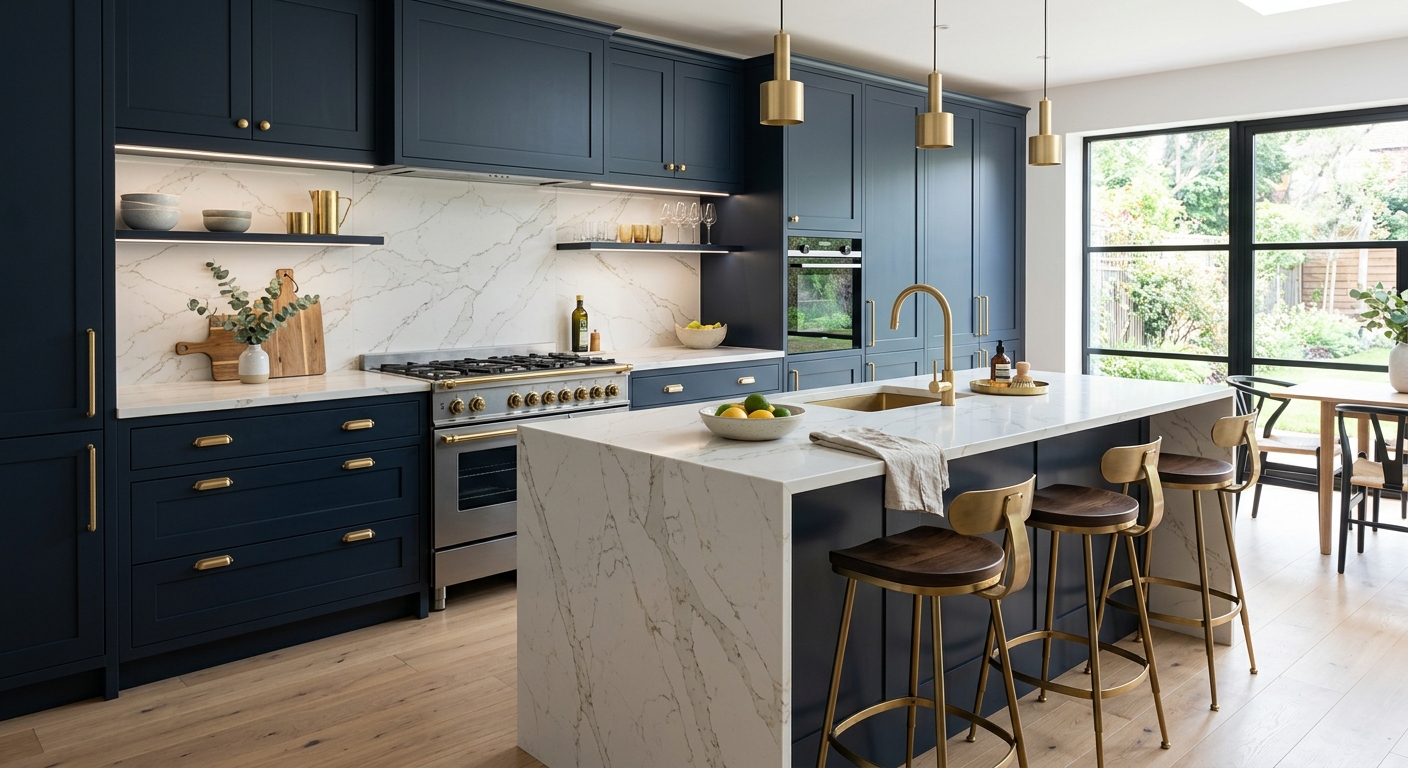
Shamokin kitchen renovation prices by scope — 2026
For homeowners in Shamokin, kitchen renovation costs and strategies reflect both the realities of local income and an exceptionally high percentage of owner-occupants (57.7%) (U.S. Census Bureau, ACS 2024). Median household income in Shamokin sits at $32,753, making kitchen investments a significant financial decision. Most properties are early-1900s row homes rather than newer single-families—which means renovations often uncover aging wiring, small rooms, or layouts that don't suit modern needs.
The single biggest cause of budget overruns is planning around a basic cabinet replacement but later deciding to move walls, reroute plumbing, or upgrade all appliances. That step up—the shift from a simple update to a full remodel—can triple or quadruple the cost, especially once electrical or structural changes trigger permitting and inspections.
| Scope |
What's included |
Duration |
Price range |
| Full gut remodel, same layout |
cabinets, counters, appliances, flooring, lighting, fixtures |
6–10 weeks |
$25,000–$99,500 |
| Gut plus layout change |
all of the above plus moved plumbing, electrical, walls |
10–16 weeks |
$54,000–$99,500 |
| Cabinet replacement (stock to semi-custom) |
remove and install cabinets, hardware, patching |
1–3 weeks |
$5,800–$25,000 |
| Cabinet refacing |
new doors and drawer fronts, veneer, hardware |
3–6 days |
$5,800–$16,500 |
| Countertop replacement only |
template, fabricate, install, reconnect sink |
1–3 weeks |
$3,300–$13,500 |
| Kitchen flooring only |
remove existing, install new flooring |
3–6 days |
$4,100–$16,500 |
Estimates for a typical Shamokin kitchen. Cabinet grade and whether the layout changes move these figures more than square footage.
When a Shamokin kitchen needs walls moved
The moment you decide to move walls or change the key working zones in a Shamokin kitchen, you cross into a whole new price class. Keeping plumbing, electrical, and cabinetry footprints where they are keeps your project in the $25,000–$99,500 band for a full gut remodel with unchanged layout. But as soon as you shift the sink, fridge, or walls—even by a few feet—the cost jumps to $54,000–$99,500 or higher.
Why such a big jump? Moving drain lines for a sink or dishwasher isn’t just a matter of a longer pipe—in most row homes here, you’re up against the need for correct slope, and that can mean opening floors or ceilings. If you’re on a slab or have finished ceilings below, this often triggers more costly demolition and rebuild. Adding or relocating circuits isn’t always simple, either: many early-1900s homes have undersized panels, so new appliances or lighting may require a new subpanel or even a full service upgrade.
Pulling down a wall opens structural questions. You have to determine if the wall is load-bearing—if it is, an engineer is needed and a permit is mandatory. In Sunbury, this kicks off a formal plan review process. Relocating a range hood for a new stove location means an exterior wall penetration, which again involves code and sometimes insulation fixes for the north-central PA winter.
The honest advice: ask whether your layout is truly stopping you from living in your kitchen, or if cosmetic upgrades will get you most of the benefit. Spending tens of thousands to move a sink four feet is more common than it should be. There’s nothing wrong with keeping the structure but updating the finishes unless there's a safety or absolute layout need.
Countertop materials compared
Your countertop decision in Shamokin should weigh how you cook, clean, and live in your kitchen—not just what’s trending online. Quartz is engineered stone, non-porous and low-maintenance, and resists stains better than marble or granite. Its tradeoff? Set down a hot pan and you may scorch it—quartz isn’t as heat tolerant as granite. Granite is all natural and, when sealed, is resistant to most stains. It does need to be resealed periodically—otherwise, it will stain or absorb oils. Both quartz and granite show seams, especially in larger kitchens.
Laminate deserves more respect. Modern laminates are good looking, easy to clean, and cost just a fraction of stone. They’re modestly scratch and scorch-prone, but for a rental or a lower-value home, it’s a practical pick that won’t look out of place in an older Shamokin row house. Butcher block warms a room and can be sanded and refinished, but takes steady maintenance to avoid stains and water damage. Solid surface (like Corian) isn’t as popular as it once was but is fully repairable and comes in many colors. Scratches buff out, seams are less visible, and you can integrate a sink for easy cleaning.
On fabrication: stone and solid surface require templating, which means installers come measure after cabinets are installed to ensure accurate fit—this delays install but avoids mistakes. Edge details (standard eased, bullnose, or ogee) and sink or cooktop cutouts also increase fabrication cost. In most Shamokin kitchens, these labor and finish choices swing total cost as much as the material itself.
Why appliance selection comes first
Deciding on your appliances before you order cabinets matters—especially in Shamokin’s typically tight and odd-shaped kitchens. Appliances set the sizing “grid” for the whole room. If you select a fridge or range after your cabinets are made, you may find the new appliance just won’t fit, or the door can’t open fully. Counter-depth refrigerators look better but hold less; their reduced depth requires planning the adjacent cabinets so that doors and drawers open without colliding. Slide-in and freestanding ranges need different cabinet setups. If you go induction, you may need new wiring—early-1900s row homes almost never have a dedicated 40-amp circuit for a modern electric range.
Panel-ready dishwashers and fridges allow for custom fronts to match cabinets—an upscale look with extra planning and cost. With range hoods, ducted models (venting outside) do a much better job controlling smoke and grease. Recirculating hoods are only a compromise for layouts where venting isn’t practical; they don't meet code in every scenario, especially where heavy cooking is common.
Professional-grade appliances mostly deliver on durability, but the visible premium is in design and prestige. Most homeowners don’t need a commercial-style range, but the look is appealing. Finally, don’t get caught by supply chain issues—these days, appliance lead times can exceed those of custom cabinetry, especially for special finishes or pro brands.
Living through a kitchen renovation
The part that tampers most with daily life in Shamokin is the weeks without a functioning kitchen. Plan a makeshift setup somewhere—sometimes the dining or living room—where you keep your fridge, set up a microwave, coffee maker, and a folding table. Wash dishes in a bathroom or laundry sink. Most families switch to paper plates and disposable utensils, and no matter how thrifty, you’ll spend more eating out—often more than the cost of new kitchen flooring ($4,100–$16,500) over eight weeks of takeout and prepared meals.
Expect dust on everything, even behind closed doors—PA row homes are tight quarters, so dust protection with plastic sheeting and zipper walls is essential. Crews will need part of your driveway or street for a dumpster and daily staging—a reality of narrow lots and rear access in most Shamokin layouts. Pets can slip through open doors or be stressed by noise, so have a plan to contain them. For the demolition phase (the loudest and dustiest week), it may make sense to stay elsewhere, especially if you have young kids or allergies.
Be realistic: your routines will be off for the duration, and planning ahead for food, storage, and access to water minimizes headaches.
The biggest line item in your Shamokin kitchen
Cabinets nearly always set the pace for your kitchen budget. In Shamokin’s older homes—where non-standard wall dimensions are the rule—you typically find yourself pushed toward semi-custom cabinets, whether you planned on it or not. Four main routes exist: painting, refacing, stock, semi-custom, and full custom.
Painting existing cabinets is the cheapest route. If the boxes and doors are sturdy, it’s just a matter of prep and finish. Refacing keeps your current cabinet boxes but swaps all doors, drawer fronts, and adds a new veneer—a huge improvement provided the boxes are solid and the current layout works for you. If not, it’s not worth the outlay.
Stock cabinets are affordable and available quickly, but come in fixed increments—leaving you to fill odd spaces with filler strips, which is often required in the narrow, varied kitchens common locally. Semi-custom cabinets are adjustable in size and finish, ideal for early-1900s walls that rarely run straight, though wait times are longer. Full custom fits anything, delivers every storage feature, and comes at the highest cost and the longest timeline—seldom needed outside high-value homes.
Across all price points, cabinet construction matters more than finish. Plywood boxes outlast particleboard. Full-extension, soft-close hardware is now the standard above box-store entry level. Frameless (European) styles maximize storage space, but can be trickier to install against out-of-square walls common in Shamokin row homes.
| Option |
Cost |
Best when |
Limitation |
| Painting existing cabinets |
$1,200–$3,500 |
boxes and doors sound, tight budget |
no layout or style change |
| Refacing |
$5,800–$16,500 |
boxes square and layout works |
storage unchanged |
| Stock cabinets |
$5,800–$25,000 |
standard dimensions fit |
filler strips, limited finishes |
| Semi-custom |
$16,500–$25,000 |
non-standard walls or finishes |
6–12 week lead time |
| Full custom |
$16,500–$25,000 |
unusual layout or high-end design |
longest lead, highest cost |
Permits and inspections for a Shamokin kitchen
Not every kitchen project in Shamokin requires a permit. Routine cosmetic upgrades—like painting cabinets, swapping hardware, refacing, or replacing a countertop without moving the sink—generally don’t trigger local requirements. But if your kitchen work involves adding or moving electrical circuits, rerouting plumbing, altering structural walls, or significant mechanical system changes, you’ll need a building permit. In Sunbury, any new electrical circuits or wall changes will trigger a permit, while neighboring municipalities may have different standards. A structural or major mechanical change also brings a formal plan review in Sunbury.
Inspections are usually required for permit work. In Sunbury, the City of Sunbury Code Enforcement Office manages most permits, but electrical inspections are done by a contracted third-party agency—not a city employee. This catches even experienced homeowners by surprise and can complicate the final sign-off.
Pennsylvania requires all contractors working on home improvement contracts over $500 to be registered under the Home Improvement Contractor (HIC) program—verify anyone you hire at hic.attorneygeneral.gov. If the contractor has employees, they must carry workers’ compensation insurance, which you can check through WCAIS (wcais.pa.gov).
Skipping permits can cause issues when you resell, especially in older homes, as unpermitted work often comes to light in a buyer’s inspection and may need to be redone or documented after the fact.
Frequently asked questions — kitchen renovation in Shamokin
Does replacing cabinets require a permit?
In most of Northumberland County, including Shamokin, simply removing and replacing cabinets in the same configuration usually does not require a permit if you are not moving walls, adding new electrical circuits, or changing plumbing. This is especially true in municipalities like Milton, where direct replacement is commonly handled without any paperwork. However, if you upgrade your electrical to add under-cabinet lighting or new outlets as part of the project—a frequent need in Shamokin’s older homes—this will likely trigger a permit in Sunbury and neighboring areas. Before work starts, always check with the local code office or your contractor. For the cabinet work itself, expect costs in the $5,800–$25,000 range depending on choices, but factor in additional expense if electrical work means you need inspections and plan review.
What does a quartz countertop cost in Shamokin?
Quartz countertops are increasingly popular in Shamokin for their stain resistance and modern look. Expect prices for template, fabrication, and installation to run between $3,300–$13,500 for an average kitchen, with most homeowners landing around $7,500. The price depends on the specific color and brand, edge profiles, number of cutouts, and whether you have complex corners or require a seamless look. In smaller Shamokin kitchens, the cost will be on the lower end, but in those old row homes with odd layouts, you may pay more for additional seaming and labor. Remember, quartz isn’t as heat-resistant as granite—so if you cook a lot with hot pans, factor that into your decision as well.
Do I need to change my kitchen layout?
Most Shamokin kitchens are compact, early-1900s galley styles that feel cramped by modern standards. But changing your kitchen layout—moving the sink, range, or knocking down walls—puts you into a whole new cost bracket. The honest answer is that most kitchens can be improved significantly without moving every major component. If you genuinely cannot function in the space, a gut remodel with layout changes will cost between $54,000–$99,500. But if your main issue is dated cabinets and worn countertops, focusing on finishes can give you most of the benefit at a much lower price. Always have a contractor evaluate whether layout changes are necessary or just “nice to have,” and weigh that against your budget and needs.
Which upgrades are not worth the money?
In Shamokin, some upgrades just won't pay back what you spend—especially in homes valued far below Pennsylvania’s state average. High-end appliances, built-in espresso makers, and luxury countertop splurges only make sense if you’ll be there long-term and truly use them. Moving plumbing or electrical just for aesthetic reasons is the biggest money sink in local renovations: shifting the sink or range rarely adds real resale value but can add $25,000–$35,000 to the project. Instead, prioritize storage, functional lighting, and durable flooring. Skip costly bells and whistles unless they fix a genuine problem or you’re planning a high-end custom kitchen for your forever home.
How far ahead should I book a contractor in Shamokin?
With a tight finish-trade labor market in Northumberland County, especially compared to Williamsport or larger metros, you should plan to book a reliable kitchen contractor at least three to six months in advance. Many quality firms are backlogged, especially during peak construction season. The more customized your renovation—particularly if you need semi-custom or full custom cabinets, or anticipate permitting and inspections—the longer the lead time. Appliance lead times can further extend project duration. It is not uncommon for a full kitchen gut remodel (at $25,000–$99,500) to be scheduled up to a year out once plans, approvals, and materials are factored in—so begin conversations early.
Is laminate countertop a bad choice?
Laminate is still a smart choice in many Shamokin kitchens, especially in rentals, starter homes, or anywhere the kitchen budget is tight. Modern laminates are durable, easy to clean, and come in attractive patterns, no longer resembling the “builder basic” of decades past. Their downside is susceptibility to scratches and burns, but for many households, the performance versus price trade-off is well worth it. Laminate countertop replacement typically falls between $3,300–$7,500 installed locally—making it less than half the cost of stone or solid surface. If you’re not planning high-end resale or don’t spend hours cooking every day, there’s no shame in choosing laminate.
How does Shamokin's housing stock affect cabinet fit?
The reality in Shamokin—and Sunbury too—is almost all houses were built before 1980, with a huge percentage dating to the early 1900s. These homes seldom have square rooms or standard wall lengths, meaning off-the-shelf stock cabinets usually leave awkward gaps, forcing you to use filler strips and sometimes sacrificing storage. That’s why semi-custom cabinets (priced at $16,500–$25,000) are much more common in local projects than people expect; they’re flexible enough to squeeze every inch out of old, uneven walls. If you’re determined to maximize usability in a historic row home, plan for semi-custom at minimum—full custom is only rarely needed unless your kitchen is genuinely unusual or you want high-end finishes.
Should I hire a general contractor or a kitchen firm?
Both routes work in Shamokin, but your project’s complexity should guide the decision. A dedicated kitchen remodeler often brings tight coordination and product-specific discounts, plus experience with quirky local housing. General contractors are best when your kitchen work is part of a larger renovation or involves major structural, plumbing, or electrical changes. Either way, ensure your contractor is registered as a Pennsylvania Home Improvement Contractor—verify at hic.attorneygeneral.gov—and carries proper insurance. For most kitchen-only projects in the $5,800–$25,000 range, a kitchen specialist can be more efficient. For major gut or whole-house remodels, a GC is often better equipped to juggle trades and inspections.
How much does a kitchen renovation cost in Shamokin?
Most full gut remodels of Shamokin kitchens, keeping the layout, land between $25,000–$99,500, with the typical project around $54,000. If you’re aiming for just cabinetry and finishes, prices for replacement cabinets run $5,800–$25,000. Countertops alone can usually be replaced for $3,300–$13,500. If you cross the line into a major layout change—moving walls, plumbing, or electricity—expect costs to rise sharply. For most local homeowners (median income $32,753), it makes sense to focus on the updates that offer the best function and durability for the budget, rather than gutting and rebuilding unless absolutely necessary.