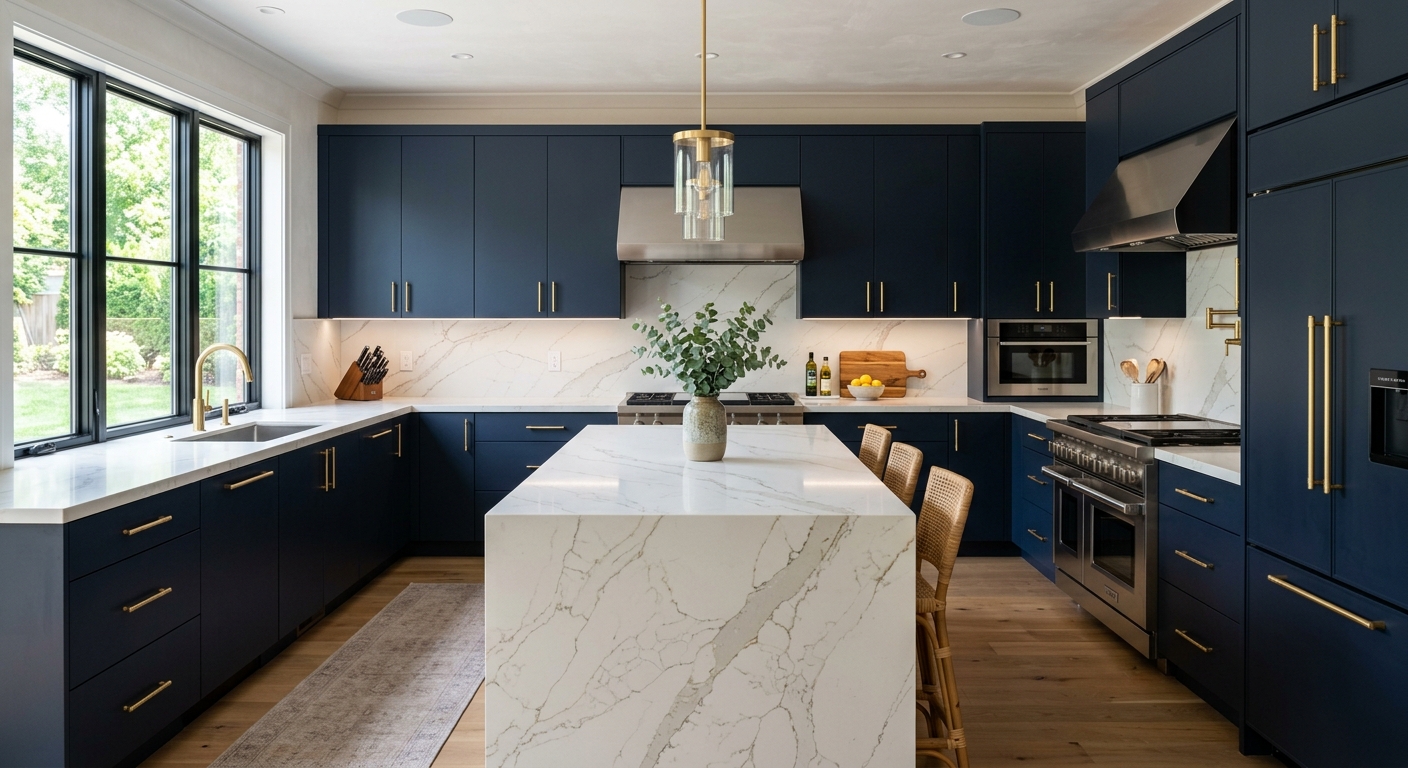
Prospect Park kitchen renovation prices by scope — 2026
In Prospect Park, where the median household income is $63,015 and 60.0% of residents own their homes (U.S. Census Bureau, ACS 2024), kitchen renovations are a major investment and a long-term decision. Across Delaware County, much of the housing stock was built between 1920 and 1960, resulting in a prevalence of small galley kitchens that often require layout changes and wall reconfiguration rather than simple cosmetic updates. Budgeting is particularly tricky for these homes—a 1950s galley might demand a layout overhaul, while a 1990s kitchen may only need surface upgrades.
Most blown kitchen budgets happen because homeowners price out a basic renovation but then add scope—like new electrical, moved walls, or higher-end materials—without realizing how quickly costs climb. Below is a breakdown of typical kitchen renovation scopes in Prospect Park, so you can match your project and spending to what your home actually needs:
| Scope |
What's included |
Duration |
Price range |
| Full gut remodel, same layout |
cabinets, counters, appliances, flooring, lighting, fixtures |
6–10 weeks |
$29,000–$116,000 |
| Gut plus layout change |
all of the above plus moved plumbing, electrical, walls |
10–16 weeks |
$62,500–$116,000 |
| Cabinet replacement (stock to semi-custom) |
remove and install cabinets, hardware, patching |
1–3 weeks |
$6,800–$29,000 |
| Cabinet refacing |
new doors and drawer fronts, veneer, hardware |
3–6 days |
$6,800–$19,500 |
| Countertop replacement only |
template, fabricate, install, reconnect sink |
1–3 weeks |
$3,900–$15,500 |
| Kitchen flooring only |
remove existing, install new flooring |
3–6 days |
$4,800–$19,500 |
Estimates for a typical Prospect Park kitchen. Cabinet grade and whether the layout changes move these figures more than square footage.
Cabinets are the critical path
The single biggest cause of delays in Prospect Park kitchen renovations is cabinet lead time—and you can’t fast-track it. This area’s dense contractor market (especially around Upper Darby and Haverford) helps with scheduling, but even the best crews can’t work around cabinets that haven’t arrived.
After your kitchen design and measurements are finalized, cabinets must be ordered. In 2026, a stock or semi-custom cabinet order for Delaware County typically takes 5 to 10 weeks to arrive. Until cabinets are physically on-site, it doesn’t make sense to start demolition. If you do, you’ll either be living in a construction zone longer or paying more for stop-start labor.
Here’s the typical sequence: finalize design and measure; place the cabinet order; schedule demolition to start a week before cabinets land; bring in all trades to rough in electrical, plumbing, and HVAC; perform framing and wall work as needed; pass required inspections; install cabinets; then and only then can the countertop fabricator template the surface. No fabricator will template off a plan—only actual cabinets in place guarantee accuracy. This step means an unavoidable gap of a week or more between cabinet installation and countertop final measurement, during which not much can happen.
Don’t let anyone tell you that you can “order cabinets after demo.” In Prospect Park’s older homes, any delay is magnified by the logistical realities—tight access, staging, and high demand for finish trades. Advance ordering is essential to keep your project moving and your kitchen closed up as soon as possible.
What requires a permit in a kitchen renovation
In Delaware County, including Prospect Park, you generally do not need a building permit for cosmetic kitchen updates such as painting, installing new cabinet doors (refacing), changing hardware, or a direct countertop swap. This makes sense if you are simply freshening up the look without altering systems or structure.
However, once a kitchen project includes any new or relocated electrical circuits, changes to plumbing, or moving/removing walls, you will trigger the need for a permit. If your plan calls for a range hood duct, new lighting, or reworking outlets and switches, most townships in the county require a building permit and plan review. These permit “tripwires” protect you at resale, ensuring your work is documented and up to code.
Electrical inspections for kitchen remodels across many Delaware County municipalities—including Prospect Park—are managed not by the township itself, but by approved third-party inspection agencies. This is a surprise to some homeowners, but it’s standard practice locally and can affect timing, as you’ll need to coordinate both township and outside inspector schedules.
Legally, any kitchen contract over $500 must be with a registered Home Improvement Contractor (verify at hic.attorneygeneral.gov), and if your contractor has employees, they must carry workers’ compensation coverage—checkable through Pennsylvania’s WCAIS system. Unpermitted work can become a major resale headache, as township-required certificates or code sign-offs often come up at closing, and undocumented changes may have to be opened up or redone.
Comparing kitchen renovation bids in Prospect Park
The biggest trap for Prospect Park homeowners is assuming kitchen bids are apples-to-apples. In reality, allowances—placeholders for products not yet chosen—are where bids differ most. One contractor may show a generous allowance for tile or appliances, while another lowballs these figures to look less expensive. Always compare allowances line by line, not just the bottom-line cost, or you may face expensive change orders mid-project.
Look for specifics in the bid: cabinet brand, series, and box construction; countertop material (not just “quartz” or “granite”) as well as thickness and seam details. Electrical lines should spell out how many new circuits, GFCIs, or specialty outlets are included. If the bid glosses over how unforeseen wall damage or subfloor issues are handled, clarify before you sign.
Proper change orders—written and signed before work—are a must. Payment schedules should be milestone-based (e.g., after demo, post-cabinet install), not front-loaded. Savvy homeowners also ask for lien waivers from subcontractors with each payment to avoid later headaches. Remember, Pennsylvania’s Home Improvement Consumer Protection Act (HICPA) requires a written contract if the job exceeds $500, with a three-business-day right of cancellation.
| Line item |
What to look for |
Red flag if… |
| Allowances |
realistic amounts, itemised |
round numbers with no basis |
| Cabinetry |
brand, line, box construction |
'quality cabinets' |
| Countertops |
material, thickness, edge, seams |
material name only |
| Electrical |
circuits to be added, GFCI scope |
'as needed' |
| Unforeseen conditions |
how they are priced and approved |
not addressed |
| Change orders |
written approval before work |
verbal |
| Payment |
milestone-based, modest deposit |
front-loaded |
| Lien waivers |
from subs at each payment |
not offered |
Eight weeks without a kitchen
Prospect Park kitchen renovations can mean living without your real kitchen for six to ten weeks. Before demolition starts, set up a temporary space—a microwave and coffee maker on a folding table, the fridge moved to the dining room or garage, and a plastic tub or laundry sink as a dishwashing stand-in. Most people vastly underestimate the convenience of a functional sink: be ready to rely on disposable plates and utensils and to supplement with simple, no-cook meals.
Dust control is serious business. In older Delaware County homes, construction dust can move through cracks and ducts and linger for months if not checked. Hang plastic sheeting with zip walls and request that crew stage tools and debris as compactly as possible. The typical roll-off dumpster will need driveway or street space, and materials may be staged on the porch or in a garage if available.
Pets are a consideration—front doors will be open, and curious animals can slip out or get into trouble. For at least the demolition week, some residents find it much less stressful to stay with family or book a few nights away.
Finally, eating out for six to eight weeks adds up fast. In this area, the takeout and restaurant cost for a family can easily match the cost of new kitchen flooring—sometimes $4,800–$9,700 or more. Build this into your budget up front.
Choosing a countertop for a Prospect Park kitchen
Countertop choices in Prospect Park kitchens should be based on daily practicality, not just looks. Quartz—an engineered, non-porous product—is the most popular for good reason: it resists stains and never needs sealing, but it is vulnerable to direct heat (a hot pan may discolor or crack it). Granite is a natural stone that holds up well to heat, but needs to be sealed periodically to prevent stains. Seams are more visible with patterned stones and where long counters can’t be done in one piece.
Laminate—often dismissed—remains a valid option, especially in rentals or modest kitchens. Today’s laminate is much tougher and better-looking than the stuff in your grandparents’ homes, and can be swapped for a fraction of the price ($3,900–$8,700 range). Butcher block offers warmth, but requires regular oiling and is susceptible to scratches and moisture damage; best for accent areas. Solid surface (like Corian) is repairable and quietly attractive, but can scratch and scorch with abuse.
Fabrication cost goes beyond the material. The more complex your edge profile, number of sink or appliance cutouts, or seams, the higher the labor cost. Measure once, template in place: countertops are always templated after cabinets are installed, never from the architect’s plan, to account for real walls and fit.
If your kitchen is basic and the home’s value moderate, don’t feel pressured to “over-upgrade” counters. Laminate is a respectable, cost-effective material for many Prospect Park kitchens.
Where the money actually goes
In a full kitchen gut remodel for a Prospect Park home, cabinetry is the biggest single slice—typically 25% to 35% of the total, due to both material and installation time. Labor and installation follow close behind, especially if you are reconfiguring a 1950s galley kitchen with new wall and utility runs. Countertops, appliances, and flooring are each significant and variable based on your selections.
Soft costs and “invisible” lines need real budget attention. Permits, design fees, and debris disposal often total a few thousand dollars, and should not be an afterthought. Contingency spending—money reserved for unseen electrical, framing, or plumbing trouble uncovered during demolition—is not optional in Delaware County’s older homes. An extra thousand dollars buys the most impact in lighting, plumbing fixtures, or flooring upgrades. It buys the least if you overspend on an appliance but can only afford basic cabinets. In Prospect Park, resist the temptation to dedicate a grand to top-tier appliances while choosing entry-level cabinetry; the tradeoff will show.
For a typical kitchen gut remodel at $62,500, here’s how the budget breaks down:
| Category |
Share of budget |
Notes |
| Cabinetry |
25–35% |
the largest line and the longest lead time |
| Labour and installation |
20–30% |
rises sharply if the layout changes |
| Countertops |
8–15% |
material choice drives the swing |
| Appliances |
10–20% |
widest range of any category |
| Flooring |
5–10% |
|
| Lighting and electrical |
5–10% |
higher in older homes needing circuits |
| Plumbing and fixtures |
4–8% |
|
| Permits, design, disposal |
3–6% |
usually forgotten in early budgets |
| Contingency |
10–15% |
not optional in a pre-1980 house |
Frequently asked questions — kitchen renovation in Prospect Park
Should I renovate before selling or let the buyer do it?
The answer depends on your home’s condition and your goals. In Prospect Park, where many homes were built before 1980, dated or dysfunctional kitchens can discourage buyers. However, a full gut remodel at $29,000–$116,000 rarely returns dollar-for-dollar at resale. Modest updates—cabinet refacing, fresh counters, new lighting—often yield a better return and speed up a sale without risking a style gamble that misses the next owner’s taste. If your kitchen is truly unusable or unsafe, renovating is wise. Otherwise, get professional advice on the minimum updates to attract buyers without over-investing. Remember, buyers in Prospect Park are looking for clean, workable spaces, not a blank check kitchen unless your home already sits at the top of the local price range.
What is a realistic contingency for a Prospect Park kitchen?
Prospect Park’s pre-1980 housing stock means you should assume surprises during renovation—old wiring, questionable plumbing, and out-of-level floors are common. Industry standard is a 10–15% contingency added to the contract amount, which for a typical kitchen renovation at $62,500 is $6,250–$9,375. You don’t want to spend this if you don’t have to, but older homes in this area often conceal framing or wiring issues that can’t be predicted until demolition starts. It’s better to set the funds aside and release them only if needed; unused contingency stays in your pocket. Skipping it can mean delays or substandard fixes when issues are discovered.
Why are kitchen quotes in Prospect Park so far apart?
Price differences between bids in Prospect Park often come down to scope, product grade, and especially allowances. One contractor may include a stock cabinet line and basic counters, while another specs out semi-custom cabinetry and high-end quartz. Also, some bids leave appliance or tile allowances at a bare minimum—so the low number is tempting until you see the add-on costs. For example, a project may quote $29,000 with wafer-thin allowances, but land at $62,500 after selections. Always check the specific products and numbers in each bid and confirm inclusions before picking the “lowest” price.
What happens if previous work was unpermitted?
Unpermitted work is a real problem at resale in Prospect Park and Delaware County overall. Local building departments may require documentation for any kitchen remodels involving electrical, plumbing, or wall changes. If the prior owner skipped permits, you could be forced to open up finished walls for inspection or even re-do parts of the work. This can affect appraisals and delay closings. If you’re buying or selling, be proactive—ask for proof of permits and inspection approvals, especially if the project involved new circuits or moved plumbing. A legitimate remodel here, especially in older homes, should have a paper trail and be done by a registered contractor with proper workers’ compensation.
What are cabinet lead times in Prospect Park right now?
In 2026, even with Delaware County’s dense contractor market, cabinet lead times for stock and semi-custom lines usually run 5 to 10 weeks from final approved drawings to delivery. In Prospect Park, many renovation schedules are thrown off by ordering cabinets too late—if you wait until demolition is done to order, you’ll likely add a month of “dead time.” Always finalize your selections and order cabinets first, then plan demolition to start about a week before delivery. This is especially critical in older homes where fit adjustments are likely. The overall project cost for sitting with a half-done kitchen is more than just time—it can mean eating out and extra labor costs on top of your $6,800–$29,000 cabinet spend.
Do I need to change my kitchen layout?
Not necessarily. In Prospect Park, many kitchens are compact and built in the galley style from the 1940s–1960s. If the layout works, you can save tens of thousands by keeping plumbing and electrical in place—a full renovation with a layout change starts at $62,500. If the kitchen is cramped, lacks work zones, or blocks key traffic, a layout change could be worthwhile, but it comes with higher cost and permit requirements. For resale, a functional—not flashy—layout is enough. Before deciding, live in your kitchen for a few months and talk honestly with your contractor about what’s possible without breaking the bank.
How does Prospect Park's housing stock affect cabinet fit?
Most Prospect Park homes were built before modern cabinet sizing standards—walls aren’t always square, and ceiling heights can be odd. This means stock cabinets (even from big-box stores) may need more inventive filler pieces, scribed panels, or adjustment to fit tightly in the space. In some cases, semi-custom cabinetry may be worth the upgrade, especially if you have short ceilings or odd corners, though this will push your total cabinet cost higher—to $19,500–$29,000 for many projects. Plan for your installer to spend time templating and shimming—a surprising chunk of the budget and timeline in Prospect Park feeds into just getting everything to fit old, not-quite-straight kitchens.
Is induction worth it over gas?
Induction cooking is gaining ground in Prospect Park, especially as homes get electrical upgrades during renovation. Induction is precise, fast, and cools quickly, with easier cleaning since spills don’t bake onto a hot surface. Downsides: you’ll need compatible cookware and potentially upgraded wiring powered by a dedicated circuit. If your kitchen already has a good gas line, consider whether you’re happy with your current performance. If you’re planning a full renovation in the $29,000–$116,000 range, upgrading to induction is a reasonable luxury—but not a must if budget is tight. In entry-level or rental kitchens, keep it simple unless cooking technology is your passion.
What is an allowance in a renovation quote?
An allowance in your Prospect Park kitchen bid is a placeholder dollar figure for items not yet picked out—think tile, appliances, or light fixtures. For example, your quote may include a $2,000 tile allowance, but if you choose materials costing $4,000, you’ll pay the difference. Allowances let the contractor assemble a bid before every selection is locked in, but they’re also where budgets get blown. In this area, compare allowance lines—not just the project total—on each quote. A bid with a generous appliance allowance may start at $62,500, while a seemingly cheaper one skates by with bottom-tier numbers and lets you find out the real cost later. Insist on itemized, realistic allowances and ask in writing how overages and credits are handled.