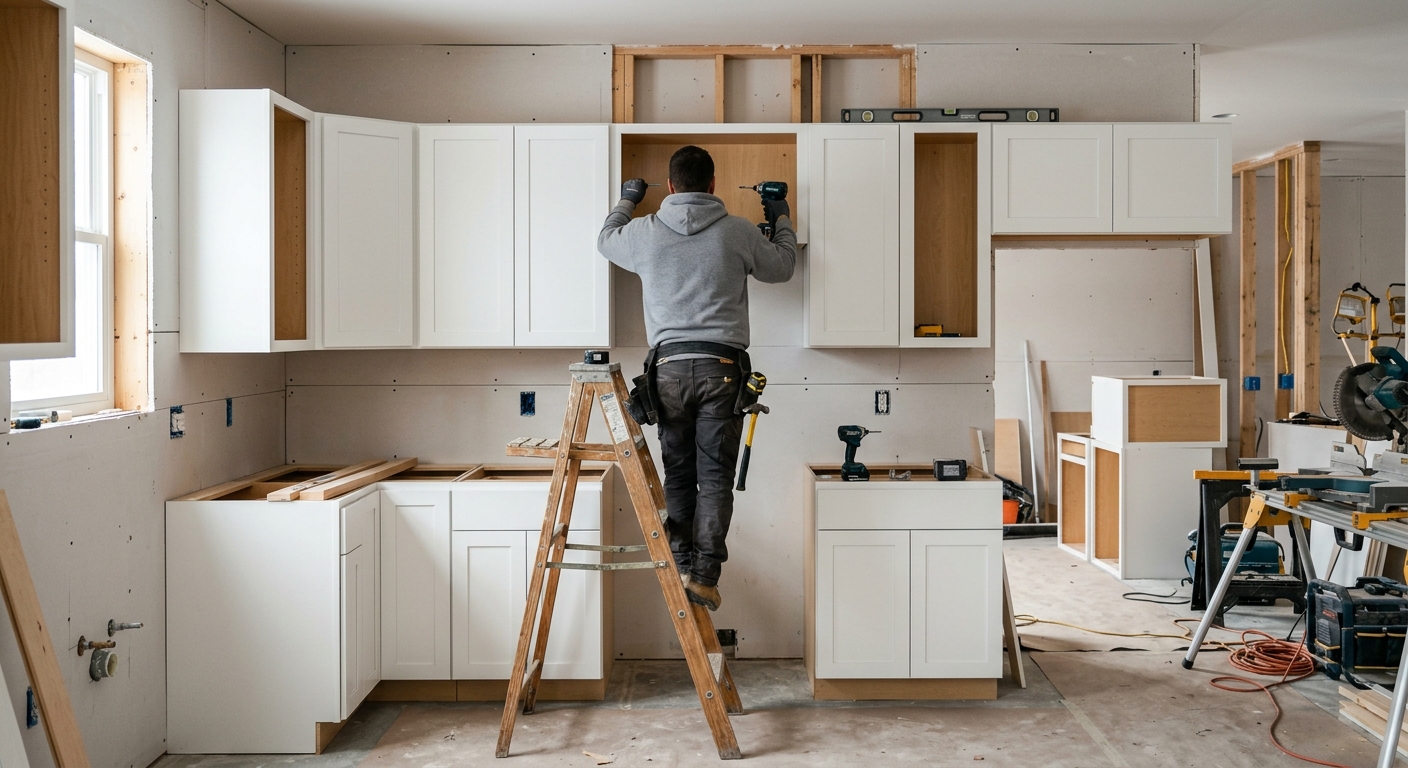
Kitchen renovation costs in Milton — 2026
In Milton, planning your kitchen renovation budget starts with knowing your local housing stock and what homeowners typically spend. With a median household income of $50,431 and a homeownership rate of 43.2% (U.S. Census Bureau, ACS 2024), most Milton owners look for quality improvements that will last, but are careful to avoid overspending for their neighborhood. Northumberland County trades see a range of houses, but Sunbury and Shamokin are filled with early-1900s row homes. These often need not just cosmetic upgrades, but also electrical updates—many kitchens here are overdue for significant behind-the-wall work. By contrast, homes built since 1980 may just need new finishes or appliances.
The biggest mistake is asking for prices based on a cosmetic refresh, then picking out products that require gutting or moving walls—this instantly doubles or triples the project. Understanding the scope up front prevents painful surprises and costly change orders.
| Scope |
What's included |
Duration |
Price range |
| Full gut remodel, same layout |
cabinets, counters, appliances, flooring, lighting, fixtures |
6–10 weeks |
$27,000–$108,500 |
| Gut plus layout change |
all of the above plus moved plumbing, electrical, walls |
10–16 weeks |
$58,500–$108,500 |
| Cabinet replacement (stock to semi-custom) |
remove and install cabinets, hardware, patching |
1–3 weeks |
$6,300–$27,000 |
| Cabinet refacing |
new doors and drawer fronts, veneer, hardware |
3–6 days |
$6,300–$18,000 |
| Countertop replacement only |
template, fabricate, install, reconnect sink |
1–3 weeks |
$3,600–$14,500 |
| Kitchen flooring only |
remove existing, install new flooring |
3–6 days |
$4,500–$18,000 |
Estimates for a typical Milton kitchen. Cabinet grade and whether the layout changes move these figures more than square footage.
Renovating to live in versus renovating to sell
In Milton, the smartest kitchen renovation decisions are different depending on whether you plan to live in the home or prepare it for sale. If you’re renovating to sell, the goal isn’t to create your dream kitchen; it’s to help your house stand out against competing listings and sell faster—not to add back every dollar you put in. Neutral finishes and a mid-range budget (often between $27,000–$58,500 for gut remodels) make sense, and you skip moving plumbing or walls.
On the other hand, if you’re staying put, focus your dollars where they bring you daily satisfaction. That means picking the layout, appliances, and finishes you’ll truly use. A high-end kitchen isn’t an investment—it's a personal expense, especially in a Milton market with a median income of $50,431. Putting in a $100,000 kitchen in a neighborhood where most homes simply don’t justify it can mean you recover less than half on resale. You get the kitchen you want, but it’s money spent for your own use, not a return.
Most Milton owners lean towards practical, quality work that fits the house and neighborhood. A mid-range job in a lived-in home makes the space enjoyable and keeps you in sync with local values. Over-spending rarely pencils out—especially if selling is on your horizon.
Appliance choices and the decisions they force
Appliance decisions drive your kitchen layout, not the other way around. If you order cabinets before locking in your appliance picks, you risk an expensive cabinet modification or stuck delivery on installation day. This happens most often with refrigerators—standard-depth models stick out past the countertop, while counter-depth fridges stay flush but offer less space and typically cost more. Ordering the wrong size means filler panels or wasted space.
On ranges, the choice between slide-in and freestanding matters. Slide-in models sit flush with your counters and need exact cabinet cutouts. Freestanding models are simpler but less custom-looking. Choosing gas or induction has wiring consequences in Milton’s older homes; induction ranges require upgraded electrical circuits—often not present in kitchens built before 1980. Gas might require running new lines and a ventilation plan.
Panel-ready dishwashers blend seamlessly with your cabinets, but only if the boxes are sized and finished for them from the start. And for range hoods, venting to the outside is always better—recirculating hoods are only an option when exterior venting is unrealistic and they do a poor job on real cooking by comparison.
Professional-grade appliances mostly deliver looks and a badge, not always measurable cooking advantages for typical homeowners. The lead times—sometimes exceeding the 6–12 weeks for cabinets—also require you to decide early and order ahead, especially for specialty or premium models.
Eight weeks without a kitchen
Living through a Milton kitchen renovation means making a realistic plan for daily life without a functioning space. Most owners set up a temporary kitchen elsewhere in the house—usually a folding table for the microwave and coffee pot, the fridge plugged in wherever it fits, and a stash of paper plates and cutlery. For washing up, a laundry or bathroom sink is essential, but expect convenience to go out the window fast.
Dust and debris travel everywhere, so using heavy plastic sheeting and zip walls to create a sealed work zone is worth every minute spent. It keeps dust out of your living areas and away from ductwork and electronics. The crew will stage materials and run a dumpster on your driveway or yard, so clear space in advance. If you have pets, doors stay propped open—plan accordingly to avoid escapes. The demolition week is especially disruptive, so some Milton homeowners choose to relocate for at least that stretch if possible.
There’s no getting around it: eating takeout and store-bought meals for up to eight weeks comes with sticker shock. For many households, the increase in food costs during a renovation rivals the spend for new flooring—$4,500–$18,000—so build it into your upfront budget.
What requires a permit in a kitchen renovation
In Milton, knowing where permit requirements begin and end saves you both cost and trouble at resale. You can upgrade paint, swap out cabinet hardware, or even reface cabinets and replace countertops without a permit—if there are no layout changes and everything lands back where it started. As soon as you move plumbing, add or relocate electrical circuits, remove structural walls, or install a new ducted hood, your renovation crosses into permit territory. If your project only involves direct cabinet and countertop replacement in the original footprint (common in Milton), a permit is usually not required.
Unlike Sunbury, where a formal plan review is required for major kitchen changes, Milton relies on local code offices and does not typically require a permit for surface-level replacement work. Electrical inspections in Sunbury are managed by a third-party agency, but in Milton, check with your township or borough, since each office enforces its own interpretation under the Pennsylvania Uniform Construction Code (UCC).
Any contractor you hire must hold Home Improvement Contractor (HIC) registration through the Pennsylvania Office of Attorney General for contracts over $500. Workers’ compensation insurance is required for all employers and verified via WCAIS. Written contracts are mandated, and you have a three-day cancellation right under state consumer law.
Doing unpermitted work—or worse, getting caught at resale—can freeze a sale and turn a simple project into an expensive fix. It rarely pays to cut corners on this front.
What's behind the walls in a Milton kitchen
With 80.1% of local homes built before 1980, Milton renovations routinely run into surprises behind the plaster and lath. Once demolition starts, the most common issues are out-of-plumb walls or sloped floors, turning every cabinet install into a shimming project—resolving these can add $1,000–$3,500. It’s not unusual to encounter knob-and-tube or ungrounded wiring that must be upgraded to code, with new circuits for modern appliances bumping up the electrical bill another $2,500–$6,000 for a full kitchen.
Galvanized water lines and cast iron drains are typical finds in old Milton homes. Swapping them for modern PEX and PVC could run another $1,500–$4,000 depending on access. Insulation (or lack thereof) in exterior kitchen walls is another common deficiency, easily found when opening up old walls. Past unpermitted changes, odd bulkheads, and legacy plumbing hidden in chases add labor and cost.
On lead paint, any house built before 1978 falls under the federal EPA Lead RRP Rule, which requires licensed contractors to test and follow containment procedures before disturbing painted surfaces. Lead and asbestos discovery means extra steps—never skip testing in these era homes.
Newer homes will present different issues: builder-grade cabinets reach the end of their useful life, original laminate countertops need replacement, and the number of electrical circuits may be below what’s now common or code minimum. Each item affects schedule and final cost in Milton’s older kitchen stock.
The biggest line item in your Milton kitchen
Cabinets typically make up the largest chunk of your Milton kitchen budget, and deciding among refacing, stock, semi-custom, or full custom options shapes not only cost but result. Refacing is the lowest-impact option—new doors, drawer fronts, and a fresh veneer only work if the existing boxes are solid, square, and laid out the way you want. No new storage, but a big visual upgrade for significantly less than full replacement.
Stock cabinets are made in standard widths and heights. They’re quick to order, cheapest up front, but often require filler strips and compromise on looks in older Milton homes, where nothing is square and dimensions are rarely standard. Finishes are limited, and you may have to accept a close-enough fit.
Semi-custom is the local sweet spot—adjustable sizes, finishes, and modifications to accommodate wonky old walls common in Sunbury and Shamokin’s early-1900s row houses. It’s more expensive, but avoids hacked-together filler pieces and awkward storage. Full custom goes all-in for oddball layouts or vanity-grade finishes with the longest lead times and highest costs.
Focus on construction: plywood boxes last, particleboard doesn’t. Dovetail joinery and full-extension soft-close hardware are worth the upcharge for long-term value. Frameless (European-style) cabinets offer more usable space, but are trickier to install in out-of-square rooms than face-frame designs.
| Option |
Cost |
Best when |
Limitation |
| Painting existing cabinets |
$1,200–$3,500 |
boxes and doors sound, tight budget |
no layout or style change |
| Refacing |
$6,300–$18,000 |
boxes square and layout works |
storage unchanged |
| Stock cabinets |
$6,300–$27,000 |
standard dimensions fit |
filler strips, limited finishes |
| Semi-custom |
$18,000–$27,000 |
non-standard walls or finishes |
6–12 week lead time |
| Full custom |
$18,000–$27,000 |
unusual layout or high-end design |
longest lead, highest cost |
Frequently asked questions — kitchen renovation in Milton
What flooring works best in a kitchen?
In Milton, most homeowners go with either luxury vinyl plank (LVP), tile, or hardwood, depending on style, budget, and the house’s age. Given the older homes and colder months here, LVP is popular for its warmth and water resistance, and it handles the uneven subfloors you often find in Milton and Sunbury. Tile is extremely durable but cold underfoot in winter unless you spring for radiant heat, which can push the price to the high end of the typical kitchen flooring range—$4,500–$18,000. Hardwood has long-term resale appeal but can show water damage faster. If your kitchen gets heavy foot traffic or you have pets, choose durability over appearance. If your subfloors are really out of level, factor in extra labor to prep for tile or hardwood.
What is the cheapest way to update a Milton kitchen?
If you’re on a tight budget in Milton, painting your existing cabinets and swapping out hardware offers the biggest visual impact for the lowest cost—typically $1,200–$3,500. Painting doesn’t fix worn boxes or bad layouts, but it refreshes even the oldest kitchen. If your countertop is stained or cracked, replacing just that surface can dramatically lift the room for between $3,600–$14,500. Refacing cabinets, which keeps the boxes but changes the doors and fronts, lands between painting and full replacement in both results and cost. Prioritize what you see and touch most—sometimes just new lighting and pulls are enough until you can fund a bigger upgrade.
Can I over-improve for my Milton neighbourhood?
Yes—over-improvement is a real risk in Milton, where the median household income is $50,431 and many homes are valued well below what a high-end kitchen could cost. Pouring $100,000 into a kitchen in a neighborhood where most sales are below that number won't return that investment. For resale in Milton, stick with quality mid-range finishes and avoid moving plumbing or walls unless absolutely needed. Save personal tastes and splurges for homes you plan to enjoy for years, not flip in the near future. If you’re unsure, ask a real estate agent familiar with Milton before you sign any big contracts.
Do older Milton homes need electrical upgrades for a kitchen?
Almost always, yes. With more than 80% of Milton homes built before 1980, it’s common to find outdated wiring—sometimes even knob-and-tube or ungrounded circuits—when you open up walls. Modern kitchens demand dedicated circuits for appliances like microwaves, dishwashers, and induction ranges. Upgrading will likely add $2,500–$6,000 to your project, but skipping it can be a safety hazard and create resale headaches if home inspectors spot ungrounded outlets. If your home has never had its panel or branch circuits updated, budget for this work as you plan your renovation.
Can I cancel a renovation contract in Pennsylvania?
Yes, you have the legal right to cancel a home improvement contract within three business days of signing in Pennsylvania, including any project above $500 in Milton. This rule applies under the Home Improvement Consumer Protection Act, meant to safeguard owners from pressure sales. Make sure you get a written contract, and don’t sign until you’re sure of the details and price—such as a full kitchen gut in the $27,000–$108,500 range. If a contractor won’t provide paperwork or pushes you to forfeit this right, that’s a good reason to walk away. Always get everything in writing.
How do I set up a temporary kitchen?
In Milton, most families use the dining room, basement, or even a garage to set up a temporary kitchen during renovation. Move your fridge to the nearest outlet, install a folding table for a microwave, toaster, and kettle, and stock up on disposable plates and cutlery. Use a nearby laundry or bathroom sink for washing dishes. If you have an outdoor grill, put it to use. Dust will travel, so ask your contractor to install plastic sheeting or a zip wall. Plan for eating out: the extra cost can rival your new flooring budget—$4,500–$18,000 over two months. It’s not glamorous, but it will keep daily life manageable while the real kitchen is down.
Why are kitchen quotes in Milton so far apart?
Local kitchen quotes vary widely because of Milton’s mix of old and newer homes, contractor travel surcharges (since we’re sandwiched between larger metros), and unpredictable surprises behind the walls. Labor is tight in Northumberland County, leading to longer schedules and higher prices, especially for finish trades. An old row house needing electrical or subfloor work will cost much more than a straight swap in a 1990s house. Expect quotes anywhere from $27,000–$108,500 for a gut job, depending on your scope and which structural or systems quirks must be fixed. Cheap quotes often skip hidden issues—which show up later as costly change orders.
How much does a kitchen renovation cost in Milton?
For 2026, most full gut renovations in Milton fall between $27,000–$108,500, with a typical job around $58,500. Cabinet replacement alone is usually $6,300–$27,000, and swapping a countertop (without changing cabinets) ranges from $3,600–$14,500. Actual costs hinge on how much you move walls or plumbing, your cabinet selections, and surprises behind older walls. Always ask what is (and isn’t) included—and make sure you’re comparing the same scope between quotes. For Milton’s many older homes, expect to spend extra on electrical and plumbing updates if you’re doing more than a surface refresh.
Should I order cabinets before demolition?
Never order cabinets before your contractor has opened up key walls, especially in a Milton home built before 1980. Older houses can hide out-of-level floors, crooked walls, or surprise mechanicals that force last-minute layout tweaks. If you order based on old measurements, cabinet installers may need to cut down or shim every box, delaying the whole project. Semi-custom or custom cabinets—often in the $18,000–$27,000 range—require precision. Good contractors will demolish critical areas first, then take final site measurements before placing the cabinet order, ensuring a proper fit and less frustration during install.