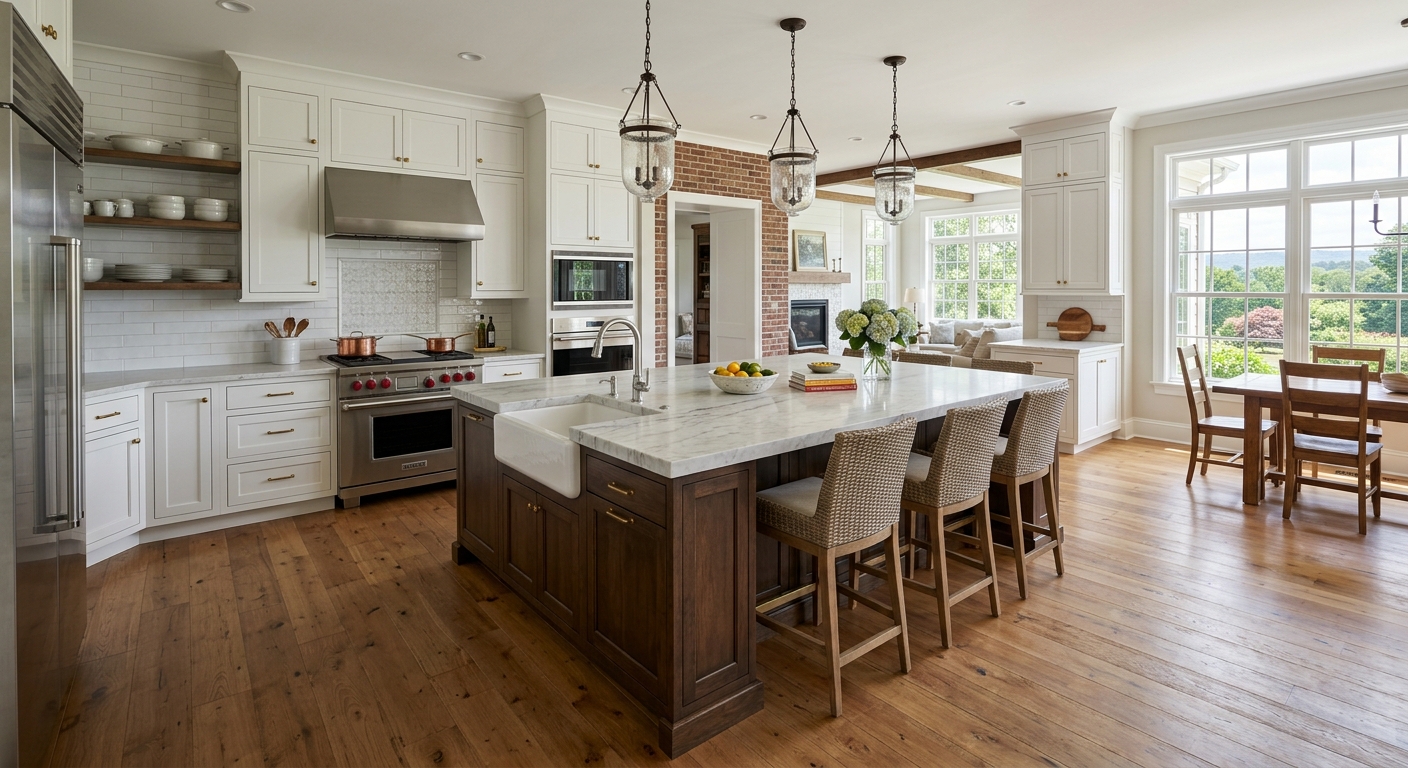
Kitchen renovation costs in Allen — 2026
In Allen, where homeownership is strong and incomes are above average (homeownership rate: 80.4%, median household income: $95,474, U.S. Census Bureau, ACS 2024), kitchen renovations are often treated as major investments rather than cosmetic quick fixes. The local housing stock has plenty of homes built before 1980, with the nearby cities of Bethlehem and Easton seeing frequent, large-scope renovations to open up old galley kitchens or modernize layouts. In this corner of Northampton County, renovation budgets are shaped by whether you’re working within an existing 1990s open plan or confronting the low ceilings and awkward closets of a pre-war house.
Allen homeowners should understand the true driver of cost overruns: planning for a pull-and-replace but getting drawn into layout changes or specialty upgrades mid-project. If you price a basic cabinet swap but ask for new lighting circuits and relocated plumbing after demolition, expect to land at the top end—or beyond—the price range.
| Scope |
What's included |
Duration |
Price range |
| Full gut remodel, same layout |
cabinets, counters, appliances, flooring, lighting, fixtures |
6–10 weeks |
$31,500–$126,000 |
| Gut plus layout change |
all of the above plus moved plumbing, electrical, walls |
10–16 weeks |
$68,500–$126,000 |
| Cabinet replacement (stock to semi-custom) |
remove and install cabinets, hardware, patching |
1–3 weeks |
$7,400–$31,500 |
| Cabinet refacing |
new doors and drawer fronts, veneer, hardware |
3–6 days |
$7,400–$21,000 |
| Countertop replacement only |
template, fabricate, install, reconnect sink |
1–3 weeks |
$4,200–$17,000 |
| Kitchen flooring only |
remove existing, install new flooring |
3–6 days |
$5,300–$21,000 |
Estimates for a typical Allen kitchen. Cabinet grade and whether the layout changes move these figures more than square footage.
Allocating a kitchen budget
Most Allen homeowners are surprised to see where the money actually goes in a kitchen renovation. The headline number almost always hides the fact that cabinetry soaks up more of the budget than anything else—often a quarter to a third. After that, it's the cost of skilled labor. Counters, appliances, and flooring follow, but each with less proportional weight than people assume.
The frequently-overlooked lines: first, set aside a contingency of 10–15% for what you’ll find inside the walls—past water leaks, failing wiring, or insulation issues come up in more than a third of pre-1980 Allen homes. Second, allow 3–6% for soft costs: building permits, designs, delivery, and hauling away debris.
For most Allen kitchens, the best return on an extra thousand dollars is upgraded cabinet hardware or quality countertops. The worst ROI? High-end appliances in an economy cabinet box. Appliances can and do get swapped out later; cabinets don’t. If you have $68,500 for a full gut remodel (the local median), that means $17,000–$24,000 just for cabinetry—more than enough for excellent semi-custom options.
| Category |
Share of budget |
Notes |
| Cabinetry |
25–35% |
the largest line and the longest lead time |
| Labour and installation |
20–30% |
rises sharply if the layout changes |
| Countertops |
8–15% |
material choice drives the swing |
| Appliances |
10–20% |
widest range of any category |
| Flooring |
5–10% |
|
| Lighting and electrical |
5–10% |
higher in older homes needing circuits |
| Plumbing and fixtures |
4–8% |
|
| Permits, design, disposal |
3–6% |
usually forgotten in early budgets |
| Contingency |
10–15% |
not optional in a pre-1980 house |
Permits and inspections for a Allen kitchen
In Allen, kitchen upgrades that are strictly cosmetic—like painting, hardware swaps, cabinet refacing, or a drop-in countertop swap—typically do not trigger a permit requirement. However, the moment you move or add electrical circuits, plumbing, or take down a wall, a building permit is required. In Bethlehem, any kitchen project that changes structural elements or installs new electrical circuits requires not only a permit but also a plan review before the work begins. For smaller towns around Allen, expect similar policies since most Northampton County jurisdictions govern their code enforcement locally.
For electrical work within Bethlehem’s borders, inspections are completed by the City of Bethlehem Bureau of Code Enforcement, so plan for municipal inspectors rather than third-party agencies. This is a key difference from some Pennsylvania counties where independent firms are brought in. Failing a final inspection or skipping permits can surface at the sale of your house—especially common when a home inspection turns up unpermitted wiring or non-conforming work.
Contractors must hold a Home Improvement Contractor (HIC) registration from the Pennsylvania Office of Attorney General for jobs over $500. You can and should verify registration at hic.attorneygeneral.gov. If the contractor has employees, they are mandated to carry workers’ compensation insurance, which is verifiable at the state’s WCAIS system. Getting these credentials up front protects your liability and positions your renovation for a clean resale down the line.
Layout changes and the cost cliff
The dividing line between a moderately-priced kitchen remodel and a project that doubles its budget is almost always layout changes. So long as sinks, ranges, and major appliances stay put, most of your dollars go into surfaces, fixtures, and cosmetic upgrades. But relocating plumbing, electrical, or knocking down a wall creates a wave of costs—out of proportion with the visual distance things move.
Plumbing lines, for example, need slope for drainage; running a new drain across a slab or finished ceiling is often the single biggest constraint. Adding or moving electrical circuits requires not only finding or making room in your panel, but also triggering a permit and an inspection. If you want to remove a wall, first determine if it’s load-bearing—if it is, an engineer must stamp the plans before permits. Moving a range hood to a new location means cutting a new hole through the exterior, sometimes running into brick or stone that requires specialty trades.
This is where Allen’s high percentage of pre-1980 homes comes sharply into play. Feeding new utilities through old framing or stonework is slow and expensive. The honest advice: take a weekend to map out how you actually use the space. If traffic flow is good and only the look is tired, save your capital. Many Allen families pour $31,500–$68,500 into moving a sink or stove just a few feet when the payout in daily use is marginal.
In practical terms, layout changes move a remodel from the $31,500–$126,000 range directly into the higher end—and planning permits and engineering from the outset is essential to avoid mid-project stops.
Countertop materials compared
How a countertop performs in daily use matters more than how it looks under showroom lights. Quartz is a leading choice in Allen: it’s engineered, non-porous (no sealing needed), and resistant to stains, but it can be damaged by excessive heat. Granite is uniquely natural and holds up to high heat, but being porous, it does require sealing every few years. Laminate often gets dismissed, but newer versions are durable, stain-resistant, and perfectly sensible for many Allen kitchens—especially rentals, in-law suites, or if your cabinets aren’t top-tier.
Butcher block is appreciated for its warmth and tactile appeal. It needs regular oiling and is sensitive to water and heat, but can be renewed through sanding if stained or scratched. Solid surface brands offer seamless joins, are fully renewable, and come in myriad colors, though they can be vulnerable to cuts and hot pots.
Fabrication details drive final cost: more complex edge profiles, sink cutouts (especially undermounts), and seam minimization generally mean higher prices. Every job in Allen gets a template visit, not just a rough measurement, and it’s wise to discuss seam placement and intended use up front.
Don’t let anyone tell you that laminate isn’t appropriate in an Allen home. If your renovation budget is at the $4,200–$17,000 mark for counters, putting money into a reliable surface and reinvesting in a better cabinet box later is often the smarter call in this market.
Planning appliances before cabinets
The single most common plan flaw in Allen kitchen remodels is picking out appliances after the cabinets are ordered. Appliance sizes, especially for refrigerators and ranges, dictate cabinet layout. Counters and panels need to fit precisely around them—order matters.
Counter-depth refrigerators look built in but require deeper cabinets; picking one late results in either an expensive cabinet change or a fridge that sticks out awkwardly. Slide-in ranges sit flush and streamline the look but need a gap at the rear and custom cutouts. Gas versus induction often comes down to what’s already in place: induction will usually require new electrical circuits, which triggers permit requirements in Allen. Panel-ready dishwashers blend in, but cabinets must be templated to their door thickness exactly. For range hoods, venting to the exterior is always superior—a recirculating (ductless) hood is a compromise mostly used where venting isn’t feasible. In older Allen homes, achieving a new vent run can be one of the hardest parts of the job.
High-end or professional-grade appliances offer real improvements in capacity and precision, but many Allen kitchens pay a price premium that primarily goes to visual cohesion and brand cachet, not lasting function. Right now, appliance lead times on some models actually exceed those for cabinets, so plan on locking them in before you even finalize cabinet shop drawings.
Cosmetic, replacement, gut, or layout change?
If you’re just starting to plan a kitchen project in Allen, get clear on which tier of remodel you’re truly undertaking. Most confusion and cost escalation come from assuming “remodel” means the same thing to everyone—it doesn’t. Here are the four honest tiers:
- Cosmetic refresh: Paint, new hardware, a backsplash, and maybe new lighting. No cabinet, appliance, or layout changes. This suits kitchens where the existing cabinets are solid but tired.
- Pull and replace: Remove old cabinets and counters, install new in the same footprint. Plumbing and electrical stay put. Many Allen kitchens built after the 80s fit this model, and it keeps costs and surprises down.
- Gut, same layout: Everything comes out to the studs. Insulation, wiring, supply lines are replaced, but sink, stove, and fridge all stay put. This is the right tier if the structure is fine but systems need upgrading.
- Layout change: Walls, plumbing, or electrical move. This is where engineering, permits, and the top-of-range budgets come into play. It’s unavoidable in many pre-1940 Allen kitchens that need literal opening up, but is the main source of unforeseen overruns.
The leap between the third and fourth tier is dramatic in both cost and complexity. In Allen, it means not just more money but more contractors and longer project timelines. Decide your tier first—contractors can’t give a real number until you do, and early ballparks are meaningless across such a wide spectrum. If in doubt, spend two hours with a contractor walking your kitchen before deciding if a wall really must move.
Frequently asked questions — kitchen renovation in Allen
Does a kitchen renovation increase home value in Allen?
In Allen, kitchen renovations can contribute considerably to resale value, but the outcome depends on the scope, the age of your home, and how closely your finishes match neighborhood expectations. With an 80.4% homeownership rate, many residents plan to stay long-term, and look for designs that fit modern lifestyles—open layouts, improved lighting, and flexible dining options. Data from the Lehigh Valley market suggests that a full gut remodel in the $31,500–$126,000 range rarely returns dollar-for-dollar on resale, but well-executed midrange updates often recoup a larger percentage. If your home was built before 1980 and still has cramped work triangles or poor lighting, a thoughtful renovation generally makes the property more marketable and shortens days on market—important when most Allen homes are single-family and owner-occupied. Avoid gold-plating finishes far above neighborhood standards; keep design timeless, not trendy.
What countertop material is best for a family kitchen?
For busy Allen households—especially those with kids or frequent cooks—quartz stands out for being low-maintenance, stain-resistant, and very forgiving of daily use. Granite works well if you don’t mind annual sealing, as it’s highly heat-tolerant and resists scratching, though spilled juice or coffee should be wiped up quickly. Laminate has improved and is a solid choice for families who prioritize value and expect some wear and tear; it’s available in hundreds of finishes and is often part of kitchen projects that stay in the $4,200–$17,000 range for counters. Butcher block requires commitment to upkeep but is repairable and provides a softer work surface. The right answer depends on your willingness to maintain: most Allen families opt for quartz or granite, but there’s no shame in laminate for secondary kitchens or as a temporary solution during a larger remodel.
What are cabinet lead times in Allen right now?
Cabinet lead times in Allen remain longer than pre-pandemic normals, thanks to steady demand across the Bethlehem/Easton metro market and fewer specialist remodelers compared to Allentown. Ordering stock cabinets still takes 2–4 weeks, but semi-custom and custom can easily run 8–12 weeks, especially for painted finishes. If you’re planning a full cabinet replacement in the $7,400–$31,500 range, order cabinets as soon as your layout is final and appliances specified. Always hold off on scheduling demolition until your cabinets have a firm delivery window—jobsite delays are still most often driven by cabinet backorders or shipping issues. If your contractor can’t guarantee a ship date, expect the install timeline to stretch, and build in a buffer for delivery coordination and inspection.
Is lead paint a concern in Allen kitchen renovations?
Yes, lead paint is a real concern for Allen’s pre-1980 homes—over a third fall into this category, based on census data. The federal EPA Lead RRP Rule applies if your home predates 1978, which means any contractor disturbing painted surfaces in kitchens must be EPA-certified. This affects jobs as basic as cabinet removal or window replacement. The extra steps—containment, safe removal, and cleanup—increase both cost and timeline, so ask your contractor about their EPA credentials up front. Typical kitchen gut remodels in Allen ($31,500–$126,000) will need to factor in these requirements. If you live in a newer Allen home, this is less of an issue, but never assume—always have paint tested before anyone starts demo.
Who inspects kitchen electrical work in Allen?
Within Allen’s vicinity—especially in Bethlehem—municipal electrical inspections are performed by the City of Bethlehem Bureau of Code Enforcement. This differs from some Pennsylvania counties that rely on third-party agencies. Any kitchen remodel in Allen involving new circuits or substantial rewiring requires an inspection upon completion to ensure the work meets Pennsylvania Uniform Construction Code standards. Skipping this step risks problems at resale or when insuring your home. For basic cabinet or countertop swaps, no inspection is triggered, but if you’re planning a gut remodel or moving outlets, expect your city or township code office to coordinate inspections. For projects running $31,500–$126,000, plan for this in both timeline and budget.
Is a cosmetic refresh enough or do I need a gut remodel?
In Allen, the answer depends on both the age of your home and your goals. If your cabinets are sturdy, layouts functional, and your budget is modest, a cosmetic refresh—paint, new hardware, lighting—will dramatically improve the look for a tiny fraction of the cost (often less than $7,400). This makes sense in the many post-1980 Allen homes with serviceable bones. If you’re facing failing cabinetry, bad lighting, or electrical and plumbing issues—which crop up in many local pre-war kitchens—a gut remodel is the only way to solve foundational problems and bring systems up to current code. For owners planning to stay long-term, the investment in a remodel at the $31,500–$126,000 level is defensible. Short-term or resale-focused owners should consider carefully before committing; sometimes a sharp refresh is all you need.
Should I hire a general contractor or a kitchen firm?
In Allen, the right answer depends on the complexity of your project. If you’re planning anything beyond a simple cabinet swap—such as moving walls, plumbing, or integrating major electrical work—a general contractor with experience in kitchen projects or a dedicated kitchen remodeling firm is essential. This is especially true given Allen’s mix of older and newer homes and the labor shortage among finish trades in Northampton County. For simpler jobs—cabinet refacing, new countertops—a specialty firm often delivers faster results for less. Either way, make sure your contractor is registered as a Home Improvement Contractor (for work over $500, as required in PA) and is carrying workers’ compensation for any crew they bring onsite. Check references locally—the Lehigh Valley is a small market, and good firms are known by reputation.
What does a full gut kitchen remodel cost in Allen?
For Allen homeowners considering a full gut remodel—removing everything down to the studs but keeping the basic layout—the local price band stretches from $31,500–$126,000, with typical midrange results (using quality but not top-end materials) landing around $68,500. Pre-1980 homes or those needing structural work can push toward the higher end, especially if you change the layout or run into code upgrades. The final number depends most on cabinet selection, the need for new circuits or plumbing, appliance choices, and whether you’re adding things like under-cabinet lighting or specialty storage solutions. Always ask your contractor to walk you through a line-by-line estimate—and leave room for a contingency, especially in Allen where hidden issues often surface during demo.
What is a realistic contingency for a Allen kitchen?
For Allen kitchens, a realistic contingency is 10–15% of your total project budget. This accounts for unknowns—hidden wiring, water damage, or code surprises common in the area’s pre-1980 homes. If you’re targeting a midrange gut remodel at $68,500, that means setting aside $6,800–$10,000. Skipping this line is the fastest way to derail timelines and budgets; most cost overruns in Allen follow the discovery of unpleasant surprises inside walls or under old cabinets. Even on a simpler cabinet replacement ($7,400–$31,500), put 10% aside so you don’t have to halt progress or make poor decisions mid-project when issues crop up. In new construction, you can risk going lower, but not in Allen’s aging housing stock.