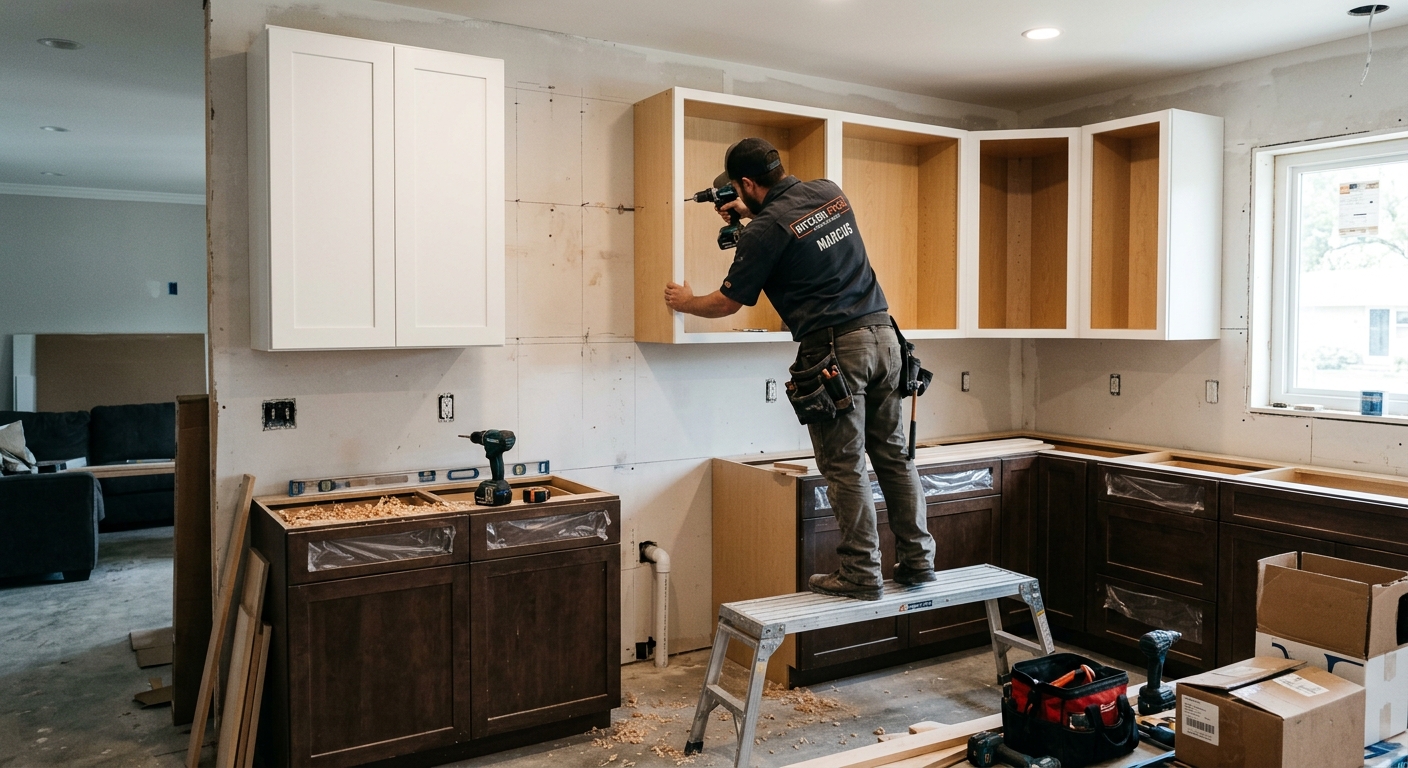
Adams kitchen renovation prices by scope — 2026
In Adams, most kitchen renovations are planned by owner-occupiers (homeownership rate: 88.9%) who tend to have higher household incomes (median: $136,842) than the state average. Budgeting is far more rigorous here than in tenant-heavy areas. Kitchen investment in Adams often tracks with increasing home values, but over-spending above neighborhood standards is rarely recovered at resale.
Cranberry Township’s 1990s–2000s subdivision boom means the most common setups are builder-grade kitchens now ready for a full-gut remodel. Homeowners are frequently deciding between refreshing finishes or gutting back to the studs and re-thinking the entire layout. Construction era matters: many Adams kitchens only need new surfaces and storage, not major wall-moving or mechanical upgrades. The difference between a price-friendly “refresh” and a costlier full renovation comes down to scope creep—most blown kitchen budgets start when a homeowner prices only new cabinets or counters, but midstream opts for new lighting, appliances, and electrical upgrades.
It’s critical to match your expectations and the renovation tier—cabinet refacing or replacement, countertop swaps, or floor-only upgrades can make a dramatic difference for much less than a gut-to-studs renovation. Use the table below to size your project:
| Scope |
What's included |
Duration |
Price range |
| Full gut remodel, same layout |
cabinets, counters, appliances, flooring, lighting, fixtures |
6–10 weeks |
$34,000–$135,500 |
| Gut plus layout change |
all of the above plus moved plumbing, electrical, walls |
10–16 weeks |
$73,500–$135,500 |
| Cabinet replacement (stock to semi-custom) |
remove and install cabinets, hardware, patching |
1–3 weeks |
$7,900–$34,000 |
| Cabinet refacing |
new doors and drawer fronts, veneer, hardware |
3–6 days |
$7,900–$22,500 |
| Countertop replacement only |
template, fabricate, install, reconnect sink |
1–3 weeks |
$4,500–$18,000 |
| Kitchen flooring only |
remove existing, install new flooring |
3–6 days |
$5,600–$22,500 |
Estimates for a typical Adams kitchen. Cabinet grade and whether the layout changes move these figures more than square footage.
Code requirements for Adams kitchens
For homeowners in Adams, understanding local kitchen renovation code is essential, especially with most homes built after 1990 relying on builder-grade finishes. Cosmetic work—such as painting, cabinet refacing, or direct countertop replacement—rarely requires a permit in Butler County townships. When a project involves new or moved electrical circuits, plumbing, structural modifications, or mechanical system upgrades like a new vent hood, you’ll typically need permits. In Cranberry Township, expect both a building and electrical permit if your renovation touches layout, wiring, or plumbing, with a formal plan review for full layout changes.
Inspections are performed by municipal code offices if you are in Butler or Cranberry Township; in more rural areas, some inspections, especially electrical, are handled by third-party agencies. Always confirm with your township before starting work—who inspects is not always who you expect.
Legally, any kitchen contract over $500 requires a Home Improvement Contractor (HIC) registration, which can be verified with the Pennsylvania Office of Attorney General. For projects with any employees, mandatory workers' compensation insurance should be checked via WCAIS. Skipping permits or hiring an unregistered contractor risks problems at resale—even when the work looks professional, lack of documentation can force you to redo upgrades when selling.
Renovating to live in versus renovating to sell
Renovating a kitchen in Adams to enjoy it every day is a different project than renovating to sell. For homeowners planning to stay, the best outcomes come from customizing finishes, storage, and appliances around how you really cook and live—regardless of resale trends. Projects aiming for resale should focus on neutral design, durable mid-range materials, and sticking to the existing layout, which keeps both budget and permit hurdles lower. Bumping your spend toward the upper range—especially for custom cabinetry and high-end appliances—rarely returns its cost when selling.
Adams’s high median household income ($136,842) means many owners can afford larger projects, but this also raises the risk of over-improving. A kitchen in the $135,500 range will not add as much value in Adams as it might in a high-end urban market, because buyers simply won’t pay a premium that far above local norms. Mid-range renovations—especially those in the $34,000–$73,500 range—typically return a greater share of their cost.
Remember: a well-executed, mid-budget renovation almost always beats a luxury remodel that overshoots the neighborhood’s ceiling. Renovate first for your own use; only spend for resale if you’re sure you’re moving soon.
Allocating a kitchen budget
The single most surprising fact for Adams homeowners is that cabinetry typically soaks up the largest share of a kitchen budget—often 25–35% of the total. Labour and installation costs come next, especially if altering the floor plan. Countertops, appliances, and flooring follow, with lighting, plumbing, and fixtures trailing. Most budgets shortchange the two “hidden” lines: a contingency fund for unexpected wall, electrical, or plumbing surprises (especially in homes built pre-1980), and the “soft costs” of permits, design services, deliveries and waste removal.
If you’re stretching dollars, the best return comes from: upgrading cabinet function and layout, improving lighting, or pushing for better installation quality—small splurges here change daily use. Spending an extra thousand on high-end appliances, if the cabinets or layout remain subpar, is a poor allocation in Adams. Conversely, downgrading cabinet build to afford professional appliances or stone counters will not bring lasting satisfaction or higher resale.
Anchoring the math to Adams's typical full gut—$73,500—one example breakdown follows:
| Category |
Share of budget |
Notes |
| Cabinetry |
25–35% |
the largest line and the longest lead time |
| Labour and installation |
20–30% |
rises sharply if the layout changes |
| Countertops |
8–15% |
material choice drives the swing |
| Appliances |
10–20% |
widest range of any category |
| Flooring |
5–10% |
|
| Lighting and electrical |
5–10% |
higher in older homes needing circuits |
| Plumbing and fixtures |
4–8% |
|
| Permits, design, disposal |
3–6% |
usually forgotten in early budgets |
| Contingency |
10–15% |
not optional in a pre-1980 house |
Electrical work in an older Adams kitchen
The single biggest mid-project budget jump in older Adams homes is from bringing electrical work up to current code. Kitchens are now required to have dedicated small-appliance circuits, GFCI protection at each countertop outlet, properly spaced receptacles, separate circuits for the dishwasher, disposal, and microwave, and 240V service for an electric range. Any wall work will trigger a requirement to meet all of these standards on inspected projects.
Butler County homes built before 1980 represent about 15% of stock, and these are the prime risk zone: old kitchens may have two-wire ungrounded circuits, one circuit for all outlets, undersized or full panels, and sometimes aluminium wiring—none of which are legal under code if touched. Inspectors in Adams, and especially in Cranberry Township, require that once opened up, everything exposed be upgraded—not just patched—before sign-off. Even some late-1990s subdivision kitchens lack the dedicated circuits and countertop GFCIs that are mandatory now.
For most Adams projects, budget an additional $4,500–$18,000 for electrical upgrades when gutting or reconfiguring the kitchen, with higher costs at the upper end if the main panel needs replacement or service must be upgraded.
Appliance choices and the decisions they force
The right time to finalize appliances is before cabinet plans are drawn. In Adams, more renovations run into trouble from mismatched dimensions than any design issue—cabinets are built around refrigerator, range, dishwasher, and hood specs. Waiting on appliance choices risks costly modifications or losing desired features. Standard-depth versus counter-depth refrigerators, for instance, change the required cabinet run; slide-in ranges need precise adjacent counter heights. Gas ranges require a vented line (if available), while induction usually means wiring in a new, higher-amperage circuit—doubling up in retrofit cost.
Panel-ready dishwashers and refrigerators blend seamlessly with cabinetry but demand exact cutouts and more expensive integrated panel choices. Vent hoods should, whenever possible, be ducted outside—recirculating models are a compromise, less effective at odor and moisture removal. In Adams, the subdivision kitchens built during the 1990s–2000s boom often lack proper venting altogether.
Professional-grade appliances: their performance is real, but once past the premium mid-tier, most of the added price is for aesthetic and brand. Current market conditions mean some high-demand appliances now take as long to arrive as custom cabinetry, so confirm availability before you finalize any cabinet order.
What a kitchen quote should specify
Reviewing Adams kitchen quotes is an apples-to-oranges exercise—mainly because of allowances. An allowance is a placeholder figure in the contract for an undecided item: tile at “$6/sq ft,” appliances “$5,000 total,” or hardware “$500.” Two quotes with the same final number might have a realistic tile allowance and a giveaway lowballed one; the minute you pick an actual finish, the “cheaper” bid balloons. Always compare not just totals, but every allowance line, and ask what happens if your real selections run over.
Your written contract (mandatory over $500 by the Home Improvement Consumer Protection Act) should spell out by brand and model: cabinetry, countertop material and thickness, and a detailed payment schedule tied to milestones, not dates. Look for how unforeseen conditions (bad wiring, water in the wall) are priced and approved, and insist on a process for written change orders—verbal agreements disappear fast under stress. Require lien waivers from any subcontractor at each payment milestone—without them, you may find a lean on your house from a supplier you never met.
| Line item |
What to look for |
Red flag if… |
| Allowances |
realistic amounts, itemised |
round numbers with no basis |
| Cabinetry |
brand, line, box construction |
'quality cabinets' |
| Countertops |
material, thickness, edge, seams |
material name only |
| Electrical |
circuits to be added, GFCI scope |
'as needed' |
| Unforeseen conditions |
how they are priced and approved |
not addressed |
| Change orders |
written approval before work |
verbal |
| Payment |
milestone-based, modest deposit |
front-loaded |
| Lien waivers |
from subs at each payment |
not offered |
Frequently asked questions — kitchen renovation in Adams
Can I renovate a kitchen in stages?
From an Adams perspective, phasing a kitchen renovation is possible, but it adds complexity. For example, replacing cabinets now and counters later is common, but will still require careful planning to ensure the new counters fit. Cosmetic upgrades like painting, new hardware, or even cabinet refacing (at $7,900–$22,500) can be tackled first, while saving for full gut remodels. The tradeoff is efficiency and permit risk—electrical and plumbing upgrades done piecemeal may require extra inspections or multiple permit pulls. If spacing out labor, consider long-term appliance or lighting plans upfront to avoid undoing completed work. In homes built during Cranberry Township’s boom, planning for future layout or appliance changes during the first stage often saves thousands in rework.
Why are kitchen quotes in Adams so far apart?
The wide range in Adams kitchen renovation quotes comes from a mix of local contractor supply, labor skill, and “allowance” inflation. The labor market in Butler County is less specialized than in Pittsburgh’s urban core, leading to wider variability on finish work quality and labor time. Allowances—placeholders for items not yet chosen—can be set artificially low, making a quote look more attractive than it is. As an example, one bid for a gut remodel might appear under $34,000, but allowance lines for appliances and counters may be unrealistic. Always compare the details line-by-line and ask why their numbers differ—not just the bottom total.
How much do new kitchen cabinets cost in Adams?
New kitchen cabinet pricing in Adams is governed by the size of the kitchen, cabinet brand, and whether you choose stock, semi-custom, or custom. For most homes in Adams Township, replacing all cabinets with stock to semi-custom lines falls in the $7,900–$34,000 range, with most jobs clustering around $22,500. Semi-custom or specialty pieces boost the cost, but the sweet spot for builder-grade 1990s–2000s homes is a straightforward replacement, not expensive custom cabinetry. Always check what’s included—installation, hardware, and cabinet removal add costs.
What adds the most resale value in a kitchen?
In Adams, the biggest resale bang comes from clean, neutral cabinets and surfaces, modern lighting, updated hardware, and fresh counters—mid-range upgrades. Buyers look for a bright, well-laid-out kitchen with reliable finishes, not custom cabinetry or top-tier appliances. Spending within the typical range for a full remodel ($34,000–$73,500) and sticking to a layout similar to what most buyers expect usually returns more value on resale than a complete gut or major wall moves. Over-the-top luxury materials or extreme customization often price a home above neighborhood comparables, and those dollars rarely come back in a Butler County sale.
How long does a kitchen renovation take in Adams?
Project timelines in Adams depend on scope and contractor scheduling. A full gut remodel without layout changes typically takes 6–10 weeks, while jobs involving plumbing or structural modifications, especially in Cranberry Township, can stretch to 10–16 weeks. Simpler jobs—cabinet refacing or floor-only projects—are usually done in under a week. Permit review and inspections in Adams Township are relatively efficient, but labor scheduling can still cause delays, especially for finish trades. Appliance and cabinet lead times can also add weeks between demolition and final install, particularly on premium lines.
How should renovation payments be scheduled?
In Adams, renovation payments should always track milestones, not calendar dates. Industry-standard practice is a modest deposit at contract signing (usually no more than 20%), then payments tied to completed stages: after cabinet installation, after countertop fitting, upon final inspection, etc. Never agree to a front-loaded or urgent payment structure. Your contract (required by Pennsylvania law for jobs over $500) should lay out these milestones, change order processes, and include a three-business-day right of cancellation. With a typical Adams kitchen gut running $73,500, staged payments protect both you and the contractor, ensuring work aligns with expectations at every phase.
Is induction worth it over gas?
For Adams kitchens, induction ranges are worth a close look. Induction delivers fast, even heat with precise controls and no open flame—safer for families and suitable for island installations. Most new construction since Cranberry Township’s 1990s–2000s boom has both gas and 240-volt electric available, but older homes may need wiring upgrades (sometimes an extra $4,500–$18,000) to support induction. Although induction models can cost more up-front than a basic gas range, they tend to be more efficient and cleaner. If you cook often, and are planning a full remodel, specifying induction early helps avoid costly electrical work later.
Are Adams kitchens typically small galley layouts?
No, most Adams homes, especially those built since the 1990s, feature mid-sized or large kitchens with U- or L-shaped footprints and center islands. The classic cramped galley layout is rare here, except in the small share (15.3%) of pre-1980 homes, where the kitchen genuinely may need structural changes to open the space. For subdivision homes in Adams Township, focus your budget on updating finishes and storage, not on wall removal or major reconfiguration unless absolutely needed. Jobs simply upgrading cabinets, counters, and flooring (totaling $18,000–$34,000) can transform a builder-grade kitchen without blowing the budget.
Who inspects kitchen electrical work in Adams?
In Adams Township and other areas near Butler County’s population centers, municipal inspectors typically handle electrical inspections for kitchen projects that require permits. For rural townships, third-party agencies may perform the inspection instead—something that surprises many homeowners. When tackling a renovation involving new circuits or electrical changes (often bumping project costs into the $34,000–$135,500 range), always clarify with your municipal office who inspects what and when. County townships differ, so never assume the process follows city patterns; missed inspections or approvals can cause permit headaches during resale.