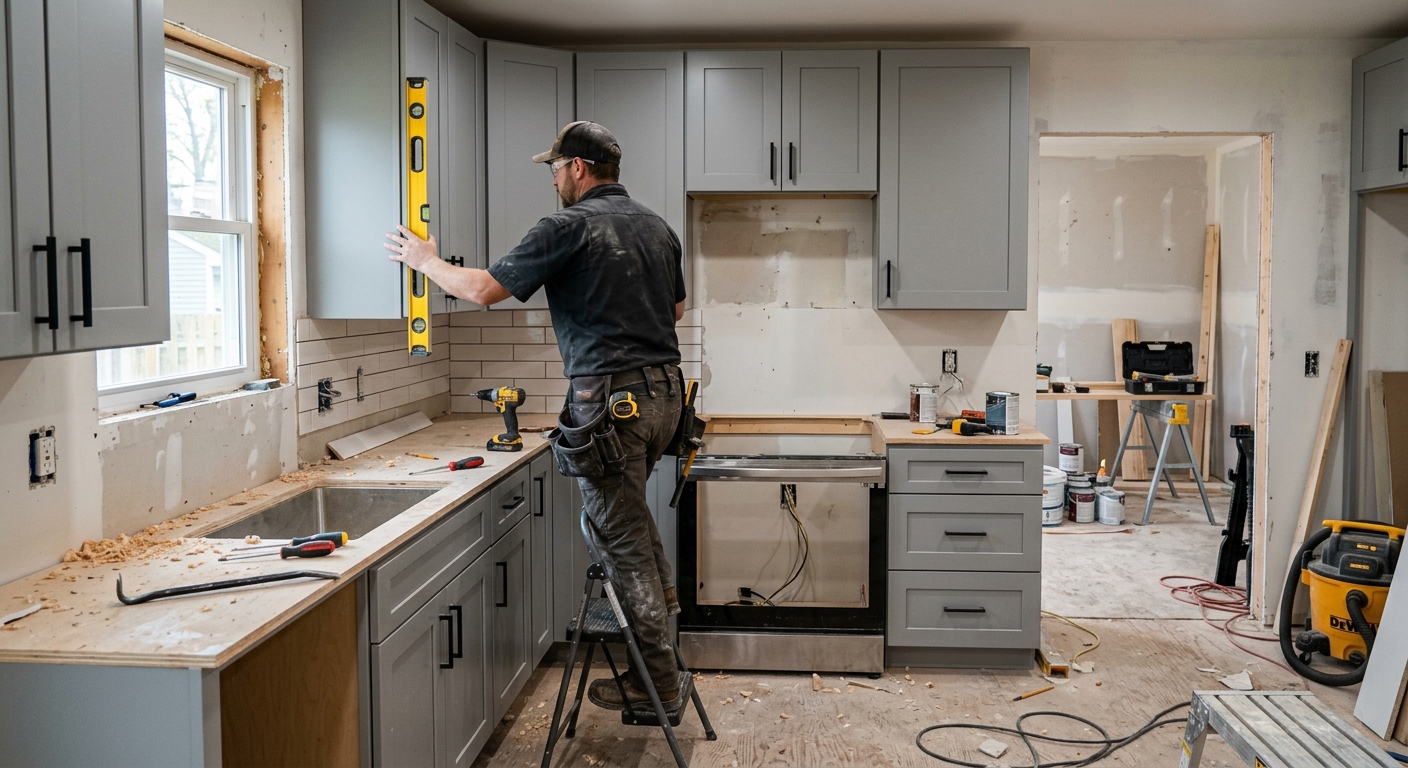
Countertop installation in Philadelphia PA
PA
Free Estimates · Licensed Contractors

Kitchen Remodeling Contractor

Philadelphia

Pennsylvania

Outdated kitchen in Philadelphia, PA? Our licensed remodeling pros transform kitchens with free design consultations. Renovations from $35772 — contemporary, traditional and transitional designs.

1–4 hr response Licensed & Certified Free Assessment
(888) 217-2249

Several kitchen remodel estimates requested this week in Philadelphia

Contractors Available
PA · Free

Remodel your kitchen in

Philadelphia, PA?

(888) 217-2249

Free assessment  ·  No obligation  ·  Tap to call

4.9  ·  200+ reviews

Same-day callback

Philadelphia area

IICRC

Certified

Insurance

Accepted

Free

Assessment

Philadelphia Housing Data — ACS 2024

Why Philadelphia homeowners need kitchen remodeling contractor

Older housing stock

85%

of homes pre-1980

Homeowners

344,149

owner-occupied units

Ownership rate

52%

of households own their home

Single-family homes

8%

of housing units

Median household income

$57,537

annual (ACS estimate)

With 85% of Philadelphia's housing stock built before 1980, aging infrastructure is one of the leading drivers of kitchen remodeling contractor calls in Philadelphia. Older systems deteriorate faster, increasing risk and repair costs for homeowners.

COST RANGE

Kitchen Remodel Costs in Philadelphia, PA — 2026 Estimates

Estimates based on kitchen size, material selections, scope of work and structural changes

MOST COMMON
$35772

to $91985

Full Kitchen Remodel

Cabinets · Countertops · Flooring · Backsplash · Appliances · Labor

SERVICE 2
$8176

to $25551

Cabinet Replacement

New semi-custom or stock cabinets · Installation · Hardware

SERVICE 3
$3577

to $12264

Countertop Installation

Granite · Quartz · Marble · Laminate · Fabrication & install

Insurance tip: Most homeowner policies cover sudden damage. Ask your contractor about documentation to maximize your claim.

🎨 Cabinet refacing / painting

$8176–$25551

🪵 Kitchen flooring installation

$5110–$20441

🔲 Backsplash tile installation

$3577–$12264

🍳 Kitchen island addition

$5110–$20441

* Estimates for Philadelphia, Pennsylvania. Final pricing after on-site assessment.

PROVEN

Why Philadelphia Homeowners Choose KitchenQuoteUSA

24/7
Emergency Response
1–4h
Avg. Arrival Time
4.9
Average Rating
$0
Assessment Cost

Licensed & Insured Contractors

Every kitchen contractor in our network holds Pennsylvania Home Improvement Contractor registration and carries full liability + workers' comp insurance. Your project is protected.

Free No-Obligation Estimates

Get a detailed estimate from a licensed Philadelphia kitchen contractor at no cost. No pressure, no commitment — just a clear quote and design consultation for your project.

Proven Local Contractors

Our Philadelphia kitchen contractor network includes only established remodelers with verified local references, completed project photos, and demonstrated experience with Pennsylvania building codes.

Quality Brands & Workmanship Warranty

Our contractors work with top cabinet lines — KraftMaid, Merillat, Waypoint, Medallion — and top countertop brands. All work backed by a written workmanship warranty.

SVC INDEX

Kitchen Remodeling Services in Philadelphia

01

Backsplash Installation

Ceramic, porcelain, subway tile, mosaic and natural stone backsplash installation by licensed Philadelphia kitchen contractors. Precise cuts around outlets, windows and under-cabinet lighting. Grout and caulk work guaranteed.

02

Countertop Installation

Granite, quartz, marble, quartzite and laminate countertop fabrication and installation by certified Philadelphia contractors. Templating, edge profiles, undermount sink cutouts and backsplash connections all included.

03

Kitchen Island Addition

Custom kitchen island design and installation for Philadelphia homes. Our contractors handle structural considerations, electrical for outlets and pendant lights, seating overhangs, and storage configuration. Permits included where required.

04

Appliance Installation

Dishwasher, range, refrigerator, microwave and hood vent installation by licensed Philadelphia contractors. Proper electrical connections, gas line hookup (where applicable), and water line for ice makers and refrigerators.

05

Kitchen Flooring

Hardwood, luxury vinyl plank, tile and laminate flooring installation by licensed Philadelphia kitchen contractors. Proper subfloor prep, transitions and threshold work included. Heated floor systems available.

06

Full Kitchen Remodel

Complete gut-to-finish kitchen renovation for Philadelphia homes. Our licensed contractors handle demolition, structural changes, new cabinets, countertops, flooring, backsplash, appliance installation and all trades (plumbing, electrical, drywall). Most mid-size kitchens completed in 4-8 weeks.

07

Cabinet Refacing

Cabinet door and drawer replacement with new veneered boxes by licensed Philadelphia contractors. A cost-effective alternative to full cabinet replacement at 50-60% of the cost — great results when cabinet boxes are structurally sound.

08

Cabinet Installation

Stock, semi-custom and custom cabinet installation by licensed Philadelphia kitchen contractors. We carry and install top brands — KraftMaid, Merillat, Waypoint and more. Proper leveling, shimming, crown molding and hardware included.

NOW

Ready to Remodel Your Kitchen in Philadelphia?

Get a free estimate from a licensed PA kitchen contractor today.

Philadelphia, PA  ·  LICENSED & INSURED

(888) 217-2249

FREE ASSESSMENT · NO OBLIGATION · 24/7/365

Philadelphia kitchen renovation prices by scope — 2026

Philadelphia kitchen remodel pricing runs a wide spectrum because most homes here aren’t new suburban builds—they’re older rowhouses with hidden issues and unusual layouts. With a median household income of $57,537 and a homeownership rate just over 52.2% (U.S. Census Bureau, ACS 2024), Philadelphia families must set priorities carefully. Most owners here are not planning open-concept islands spanning a 300-square-foot footprint; a majority are working with century-old spaces originally built for simple appliances, with walls, utilities, and floors that predate modern code. The era of your home determines your true scope more than its square footage. In Philadelphia County’s massive pre-1940 rowhouse stock, it is common for a kitchen renovation to grow from a “replace cabinets” plan to a structural and layout reconfiguration once the walls come down and conditions are revealed.

The main reason kitchen budgets explode here is scoping. Most blown budgets start with a homeowner pricing finishes and then learning—after demolition—that utility upgrades and wall moves are necessary. Be realistic about the tier of work you’re actually buying, and make sure the quotes you compare are for the same level of intervention. Below are the typical durations and price bands for kitchen renovations in Philadelphia, using current local market rates:

Scope What's included Duration Price range
Full gut remodel, same layout cabinets, counters, appliances, flooring, lighting, fixtures 6–10 weeks $27,500–$110,500
Gut plus layout change all of the above plus moved plumbing, electrical, walls 10–16 weeks $60,000–$110,500
Cabinet replacement (stock to semi-custom) remove and install cabinets, hardware, patching 1–3 weeks $6,400–$27,500
Cabinet refacing new doors and drawer fronts, veneer, hardware 3–6 days $6,400–$18,500
Countertop replacement only template, fabricate, install, reconnect sink 1–3 weeks $3,700–$14,500
Kitchen flooring only remove existing, install new flooring 3–6 days $4,600–$18,500

Estimates for a typical Philadelphia kitchen. Cabinet grade and whether the layout changes move these figures more than square footage.

Three ways to organise the project

How you structure your Philadelphia kitchen remodel is as important as what you pick for tile or appliances. There are three practical models: design-build firm, general contractor, or owner-managed.

A design-build kitchen firm signs a single contract with you, handles the layout and finishes, and runs its own installation crew. This is usually the highest cost but the least homeowner effort. You get a one-stop solution, warranty protection, and clear accountability when, not if, something unexpected pops up. If you want a hands-off experience and are willing to pay for speed and predictability, this route fits.

If you contract a general contractor, you’re hiring someone to coordinate all the sub-trades—plumber, electrician, cabinet installer—while you or a designer pick finishes and layout. This can cost less than design-build, particularly in Philadelphia where there is plenty of experienced finish-trade labor. In this county, you’ll have your pick of kitchen renovation firms, and a qualified GC can handle the stack of inspections and city process.

Owner-managed means you become the general contractor—hiring each trade and orchestrating their schedules yourself. It is the lowest cost, but it places the entire burden and timeline risk on you. Unless you have construction management experience and a very flexible schedule, this is not viable for a permit-triggering job in Philadelphia. Inspectors do not extend sympathy if rough plumbing or electrical isn’t ready—someone with a day job will find this model overwhelming.

Why the electrical line grew

If you are renovating a kitchen in Philadelphia—especially in one of the city’s many pre-1940 rowhouses—you should know that electrical surprises are the most common reason for budgets to jump mid-project. The current code expects multiple dedicated circuits: two or more just for small appliances; separate, GFCI-protected outlets at every stretch of counter; dedicated circuits for dishwasher, garbage disposal, microwave, and (if electric) a 240-volt line for the range. Spacing rules require outlets every four feet, and everything must be grounded.

In practice, 85.1% of Philadelphia homes were built before 1980 (U.S. Census Bureau, ACS 2024), and most old kitchens have a single shared circuit, ungrounded wires, and sometimes outdated fuse panels. Many times there’s no spare capacity to add circuits, aluminum branch wiring from the 1960s–1970s, or patchwork additions layered over the decades. Once you open up the walls—especially if the scope involves moving or adding outlets—the city expects everything accessible to be brought up to today’s code. This is not optional, and it cannot be grandfathered if you expose the wiring.

Bringing a Philadelphia kitchen up to current code for electrical—including new circuits, grounding, and possibly an upgraded panel—adds $5,000–$22,000 to the job, depending mostly on how deeply the house is updated and whether the main electrical service needs replacement. Most projects in 80 year-old houses will land on the higher end, especially when appliance loads and layout changes are involved.

What a kitchen quote should specify

The single biggest obstacle to comparing kitchen bids in Philadelphia is the “allowance.” An allowance is just a placeholder dollar amount for something you haven’t picked yet—tile, lighting, appliances, even countertops. The trick is that two quotes can have the same bottom line, but wildly different allowance figures buried inside; one builder may allocate $400 for backsplash tile (barely covers basic subway) and another $1,500 for something truly representative. Always compare the allowance lines before looking at the total.

Beyond allowances, every serious kitchen quote should specify: cabinet brand, line and construction, actual countertop material and thickness, how the contract handles conditions you discover in an old Philly house (bad wiring, lead, rotten subfloor), the process for change orders—written approval is protection for both sides—and a payment schedule linked to completed milestones, not calendar dates. Professional crews provide lien waivers from all subcontractors; this paperwork shields you from mechanic’s liens down the road.

Under Pennsylvania’s Home Improvement Consumer Protection Act, any contract above $500 must be written, and you always have a three business-day right of cancellation. Avoid anyone who wants to do business without a written contract.

Line item What to look for Red flag if…
Allowances realistic amounts, itemised round numbers with no basis
Cabinetry brand, line, box construction 'quality cabinets'
Countertops material, thickness, edge, seams material name only
Electrical circuits to be added, GFCI scope 'as needed'
Unforeseen conditions how they are priced and approved not addressed
Change orders written approval before work verbal
Payment milestone-based, modest deposit front-loaded
Lien waivers from subs at each payment not offered

Permits and inspections for a Philadelphia kitchen

In Philadelphia, the line between “no permit needed” and “permit required” is sharper than in some suburbs. If your project is cabinet-for-cabinet replacement without moving any utilities, most contractors will proceed without a permit. The minute you add or move electrical circuits, modify plumbing, or alter kitchen walls, a permit is triggered and must be pulled before work begins. Cosmetic changes alone—painting, refacing, swapping hardware or countertops without disturbing anything else—don’t generally require a city permit.

Philadelphia’s Department of Licenses and Inspections issues and reviews these permits. For most standard kitchen alterations, you’ll be applying for an F-EZ permit—this involves review of your documents but not a full stamped plan review. All rough-in work and finished kitchen electrical get inspected by the city, often via third-party certified agencies working under L&I’s oversight, so expect inspectors you don’t recognize on site.

Every contractor performing more than $500 of work must be registered as a Home Improvement Contractor with the Pennsylvania Office of Attorney General. You can verify their registration at hic.attorneygeneral.gov. Workers’ compensation is mandatory, and coverage can be confirmed through WCAIS (wcais.pa.gov).

Unpermitted work is a time bomb for resale in Philadelphia—a failed or absent permit can block a sale, delay settlement, or trigger expensive retroactive corrections. Don’t gamble here; it’s not worth it.

Surprises in an older Philadelphia home

If your Philadelphia home was built before 1980 — as 85.1% have been (U.S. Census Bureau, ACS 2024) — expect demolition to reveal surprises. The most common are out-of-plumb brick walls and floors that slope or sag, meaning cabinetry and counters must be custom-shimmed and scribed, not just “installed.” This can add days to installation labor or force switch to custom fit panels. You may discover old two-wire or cloth-insulated wiring, undersized or ungrounded electrical, and outdated fuse boxes, all of which must be addressed at costs ranging from $5,000–$22,000 if rewiring is needed.

Plumbing surprises include galvanized supply lines, which clog with age, and cast iron drains that can be brittle or leaking. Replacing these can run from $2,500–$8,000 depending on access. On exterior walls, houses from this era may also lack insulation altogether—a discovery that, if not corrected, will make you regret your renovation every winter.

Older kitchens in Philadelphia frequently reveal lead paint or, under layers of linoleum, asbestos-containing vinyl tile; pre-1978 homes fall under the federal EPA Lead Renovation, Repair and Painting Rule, which requires certified handling and safe work practices—never skip the testing step.

Previous unpermitted renovations will almost always need to be corrected to pass present-day inspection, whether it’s sketchy patchwork wiring, oddly rerouted drains, or hidden structural modifications. Always budget a contingency for discovery.

Eight weeks without a kitchen

No matter how well planned, a Philadelphia kitchen gut means living without a kitchen for six to ten weeks. To make it work, most homeowners set up a temporary kitchen in a dining room, den, or even an upstairs hallway. Keep your refrigerator plugged in nearby, put a microwave and a kettle on a folding table, store essentials in plastic bins, and resign yourself to paper plates and an honest increase in your food budget. If you have laundry or slop sink access, use it; if not, your bathroom sink does extra duty.

Dust is a bigger hassle than demo noise—brick, plaster, and old flooring in Philadelphia rowhouses create persistent fine dust that migrates everywhere unless you use well-taped plastic sheeting and zip wall enclosures. Expect the crew to need clear space for their dumpster or trailer, plus a dry area for incoming cabinets (usually your living room).

With doors open and new faces in the house, pets need a plan—many homeowners board cats or set up dogs with relatives during demo week. If you can move out, it’s worth considering for the three or four noisiest, dirtiest days—but most stick it out.

The real “hidden” project cost is food: eating out for eight weeks can cost more than new kitchen flooring, so budget with the same realism as you would for materials.

Frequently asked questions — kitchen renovation in Philadelphia

Are Philadelphia kitchens typically small galley layouts?

Yes—especially in Philadelphia’s older rowhouse neighborhoods, galley and narrow layouts are the rule. A vast portion of the local housing stock, built before 1940, has kitchens designed for a single cook and basic appliances. Even when homeowners choose a full gut remodel (which can run $27,500–$110,500), they’re often correcting awkward, dated layouts with structural or wall changes. While some late-20th-century homes offer a more open footprint, do not expect a suburban chef’s kitchen unless you budget for wall moves and utility reconfiguration.

How do I set up a temporary kitchen?

In Philadelphia, where kitchens are often compact and under renovation for several weeks, most homeowners repurpose a nearby dining room or living space for a temporary kitchen. Plug in your existing fridge, buy or borrow a sturdy folding table, and place a microwave, coffee maker or kettle there. Use a laundry sink if you have one; otherwise, a bathroom sink has to suffice for dishwashing. Stock up on disposable plates and utensils to minimize cleanup. Factor in increased costs from eating out—eight weeks of takeout can rival the price of new flooring ($4,600–$18,500). Make sure you protect other areas with plastic sheeting to keep construction dust from spreading. If you have pets or small children, create barriers—they can’t mix safely with workers and tool cords.

What does a full gut kitchen remodel cost in Philadelphia?

A full gut kitchen remodel in Philadelphia typically costs $27,500–$110,500, with most projects for owner-occupied rowhouses landing near the middle of that range. Prices skew higher here because the city’s large stock of pre-1940 homes often requires major electrical and structural upgrades, especially when moving walls or adding outlets to meet current code. Material choices, appliance tiers, and layout changes all affect cost, but the biggest driver is what’s hiding behind the walls—critical in such an old housing market. Always account for a 10–20% contingency in your budget, since discoveries once demolition starts are the norm here, not the exception.

Should I order cabinets before demolition?

In Philadelphia, you should not order cabinets before demolition and field measurement, especially in pre-1980 homes. Walls are rarely plumb and floors rarely level in rowhouses; even a 1" difference means your new cabinets won’t fit. The best approach is to demo, address rough carpentry and leveling, and then take final cabinet dimensions. Lead times for cabinets—stock or semi-custom—can be three to eight weeks, so your contractor should have a short down period after demo. Rushing this step to “save time” risks costly returns and delays. If you’re replacing cabinets only ($6,400–$27,500), timing and fit are still critical, but you may be able to overlap some prep if you trust your installer’s measurements.

Should I renovate before selling or let the buyer do it?

This is a common dilemma in Philadelphia, especially with so many old kitchens still functional but dated. Unless the kitchen is stopping buyers cold—severe disrepair, mold, or obvious hazards—fully gutting before listing does not guarantee you’ll recoup the investment. A typical full gut costs $27,500–$110,500. If your kitchen is usable, most buyers prefer to choose their own finishes and layout. Light cosmetic improvements—paint, new hardware, a clean coat of trim—usually make more financial sense. Don’t pour money in unless you’re targeting top-dollar buyers or have structural or code compliance issues.

Should I reface or replace my kitchen cabinets?

Cabinet refacing in Philadelphia makes sense if your cabinet boxes are solid and your layout works for your needs. Refacing costs less—typically $6,400–$18,500—than full replacement, and takes a few days instead of weeks. But refacing won’t fix box damage, water rot, or awkward layouts. In the many local homes built before 1980, boxes are often no longer square or structurally solid, making replacement smarter in the long run. If you plan to move outlets, walls or change your appliance configuration, full cabinet replacement is the correct call. For minor updates and cosmetic refresh, refacing is a solid option.

Is laminate countertop a bad choice?

Laminate counters used to be the Philadelphia norm and remain a solid budget-friendly upgrade, especially in rowhouses where space and resale pressures differ from the suburbs. Modern laminates are more durable and attractive than their 1980s versions, but they can burn and scratch, and seams are visible. A professionally installed laminate countertop runs $3,700–$14,500—far cheaper than stone or quartz. If you are renovating for rental or starter home resale, or you simply don’t cook much, laminate is not a “bad” choice. Just be honest about your use and future plans so you don’t over-invest where buyers won’t pay more.

Why are kitchen quotes in Philadelphia so far apart?

The wide spread in Philadelphia kitchen quotes comes from many factors: century-old housing stock with hidden issues, varying scopes (cosmetic vs. layout change), and, most of all, differences in “allowances” for materials and fixtures. Two bids can differ by $10,000–$30,000 or more just because of the fixtures included (or not) in their totals. Local contractors also compete in a dense metro market, meaning some low bids are “foot-in-the-door” offers with unrealistic numbers that balloon on change orders. Always drill into the details, compare every allowance, and ask direct questions about what happens when the electrician opens those 1920s walls.

Does replacing cabinets require a permit?

In Philadelphia, you generally do not need a permit to replace cabinets as long as you are not moving plumbing or electrical lines. This is common practice in the city, particularly for rowhouses where the layout stays the same. If you’re installing new lighting, moving appliances, or changing the kitchen configuration, then a permit is triggered. For most straightforward cabinet swaps ($6,400–$27,500), reputable contractors proceed without city inspection. Always confirm scope up front—unpermitted work can become a resale headache if a future buyer or inspector spots changes that should have been reviewed. When in doubt, consult the Department of Licenses and Inspections before starting.

En savoir plus sur Philadelphia

CALL NOW — (888) 217-2249