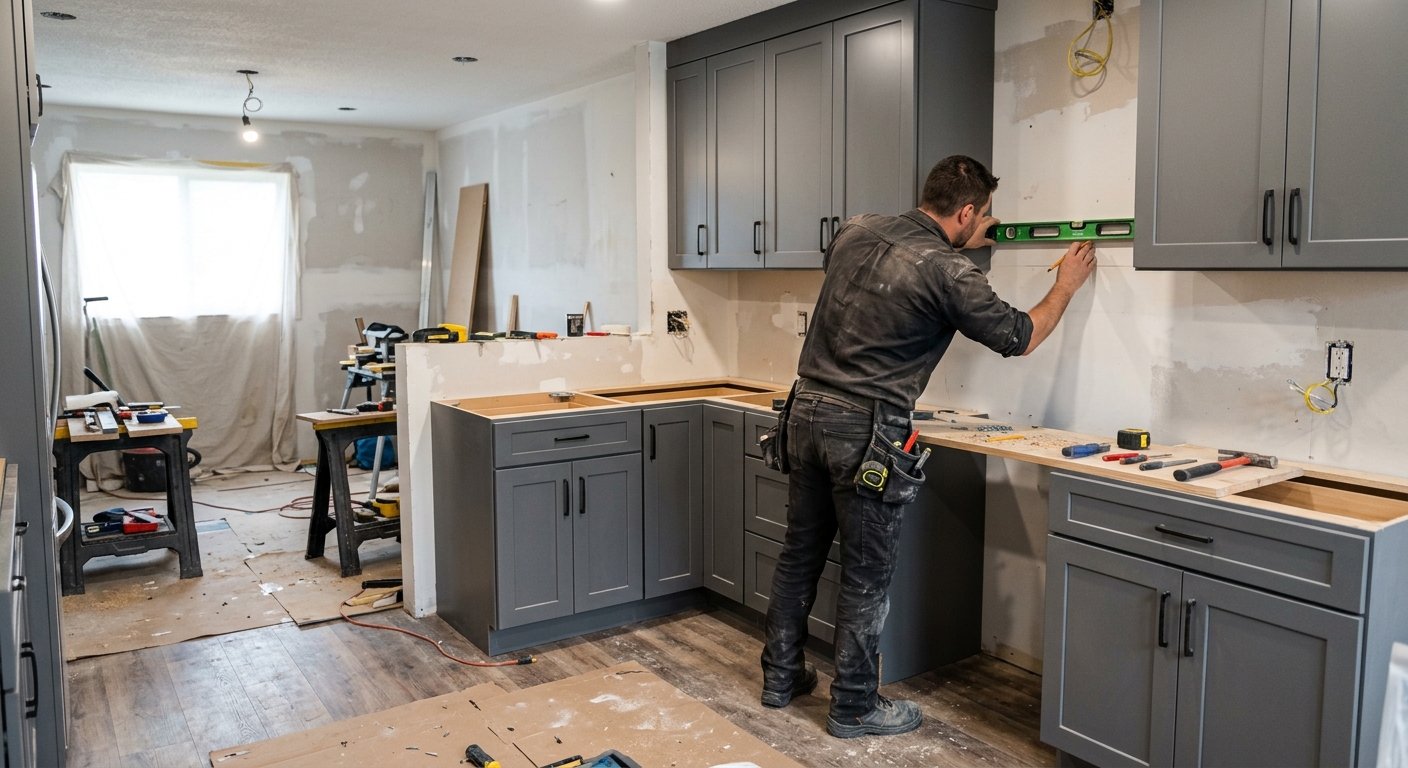
Kitchen renovation costs in Richland — 2026
In Richland, most homeowners approaching a kitchen renovation want a clear sense of cost before getting in too deep. With a homeownership rate of 86.8% and a median household income of $91,764 (U.S. Census Bureau, ACS 2024), people here tend to plan for projects that add value and improve daily living, not just freshen things up for resale. The kitchens you find in post‑1960s suburban tracts across Lower Bucks County tend to fall into two camps: the cramped original galley kitchens, which are usually overdue for a full gut or reconfiguration, and the larger 1990s layouts, which often just need cabinets and surfaces upgraded.
Where most budgets go off the rails in Richland is when someone prices out a "pull-and-replace" (just new cabinets and counters), then mid-project decides they want the wall removed or the sink moved. That single design change can double what you spend, since it jumps your project into a much more expensive scope class. Here’s what’s standard in Richland, with the price bands you can realistically expect:
| Scope |
What's included |
Duration |
Price range |
| Full gut remodel, same layout |
cabinets, counters, appliances, flooring, lighting, fixtures |
6–10 weeks |
$32,500–$129,500 |
| Gut plus layout change |
all of the above plus moved plumbing, electrical, walls |
10–16 weeks |
$70,000–$129,500 |
| Cabinet replacement (stock to semi-custom) |
remove and install cabinets, hardware, patching |
1–3 weeks |
$7,600–$32,500 |
| Cabinet refacing |
new doors and drawer fronts, veneer, hardware |
3–6 days |
$7,600–$21,500 |
| Countertop replacement only |
template, fabricate, install, reconnect sink |
1–3 weeks |
$4,300–$17,500 |
| Kitchen flooring only |
remove existing, install new flooring |
3–6 days |
$5,400–$21,500 |
Estimates for a typical Richland kitchen. Cabinet grade and whether the layout changes move these figures more than square footage.
Layout changes and the cost cliff
The steepest price jump in a Richland kitchen renovation hits when you decide to change the layout. As long as you keep plumbing, wiring, and appliances in their current spots, you’re in one scope class. The moment you want the sink under a new window, move the range to another wall, or add outlets, your project leaps into a dramatically higher bracket—with cost and permitting consequences that surprise many homeowners.
Relocating drain lines is not as simple as shifting a pipe—the slope must be maintained, which in homes on a slab or above a finished basement ceiling can require major demolition, reframing, or even moving joists. If you need new electrical circuits, you’re not just running wires: you may find that your panel has no capacity, adding an expensive upgrade. Pulling down a wall usually means determining if it’s load-bearing, which triggers hiring an engineer and a permitting process. And if you want to shift the range and vent it outside, you’re punching a new hole through brick, siding, or stucco. None of these costs are proportional to the distance moved; moving a sink four feet can cost as much as moving it across the room.
In many Bucks County municipalities, including Bensalem Township, a permit is required as soon as you move a wall or add a new electrical circuit. Plan review often becomes mandatory if you touch structure or plumbing locations. Jumping from a "full gut, same layout" budget of $32,500–$129,500 to a "gut plus layout change" instantly raises your starting number to $70,000 and up. Before you lock in any plan, decide if your kitchen’s existing footprint is unworkable, or if you’re just tired of how it looks. The most expensive feature is almost always moving what you already have.
Cosmetic, replacement, gut, or layout change?
When someone in Richland says they want a “kitchen remodel,” it could mean anything from new paint to a total reconfiguration. Sorting the scope before you talk to contractors is the most important step, since these words cover a fivefold price range in Bucks County.
- Cosmetic refresh: You’re changing paint, hardware, light fixtures, or backsplash but leaving everything else in place. No cabinets or services move. This is by far the cheapest path—good for selling or sprucing up.
- Pull and replace: Think new cabinets, countertops, potentially appliances, but everything stays in the current layout. Plumbing and electrical remain untouched, minimizing both cost and disruption.
- Gut, same layout: Down to the studs—old cabinets, soffits, floors, and sometimes drywall come out. New services are run to the same spots, so nothing moves, but you often get new electrical or plumbing within the original footprint.
- Layout change: Walls come out or move, plumbing gets relocated, appliances shift—often requiring new circuits, rerouted drain lines, and professional design input. This changes every aspect of the job, including price, planning, and permits.
The cost cliff comes between the “gut, same layout” and “layout change” tiers. As soon as you move services, you’re in a new class of job, both in what’s required and what you’ll spend. For most homeowners, you want to choose your tier before any contractor visits, since nobody can give you a useful number until you specify it. In Bucks County, a clear plan will save you many headaches, wasted appointments, and expensive “might as well” changes down the road.
Why the contingency exists
About 30% of homes in Richland were built before 1980, so “surprises” uncovered during demo are a regular part of kitchen renovations here (U.S. Census Bureau, ACS 2024). In older homes, you might find out-of-plumb walls or sloped floors—installing new cabinets over these can turn into a costly shimming and leveling process. Undersized or ungrounded wiring often turns up, necessitating a partial or full circuit replacement before you can safely install new appliances. You may also run into galvanized supply lines or cast iron drains, both of which are long past their lifespan; swapping these can quickly add a few thousand dollars.
No insulation on exterior kitchen walls is also common in mid-century tracts. If demolition uncovers this, it's wise to insulate before closing up—energy bills in Bucks County winters justify the small extra investment. Previous unpermitted work (DIY plumbing traps, spliced wiring, etc.) often needs correcting to meet today’s Code.
For homes built before 1978, you can’t disturb painted surfaces until tested for lead; federal EPA Lead RRP Rule applies, and the process requires certified professionals. Asbestos in old flooring adhesives or vinyl is possible. Never sand or demo before confirming what’s there, as remediation is specialized work.
If you’re in one of the newer suburban neighborhoods, you’re more likely to face builder-grade cabinetry that’s disintegrating, minimal circuit counts (one or two kitchen outlets for the whole room), and laminates reaching the end of their life at the same time. These can hit your wallet all at once, but surprises in wiring and structure are less likely than with older stock.
Practical survival during the work
Living through a kitchen renovation in Richland means having a backup plan for cooking, eating, and cleaning—sometimes for up to two months. Make room in a nearby hallway, living room, or garage for a folding table that holds a microwave, coffee maker, and maybe a toaster oven. Move your fridge somewhere accessible, and rely on a laundry or bathroom sink for basic dishwashing. Most families switch to paper plates and increase takeout—be ready for your grocery and restaurant bill to rise significantly, often by more than you’ll spend to replace the flooring ($5,400–$21,500).
Dust control matters more than people expect: even with doors closed, fine dust escapes demolition and installation. Insist on plastic sheeting with zipper doors between the work zone and the rest of your home, and keep interior doors shut as much as possible. Figure out where the crew’s dumpster will go—driveway or curb—and where materials will be staged. Some disruption is unavoidable, and pets can be a real challenge with doors propped open for days at a time.
Ask yourself whether to stay during demolition. If you’re working from home, demolition week is the hardest. Some leave for that stretch, especially if kids or sensitivities to dust are involved.
Planning for the real impact on your routines—as much as the finish choices—will make this process much less stressful.
Code requirements for Richland kitchens
In Richland, kitchen renovations are governed by the Pennsylvania Uniform Construction Code (UCC), which is enforced by individual municipalities or by the state Department of Labor & Industry in municipalities that have opted out. For most kitchen work—painting, swapping hardware, refacing, and even replacing countertops—permits aren’t needed. But you absolutely need a permit if your project adds or moves an electrical circuit, reroutes plumbing, or touches structural elements like removing or relocating walls. In places like Bensalem Township, moving walls or running new wiring for outlets or lighting triggers not only a permit but often plan review, especially if you’re shifting plumbing fixtures.
Electrical inspections in some Bucks County municipalities, including Bensalem Township, are handled by third-party agencies such as Tri-County Inspection Company, which surprises many. This means the municipality doesn’t send their own inspector for wiring; an outside agency performs the work. If your project doesn’t require a permit, municipal inspectors don’t get involved, but for layout changes, you’ll see both town officials and possibly outside electrical inspectors on the job.
Pennsylvania requires Home Improvement Contractor (HIC) registration for any contracts over $500—you can verify this at hic.attorneygeneral.gov. If your contractor has employees, they’re required to have workers’ compensation coverage through the private or self-insured market; proof is available via the WCAIS system. The Home Improvement Consumer Protection Act (HICPA) also guarantees the right to cancel within three business days and mandates a written contract. Cutting corners on permits or required licensing might save money upfront, but creates real trouble at resale, sometimes requiring you to undo and redo finished work before closing.
Who should run your Richland renovation
How you structure your project in Richland matters as much as what materials you pick. You have three basic choices: a design-build kitchen firm, a general contractor, or managing each trade yourself.
Design-build firms cover every detail from planning and cabinetry to electrical and finish—this is the least hassle for you, but commands the highest price. You work with one entity from design to punchlist. This is best for homeowners who want a luxury job or have no time to oversee parts of the work themselves.
General contractors (GCs) coordinate the carpenter, electrician, plumber, tile setter and others, and you or a kitchen designer pick the finishes and layout. This is usually the most balanced path—mid-range cost and time commitment—but you’ll still be making lots of decisions and may need to order appliances yourself.
If you act as your own GC (owner-managed), you’ll source and schedule every trade. This saves general contractor markup, but it’s a hard route in Bucks County. The market is crowded, and finish-trade labor is tighter here than in central Philadelphia, so the best crews can be booked out for months, making sequencing challenging. Unless you’re retired, home during the day, or have trade experience, owner-managing a permit-requiring kitchen is rarely worth the stress. Permitting, inspections, and sub scheduling eat up hours, and errors are solely your responsibility.
Most Richland homeowners do best bringing in professionals, at least for planning and critical trades. You can optimize for cost or for convenience—but rarely both.
Frequently asked questions — kitchen renovation in Richland
Is lead paint a concern in Richland kitchen renovations?
Lead paint can be a real concern in Richland, particularly if your home was built before 1978. Under the federal EPA Lead Renovation, Repair and Painting (RRP) Rule, any renovation that disturbs painted surfaces in eligible homes must be tested and, if lead is present, handled by certified professionals. This can affect both your project timeline and cost, especially if you’re doing a full gut remodel ($32,500–$129,500) or refacing work. It’s not just about compliance—lead dust from demolition is dangerous, especially for children and pets. Always ask your contractor if they are EPA certified, and do not let anyone start scraping or sanding until testing has been performed. This is required by law in Pennsylvania and cannot be waived, even if prior renovations were completed without it.
How long does a kitchen renovation take in Richland?
The timeline for a kitchen renovation in Richland depends mostly on how much you’re changing: a countertop replacement ($4,300–$17,500) might only take one to three weeks, while a full gut with a new layout can stretch from 10 to 16 weeks. Delays aren’t rare—lead time on semi-custom cabinetry is commonly weeks longer in Bucks County than in central Philadelphia because of competition for skilled finish labor. Don’t forget permitting and inspections can also add time, especially if plan review is triggered by structural or plumbing changes. If you’re living in the house during construction, expect more inconvenience during the first few weeks for demolition and rough-in, followed by a rush of activity once finishes start going in. Build extra time into your plan if you’re coordinating trades yourself or aiming for high-end details.
Do I need a permit for a kitchen renovation in Richland?
Whether or not you need a permit for your Richland kitchen renovation depends on the scope. Cosmetic updates—paint, replacing cabinet doors, or a new countertop—usually do not need a permit. But as soon as you’re adding or moving electrical circuits, altering plumbing, or removing a wall, Bucks County towns like Bensalem Township require you to pull a permit. You may also need plan review if you’re changing any structure or moving plumbing fixtures. It’s important, because unpermitted work complicates resale and can result in red tags requiring expensive rework down the line. For a mid-range cabinet replacement ($7,600–$32,500), you’re typically fine without a permit if layout and utilities aren't changing. Always check with the local office before starting, since enforcement can differ block by block.
Is laminate countertop a bad choice?
Laminate countertops are not a bad choice in many Richland kitchens, especially for lower-budget projects or rentals. They have a much lower upfront cost compared to quartz or granite, and are included in the lower end of countertop replacement bands ($4,300–$17,500). Modern laminates come in a wide range of patterns and finishes—some convincingly mimic stone or wood. What you give up is heat resistance, longevity, and repairability. In homes where durability is critical or where the goal is maximizing resale, solid surface or stone is often worth the upgrade. But for many owner-occupiers, new laminate is a functional, affordable update. It doesn’t make sense to overspend on stone if the rest of the kitchen is builder-grade or you don’t plan to stay long-term.
Can I renovate a kitchen in stages?
Yes, in Richland it’s perfectly reasonable to renovate a kitchen in stages, especially if budget or time is tight. Many homeowners start with cabinet refacing ($7,600–$21,500) or countertop replacement, then tackle flooring or appliances later. The drawback is living through disruption more than once—each phase creates dust, noise, and the need to move items multiple times. Certain stages make more sense than others: it’s easier to upgrade cabinets and then counters, not the reverse. Avoid starting any demolition if you might need structural or layout changes in the next phase; these require permits and sometimes undoing finished work. If your ultimate plan involves layout changes, it’s usually cheaper and less stressful to execute all changes in a single project, but the option to stage is always there.
What is an allowance in a renovation quote?
An “allowance” in a Richland renovation quote is a set budget placeholder for materials or fixtures you haven’t picked yet—like countertops, lighting, or backsplash. Your contractor builds a price range into the contract (for example, $4,300–$17,500 for countertops), assuming a mid-market selection. If you pick something more expensive or less expensive, you’ll pay or get credited the difference. Allowances are practical when exact selections aren’t locked in at contract signing, but beware: if you go wild with upgrades, your total price can climb fast. Always ask which items are allowances versus fixed-price. This lets you see which decisions will impact your final bill, and where you have room to save or splurge. In Pennsylvania, this must be clear in the written contract for jobs over $500.
How much do new kitchen cabinets cost in Richland?
For a typical Richland kitchen, new cabinets—stock to semi-custom—run from $7,600–$32,500, with most projects landing near $21,500. This includes removal of the old cabinetry, installation, hardware, and patching walls as needed, but does not include appliances, counters, or layout changes. The lower end is usually laminate-front, stock cabinets; the upper end covers semi-custom lines with upgraded finishes and features. Local labor rates in Bucks County are on the high side due to demand, which drives installation costs up a bit compared to more rural parts of Pennsylvania. If you want solid wood or custom work, expect to pay at the upper end or higher. Always clarify what cabinet line, hardware, and delivery are included in your quote.
Should I renovate before selling or let the buyer do it?
This depends on your timeline and your house’s competition in the local Richland market. If your kitchen is dated but functional, a cosmetic refresh—paint, new hardware, possibly a new countertop ($4,300–$17,500)—may provide the best return. Full gut remodels cost much more ($32,500–$129,500) and rarely return dollar-for-dollar unless your property is at the higher end of the market or in an area where newer kitchens are expected. Many buyers in Bucks County want to put their own stamp on a home, but a filthy or neglected kitchen can turn them off entirely. Unless you have a deep renovation budget and time, focus on making the space clean, bright, and serviceable. Save gut renovations for homes you plan to keep for several years.
How much does a kitchen renovation cost in Richland?
The cost of a kitchen renovation in Richland spans a huge range. At the entry level, replacing countertops or refacing cabinets can run $4,300–$21,500. A complete pull-and-replace with basic stock cabinets, vinyl flooring, and laminate counters lands in the $7,600–$32,500 range. Full gut remodels that bring everything down to the studs but keep the layout are typically $32,500–$129,500, with the average Richland homeowner spending around $70,000. If you want to change the layout—move walls, appliances, or services—expect costs of $70,000–$129,500 and up. Which end of the range you hit will depend most on the scope and finish grade. Always clarify with your contractor what’s included, as exclusions and “allowances” can shift the price significantly.