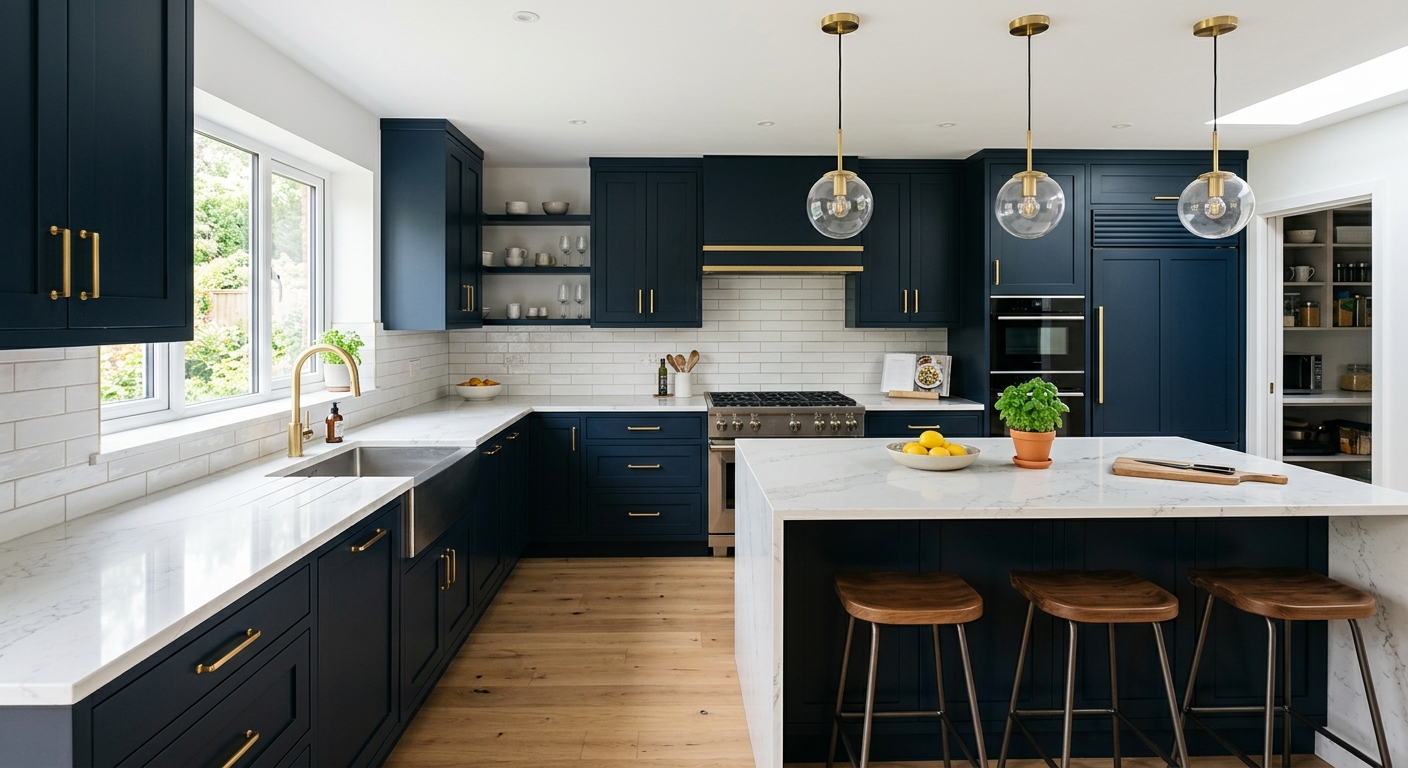
Newtown kitchen renovation prices by scope — 2026
In Newtown, the cost of a kitchen renovation swings wider than most expect, with budgets tracking closely to home values and ownership patterns. This is a high-homeownership community—84.6% of households own their homes, and the median income is solidly above the Philadelphia metro average at $141,228 (U.S. Census Bureau, ACS 2024). These numbers drive decision making: owners invest where the value stays in the house, and renovations align with resale expectations.
If your kitchen is typical for post‑1960 Lower Bucks construction, you’re likely dealing with an original galley or builder-basic kitchen. Many homes get a full gut‑and‑replace to open the space up or just bring aging fixtures out of the 1990s. Expect projects that keep the general layout intact to land at the lower end of the price band. True layout changes—moving sinks, wiring, or knocking down a wall—push you up a tier, both in price and in hassle.
The single biggest reason budgets break is mismatched expectations: pricing for cosmetic changes but then asking for layout moves, or vice versa. Know which bucket you’re in before a contractor starts, and always account for finish quality, not just size.
| Scope |
What's included |
Duration |
Price range |
| Full gut remodel, same layout |
cabinets, counters, appliances, flooring, lighting, fixtures |
6–10 weeks |
$36,000–$143,500 |
| Gut plus layout change |
all of the above plus moved plumbing, electrical, walls |
10–16 weeks |
$78,000–$143,500 |
| Cabinet replacement (stock to semi-custom) |
remove and install cabinets, hardware, patching |
1–3 weeks |
$8,400–$36,000 |
| Cabinet refacing |
new doors and drawer fronts, veneer, hardware |
3–6 days |
$8,400–$24,000 |
| Countertop replacement only |
template, fabricate, install, reconnect sink |
1–3 weeks |
$4,800–$19,000 |
| Kitchen flooring only |
remove existing, install new flooring |
3–6 days |
$6,000–$24,000 |
Estimates for a typical Newtown kitchen. Cabinet grade and whether the layout changes move these figures more than square footage.
Surprises in an older Newtown home
About 18.9% of Newtown’s homes were built before 1980 (U.S. Census Bureau, ACS 2024). In these houses, opening up the kitchen walls during a renovation nearly always brings surprises—that’s when good budgets become wishful thinking. Common hidden problems include out-of-plumb walls and slopes up to an inch, which require careful shimming and new drywall. This adds labor and might bump your install days into weeks.
Electrical wiring in these homes is often original: expect undersized circuits, fewer kitchen outlets, and sometimes ungrounded wiring. Bringing lines up to today’s standard—especially for countertop appliance loads—can add $2,000–$5,000 on top of your main project, depending on the panel and runs. Plumbing may show galvanized supply lines or cast iron drains, both at the end of their life expectancy, and swapping these for modern PEX or PVC isn’t cheap, typically adding $1,200–$3,000. On random exterior walls in a kitchen, you could still find no insulation at all. That means another $500–$1,500 for spray foam or batts if it’s open anyway.
Old homes are more likely to have unpermitted hack work behind the walls—a chase cut into a stud, for example. Pre-1978, any painted or varnished surface falls under the federal EPA Lead RRP Rule; contractors must test for lead, and specialized containment will add both time and cost if positive. Asbestos tile floors crop up occasionally and, if disturbed, must be properly handled—containment, not just demo.
If instead you have a post‑1960 Newtown home, what turns up is more likely to be builder‑grade cabinets at the end of their useful life, basic laminate countertops, and not enough dedicated circuits for today’s appliances. The fix is straightforward, but the schedule can slip if a simple swap turns into a full tear‑out upon discovery.
Permits and inspections for a Newtown kitchen
In Newtown, what triggers a permit—and what doesn’t—matters at resale. Cosmetic work like painting, swapping cabinet hardware, refacing doors, or replacing a countertop where the sink remains in the same place is typically done without permit. Once you move a wall, relocate plumbing or electrical, or upgrade mechanicals (such as a new ducted hood), you’re in permit territory. In places like Bensalem Township, a permit gets triggered by any kitchen remodel involving wall relocation or new electrical branch circuits, and if you’re touching a structural wall or relocating plumbing fixtures, expect to go through a plan review first.
Inspections can catch homeowners off guard. Electrical inspections, for instance, are performed by third‑party agencies such as Tri‑County Inspection Company rather than the township directly. This leads to extra coordination, and your project cannot close until their sign-off comes in. Plumbing and framing typically remain under municipal inspection.
Every contractor you hire for work over $500 must be registered as a Home Improvement Contractor (HIC) with the Pennsylvania Office of Attorney General — you can verify this at hic.attorneygeneral.gov. All employers, regardless of trade, must show valid workers’ compensation insurance, verifiable on the state WCAIS system.
The biggest trap for owners is skipping permits; this may seem faster now, but it will come back to bite you at resale when the buyer’s agent asks for records, or when a home inspector points to work that obviously wasn’t inspected. Always get paperwork where required—it’s protection as much as compliance.
What moving the sink really costs
For most Newtown kitchens, costs jump dramatically the moment you ask to move plumbing or electrical. Keeping everything roughly where it is—old galley or ‘90s eat‑in alike—puts you solidly in the same layout price band. The second pipes or circuits need to shift, your project climbs not just in dollar terms but in complexity and duration.
Why the jump? Relocating drain lines isn’t just moving pipe; a drain needs a continuous downward slope, and if you’re on a slab or there’s a finished ceiling below, getting that slope in can mean removing portions of the floor or opening the ceiling below—a major, messy, and costly effort. Moving the sink even four feet can add $10,000–$20,000 in labor, patching, and finish work to a standard gut remodel. Moving wiring might mean running new, larger-gauge circuits from the electrical panel. If your electrical panel is maxed out—a not-uncommon limitation in these homes—upgrades or subpanels add more cost and coordination.
Removing a wall is another cliff: before you touch it, you’ll need to know if it’s load-bearing. If it is, expect to involve an engineer and pull a permit (in Bensalem Township, plan review is required). Structural modifications drive costs up as fast as anything in kitchen work. A relocated range or hood means new venting, which requires an exterior penetration—another line item for materials, labor, and inspection.
Your money goes furthest when you work with layout, not against it. Unless the existing flow is truly unworkable, carefully weigh the benefits of a major move. It’s easy to drop $78,000–$143,500 on a full gut plus layout change in Newtown. Projects stay more predictable—and sometimes 30% cheaper—if you avoid plumbing or structural shifts unless absolutely necessary.
Where the money actually goes
Few things reorder a homeowner’s priorities like seeing the real budget breakdown for a Newtown kitchen. Cabinetry, not appliances, is where the largest chunk lives—typically absorbing 25–35% of the renovation cost and dictating your lead time. Labor, especially for skilled finish work, is the next biggest line, a reality made starker by the tighter finish-trade labor market in Bucks County compared to central Philadelphia. Countertops can make or break the middle of the budget, though material choices swing the range substantially.
Major appliances are a wild card—a Sub-Zero might cost as much as all the lighting and flooring combined, but most families spend below the top end. Lighting, electrical, and fixtures are less glamorous but crucial, especially in houses where old wiring or minimal outlets demand upgrades. Flooring has a broad range, but it’s rarely the item that impacts use or resale the way cabinetry and layout do.
Too often, homeowners skip two critical lines: contingency for hidden issues and soft costs like permits, delivery, and design. For an average Newtown gut remodel—say, $78,000—an extra thousand dollars buys noticeably better faucets, hardware, or an under-cabinet lighting system. That same money is wasted upgrading to a premium range when the cabinets are still stock; the room should balance.
| Category |
Share of budget |
Notes |
| Cabinetry |
25–35% |
the largest line and the longest lead time |
| Labour and installation |
20–30% |
rises sharply if the layout changes |
| Countertops |
8–15% |
material choice drives the swing |
| Appliances |
10–20% |
widest range of any category |
| Flooring |
5–10% |
durability matters more than cost |
| Lighting and electrical |
5–10% |
higher in older homes needing circuits |
| Plumbing and fixtures |
4–8% |
includes sink, faucet, and supply lines |
| Permits, design, disposal |
3–6% |
usually forgotten in early budgets |
| Contingency |
10–15% |
not optional in a pre-1980 house |
The real timeline for a Newtown kitchen
Most delays in Newtown kitchen renovations don’t come from demolition or even inspections—they come from waiting on cabinets and countertops. Here’s the sequence as it plays out locally: you begin with measurement, design, and final decisions (which shouldn’t be rushed). Cabinets are ordered next; current lead times for non-stock (even semi-custom) units can land at 8–12 weeks, thanks in part to the dense market along U.S. Route 1 in Langhorne. Demolition starts only once delivery is confirmed, not before—otherwise you risk weeks with a gutted kitchen but no cabinets in sight.
Once demolition is done, mechanicals—plumbing and electrical—get roughed in, then inspected. Framing changes or moved walls, if any, also get inspected. After inspection sign-off, base and wall cabinets are installed. Only then can the countertop fabricator template the surface; there is simply no shortcut here, as measurements from a drawing aren’t trusted for final cutting.
Countertop fabrication typically takes another 7–10 days for quartz or granite, with installation booked soon after. In that dead time, most other work halts. Once the tops are in, finish trim, flooring, backsplashes, and final punch list work proceed quickly—but the entire chain is at the mercy of those cabinets and templates.
Don’t let anyone start demolition before your order is locked and delivery date confirmed. In Bucks County, where finish trades are especially busy, waiting the extra few weeks up front is better than living in a construction zone for twice as long as planned.
Practical survival during the work
Living through an eight-week kitchen project in Newtown means losing your main cooking, cleanup, and food prep zone. Setting up a temporary kitchen isn’t optional. The biggest decision is where to put your essentials—most people move the refrigerator to a nearby hallway or living room and use a microwave, toaster oven, and kettle on a folding table. Forget about elaborate cooking: embrace paper plates, cutlery, and a limited pantry to limit the mess. If you don’t have a laundry sink handy, get comfortable using a bathroom sink for everything from rinsing vegetables to scrubbing coffee mugs.
Dust is relentless. Even with plastic sheeting, zip walls, and a conscientious crew, expect fine dust on every surface if the kitchen lacks direct exterior access. Material staging—where large boxes and the crew’s dumpster go—needs to be sorted before the job starts. For most houses, the dumpster lives on the driveway and eats up a parking space. Pets are the wildcard: with doors open and strangers moving in and out, accidents happen, so plan containment for cats and smaller dogs.
Some families move out for demolition week, especially if kids or remote work are involved. At minimum, budget for eating out: over six to eight weeks, even moderate takeout adds up—often outpacing the cost of new flooring by the end. Those meals become a real line item, not a small splurge.
Frequently asked questions — kitchen renovation in Newtown
How much does a kitchen renovation cost in Newtown?
In Newtown, a full kitchen gut remodel—keeping the same general layout—runs from $36,000–$143,500, with most projects for a standard suburban home landing around $78,000. The wide price swing comes from choices in cabinetry, countertop material, and whether you upgrade appliances or move the plumbing and electrical. Simply replacing cabinets and counters without touching the layout usually falls on the lower side. Projects with high-end finishes or major layout changes, such as moving a wall or relocating the sink, approach the upper end of the range. The Bucks County market is competitive, with plenty of firms competing for work, but labor and material costs remain the real drivers. Always ask for a written contract to protect yourself under Pennsylvania’s consumer laws.
Do older Newtown homes need electrical upgrades for a kitchen?
Yes—if your home was built before 1980, especially before 1970, you should expect to budget for significant electrical upgrades. Many older kitchens in Newtown have too few circuits, undersized wiring, or even ungrounded outlets, none of which are safe or up to current code. Typical updates include adding ground fault protection, more counter outlets, dedicated circuits for appliances, and possibly a sub-panel. For most gut remodels, this adds $2,000–$5,000 or more to your base cost. It's not always negotiable; electrical inspectors and resale buyers will flag non-compliant work. In some cases, panel upgrades or correcting previous unpermitted DIY jobs push the price higher. Even if your old kitchen "works," code and insurance expectations are stricter now than when your home was built.
Can I renovate a kitchen in stages?
You absolutely can, but it comes with trade-offs. Staged renovation—say, doing cabinets one year and counters the next—can help spread out costs, which makes sense for Newtown homeowners who want to avoid taking on a full $36,000–$143,500 project at once. However, doing work piecemeal usually means slightly higher overall expense, as trades must mobilize and set up multiple times. Matching finishes, especially with cabinetry and flooring, is much harder beyond 12 months. Plumbing and electrical changes often need to be done in one shot, and inspections must line up if permits are involved. If your goal is a cosmetic refresh rather than a full gut remodel, refacing or updating appliances first is possible, but remember that permanent layout changes—like moving the sink or walls—are best tackled all at once.
What flooring works best in a kitchen?
For most Newtown kitchens, durable and water-resistant flooring is the best investment. Luxury vinyl plank, porcelain tile, and engineered hardwoods are the top choices here, given the moderate freeze-thaw cycles and humid summers in Bucks County. Avoid basic laminate or site-finished hardwood—they can’t handle repeated spills or high moisture. Tile is king for durability but feels colder underfoot. Good flooring is a budget line of $6,000–$24,000 depending on material and layout complexity. Compatibility with radiant floor heat is also worth considering in older homes with cold subfloors. Ultimately, pick a product that balances durability, comfort, and cost. Don’t overspend on premium stone if your cabinets and counters are basic—keep the room balanced.
Do I need a permit for a kitchen renovation in Newtown?
Whether you need a permit depends on your exact scope. Cosmetic updates—paint, hardware, direct cabinet door replacement—generally don’t require a permit in most Bucks County townships. However, as soon as you move or add electrical circuits, relocate plumbing, shift walls, or install new major appliances with new wiring, a permit is typically triggered. In Bensalem Township, for example, moving walls or any new electrical work requires a permit and often plan review. Electrical inspections are typically performed by third-party agencies, not directly by the township. Unpermitted work is a major issue at resale; buyers in Newtown will ask for permit records, and missing documents may delay or kill a sale or trigger expensive corrections. It’s never money wasted to stay aboveboard here.
How should renovation payments be scheduled?
For any Newtown kitchen job over $500, Pennsylvania law requires a written contract and regulates payment scheduling. Most reputable contractors use a structure like 30% down payment when signing, another 30–40% at start of work or after cabinet delivery, 20% following countertop installation, and the remaining 10-20% on satisfactory project completion and punch list. Never pay the full cost upfront, and never give more than one-third before work starts or materials are delivered. The Home Improvement Consumer Protection Act exists to keep payment and contract terms straightforward for homeowners—it’s your safeguard against fly-by-night outfits. Always get receipts, and make sure every payment milestone matches real material or labor progress.
What does a quartz countertop cost in Newtown?
Quartz is a popular choice in Newtown for its durability and modern look. For a typical kitchen, quartz countertops cost between $4,800–$19,000, with most households spending about $11,000 (including template, fabrication, installation, and sink cutout). This range covers everything from entry-level quartz in modest kitchens to premium slabs with custom edging and complex layouts. Existing cabinets must be level and strong enough for quartz, otherwise extra labor and shimming are needed. If you’re pairing quartz with new cabinetry or a full gut job, the per-square-foot cost can be a little lower because trades are already on-site. Always include sink and faucet hookup in your quote—some installers charge extra for these.
Can I over-improve for my Newtown neighbourhood?
It’s possible—but hard to do in Newtown due to the solid median home value and high ownership rate. Still, if you put a $143,500 kitchen into a home where values top out at twice that, chances are good you won’t see full return on resale. The best renovations strike a balance: premium upgrades for homes in sought-after areas, but stock or semi-custom finishes in places where builder-grade kitchens are the norm. Matching your investment to local comparables—check recent kitchen sales in your township—is always smart. The 2024 median income and homeownership rate here encourage quality work, but avoid going ultra high-end if it’s not supported by the block. Appraisers and buyers don’t pay full price for luxury beyond a neighborhood’s ceiling.
What are cabinet lead times in Newtown right now?
Cabinet lead times in Newtown are directly influenced by Bucks County’s full pipeline of renovation work and the number of firms clustered along U.S. Route 1 in Langhorne. For semi-custom cabinets, expect standard lead times of 8–12 weeks from final order to on-site delivery; stock cabinets can be faster but are less common for major remodels. Always order cabinets before demolition—never after—because the wait can leave you without a usable kitchen for weeks longer than planned. The current labor market is tight enough that even small delays in cabinetry ripple through the entire job. In the current market, plan ahead and lock in your order right after final design. For perspective, a cabinet-only replacement job runs $8,400–$36,000; added storage or custom layouts often means waiting at the higher end of that window.