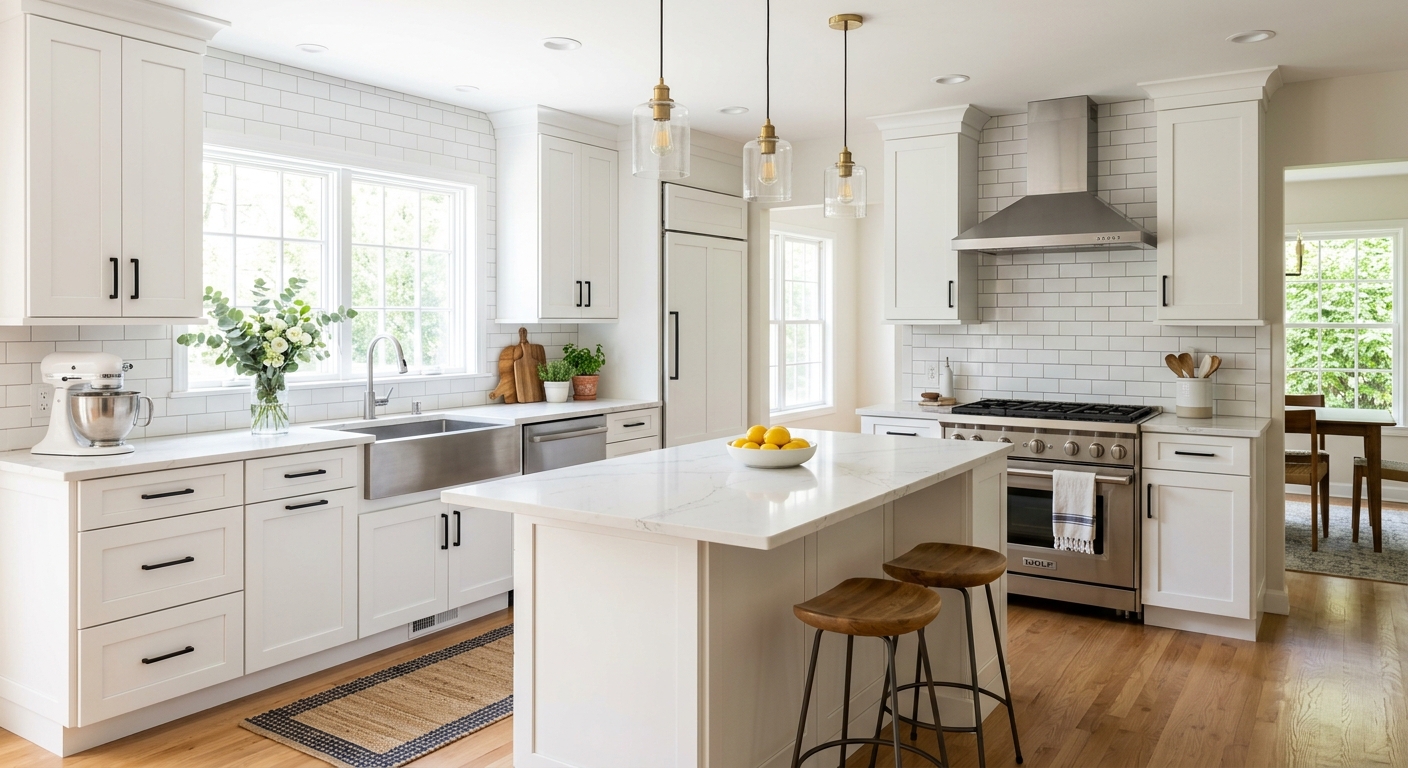
Cranberry kitchen renovation prices by scope — 2026
If you own a home in Cranberry Township or anywhere in Venango County, planning your kitchen remodel starts with the budget—and the numbers here can surprise. With a median household income of $60,800 and a homeownership rate of 70.2% (U.S. Census Bureau, ACS 2024), most upgrades are initiated by long-term homeowners prioritizing function, not quick-turn landlords. The age of the housing stock matters: areas around Oil City and Franklin have predominantly pre-1950 homes, meaning you’re often dealing with outdated layouts, knob-and-tube wiring, and galvanized plumbing. Newer homes in Venango County are rare, so even “simple” projects often uncover expensive surprises.
The most common way for a Cranberry kitchen remodel to go over budget is to start with the cost for a basic job—just new cabinets and counters—and then add scope like layout changes, wall removals, or new circuits. That’s where costs climb fast, especially with Venango County’s thin specialty contractor market and travel surcharges.
| Scope |
What's included |
Duration |
Price range |
| Full gut remodel, same layout |
cabinets, counters, appliances, flooring, lighting, fixtures |
6–10 weeks |
$28,000–$113,000 |
| Gut plus layout change |
all of the above plus moved plumbing, electrical, walls |
10–16 weeks |
$61,000–$113,000 |
| Cabinet replacement (stock to semi-custom) |
remove and install cabinets, hardware, patching |
1–3 weeks |
$6,600–$28,000 |
| Cabinet refacing |
new doors and drawer fronts, veneer, hardware |
3–6 days |
$6,600–$19,000 |
| Countertop replacement only |
template, fabricate, install, reconnect sink |
1–3 weeks |
$3,800–$15,000 |
| Kitchen flooring only |
remove existing, install new flooring |
3–6 days |
$4,700–$19,000 |
Estimates for a typical Cranberry kitchen. Cabinet grade and whether the layout changes move these figures more than square footage.
Circuits, GFCI and code compliance
The most frequent reason an older Cranberry kitchen project goes over budget is electrical. Current code, enforced under the Pennsylvania Uniform Construction Code (UCC), requires kitchens to have two or more dedicated 20-amp small-appliance circuits, GFCI protection for all countertop receptacles, outlets spaced every four feet along counters, and dedicated circuits for appliances like dishwashers, disposals, built-in microwaves, and a 240-volt line for an electric range. Most kitchens built before 1980—commonplace in Venango County—have little of this: you might find two-wire, ungrounded knob-and-tube or early Romex, one breaker running most of the kitchen, or even aluminum branch wiring in 1960s–1970s homes.
Once walls are open, inspectors will require all new work to meet current code. This is not optional and is one of the most under-budgeted aspects, especially in Oil City and Franklin, where old homes dominate. Adding new circuits, a subpanel, GFCI outlets, and updated wiring typically costs $4,700–$15,000 in the context of a full kitchen project, depending on the panel’s location and whether you are rewiring the entire space. Newer homes in Cranberry, while less common, may still need extra circuits to truly meet code’s expectations—late-1990s era houses often fail on circuit count and GFCI coverage, adding cost for incremental upgrades.
What's behind the walls in a Cranberry kitchen
Kitchens in Cranberry and greater Venango County are rarely straightforward. With 68.9% of homes built before 1980 (U.S. Census Bureau, ACS 2024), demolition often reveals problems best addressed before covering them up. Common issues include out-of-plumb walls and sloped floors—sometimes requiring manual shimming and custom trim work to properly install new cabinets (expect $1,500–$4,700 for corrective carpentry in severe cases). Many older homes have undersized or ungrounded knob-and-tube wiring, which current code does not allow in kitchen remodels; upgrading the electrical (covered in more detail above) is nearly always necessary.
Galvanized supply pipes are another classic find, often discovered only after opening a wall—replacement with PEX or copper for a typical kitchen run is usually $2,800–$9,400. Cast iron or unvented drains can pose drain clog or odor risks and may need to be replaced as part of a full gut ($3,800–$7,500 just for the drain run). Exterior walls with no insulation are common; adding proper insulation and a vapor barrier is inexpensive while the wall is open, usually under $1,500–$2,800 extra.
For pre-1978 homes, the federal EPA Lead Renovation, Repair and Painting (RRP) Rule applies: testing for lead paint must precede any demolition that disturbs painted surfaces. The same logic applies for old sheet goods flooring, which may contain asbestos—disturbance should be preceded by professional testing and, where needed, abatement handled by a certified crew.
Permits and inspections for a Cranberry kitchen
In Cranberry Township and most Venango County municipalities, work like painting, hardware swaps, cabinet refacing, or countertop replacement in place does not typically require a building permit. If, however, you’re moving or adding new plumbing or electrical circuits, moving walls, or adding mechanical ventilation (such as for a new range hood vented to the exterior), a building permit is usually triggered. In Oil City, for example, these types of alterations always require a permit, whereas in Franklin, simple cabinet replacements without structural, plumbing, or electrical changes are often completed with no permit required.
Plan review in Oil City is generally required only if your kitchen remodel affects structure or egress. For electrical work—especially the installation of new or upgraded circuits—many Venango County municipalities use third-party inspection agencies, like Middle Department Inspection Agency, rather than running their own electrical inspectors. This adds a coordination step homeowners often don’t anticipate.
All contractors performing work over $500 must hold a Home Improvement Contractor (HIC) registration, issued through the Pennsylvania Office of Attorney General—verify your contractor’s registration at hic.attorneygeneral.gov. Additionally, employers must carry workers’ compensation insurance, which you can check through WCAIS (wcais.pa.gov). Unpermitted work is a real resale risk: title searches and municipal code checks for listed homes regularly catch unauthorized renovations, delaying or derailing sales.
Why appliance selection comes first
Pick your appliances before you design your new kitchen—or you’ll regret it. Every cabinet run is planned around the exact dimensions of the appliances. Ordering cabinets before you’ve nailed down refrigerator, range, and dishwasher specs is the fastest way to end up with a refrigerator that projects six inches past the counter or a slide-in range that doesn’t fit its opening.
Counter-depth refrigerators are shallower and line up with your cabinets; standard-depth units save money but stick out. Slide-in and professional-style ranges require a gap between bases for the lips to cover, while freestanding ranges need true 30-inch openings. Switching from gas to induction for the cooktop or range will need a new dedicated 240V line—significant in old Cranberry homes. Many homeowners are drawn to panel-ready dishwashers for the flush look, but not all cabinets can be made to fit them without custom work. Range hoods can be ducted (vented to the outside) or recirculating—Cranberry kitchens benefit from ducted, as recirculating only filters, not removes, cooking odors and humidity.
Professional-grade appliances do offer better build and sometimes performance, but most of what you pay for is looks and name. Lead times for ranges and built-in fridges can now exceed most cabinet lead times, so confirm dates before you order anything. Having appliance specs in hand is not optional for accurate cabinetry and schedule planning.
When a Cranberry kitchen needs walls moved
This is the point where costs escalate—and not by small increments. As long as you keep your kitchen’s basic layout the same, with no relocated plumbing or major new wiring, you stay in a lower price band. Moving a sink or range, however, means plumbing and electrical have to move, and these are not proportional costs. For example, relocating a sink or a dishwasher two feet can mean all-new supply and drain runs. Drain pipes require slope—so if your kitchen sits atop a finished basement or slab, running new lines can require accessing ceilings or jackhammering concrete. That’s a leap in cost and disruption.
Electrical changes aren’t just opening up a wall and dropping in a new wire. If your panel is full—as is common in older Cranberry homes—a single new circuit could mean installing a subpanel, which drives up both labor and inspection requirements. Removing or shortening a wall, particularly in pre-1950 homes, demands you determine if it is load-bearing. If so, an engineer and a building permit will be required, and new support (headers or posts) must often be fitted into floors and ceilings. Ducting a relocated range hood to the outside adds cost, especially if the new run has to cross joists or masonry.
If you’re weighing a layout change, be honest about whether the existing plan is truly dysfunctional or just a little outdated. Much of the extra $33,000–$52,000 above a $28,000–$61,000 gut remodel budget pays for trades and complexity involved in moving a sink or range a few feet. In Venango, a permit is triggered by these changes, and planning for this early is the only way to avoid crisis pricing mid-project.
The real timeline for a Cranberry kitchen
The biggest gap between homeowner expectation and reality is timeline. A full kitchen job, even in a straightforward Cranberry house, requires careful sequencing. First is design and measurement: you’ll need final appliance specifications and a layout before you can even order cabinets. Cabinet lead times—especially for semi-custom or specialty options—are often 7 to 12 weeks in Venango County, and that can stretch if specialty finishes or modifications are involved.
The order matters. Demolition comes after cabinets are ordered, not before—otherwise you’ll end up living in a construction zone for two or three months, plus possible delays if unexpected conditions are found. Once walls are open, rough-ins for plumbing and electrical are completed and inspected (expect coordination with third-party electrical inspectors here). Cabinet installation happens after all rough-in inspections pass. Then and only then can the countertop fabricator come to template—no reputable shop will cut based on drawings, because base cabinets need to be fully set and level. Fabrication and installation of the countertop is another 1–3 weeks, during which kitchen use is limited.
Flooring, tile, and trim finish the project. Since the market here is thin on finish-trade labor, it is common for scheduling to string out if you haven’t locked in subs in advance. The critical path is cabinets and countertops—no matter how well you plan, there is an unavoidable dead period for countertop fabrication after cabinets are set that most first-timers never see coming.
Order cabinets before demolition, not after, to minimize downtime.
Frequently asked questions — kitchen renovation in Cranberry
What is a realistic contingency for a Cranberry kitchen?
If you’re budgeting for a kitchen project in Cranberry, set aside a contingency of 15–20% on top of your base project estimate. For example, if your kitchen gut remodel is slated at $61,000, plan for an extra $9,000–$12,000 for surprises. The reason is simple: with nearly 69% of homes built before 1980, demolition frequently uncovers old wiring, uninsulated exterior walls, or plumbing issues that can’t be ignored. Labor is also less available than in surrounding metro areas, so delays or missed items get expensive quickly. Skipping the contingency almost guarantees stress mid-project. In Venango County, it’s always better to be over-prepared than caught without options when problems surface.
Is induction worth it over gas?
For many Cranberry homeowners, induction cooktops or ranges offer genuine advantages, especially in older homes where adding or upgrading a gas line may be cost-prohibitive. Induction heats faster, offers precise control, and keeps kitchens cooler. The trade-off is that you’ll need compatible cookware and a dedicated 240-volt electrical circuit, which could add $1,500–$4,700 to the electrical upgrade costs if your panel is full or your wiring is outdated—a common scenario in pre-1980 Venango homes. Gas can still win on preference for high-heat cooking, but induction is safer, easier to vent, and often makes for quieter kitchens. In most Pennsylvania kitchens today, the decision comes down to upfront cost versus long-term performance and convenience.
Should I reface or replace my kitchen cabinets?
Cabinet refacing makes sense if your cabinet boxes are solid, plumb, and configured well for your kitchen use. In Cranberry, where homes are older, many boxes are out-of-level or made from materials near the end of their lifespan, tilting the decision toward replacement. Refacing typically runs $6,600–$19,000, while full replacement with new stock or semi-custom cabinets can stretch from $6,600–$28,000. If your kitchen layout needs improvement—more drawers, taller cabinets, or updated ergonomics—replacement is likely the better long-term investment. But if your boxes are solid and you just hate the doors, refacing is faster and keeps the budget in check.
Can I live in the house during a kitchen renovation?
In most Cranberry home renovations, you can stay in the house with some planning, but be prepared for substantial disruption. Full gut remodels last anywhere from 6 to 16 weeks — longer if you’re moving plumbing or walls. Noise, dust, and loss of cooking facilities mean most people set up a temporary kitchen in another room and lean on microwaves or meal delivery. If your home has only one kitchen and you’re upgrading old systems, you’ll likely be without running water or power to the area for days at a time. For projects in the $28,000–$113,000 range, build in time, and patience, for daily cleanup and constant traffic through your home.
What are cabinet lead times in Cranberry right now?
In Cranberry and the greater Venango County area, cabinet lead times for stock to semi-custom lines are running 7 to 12 weeks, sometimes longer for specialty finishes or odd sizes. These lead times generally exceed countertop and appliance deliveries, so you need to order well in advance—ideally before you even begin demolition. In a thin specialty labor market like Venango, delays in cabinets cause a domino effect, pushing back every other trade. For a standard kitchen project in the $6,600–$28,000 range just for cabinets, allow more time if you want special materials or colors.
What does a full gut kitchen remodel cost in Cranberry?
A full gut remodel in Cranberry, keeping the same general layout and replacing cabinets, counters, floors, appliances, and lighting, generally falls in the $28,000–$113,000 range, with typical projects landing around $61,000. This variation is driven by cabinet choices, appliance packages, and especially by how much electrical or plumbing work is required. If the job includes moving walls or redesigning the layout, the total tends to rise toward the top of that band. Most old houses in the area end up at least around the midway mark due to surprises behind walls.
What adds the most resale value in a kitchen?
In Cranberry, kitchens that sell best are those with modernized layouts (open sightlines, ample counter space), new cabinets, durable countertops, and up-to-date appliances—not necessarily luxury brands. Full-scale gut remodels cost $28,000–$113,000, with resale gains coming mainly from resolving old wiring, adding cabinet storage, and refreshing finishes for durability and brightness. Changing the layout only pays if the original space is dysfunctional—if not, new surfaces and lighting can achieve nearly the same impact for a lot less. Buyers often cite GFCI outlets, soft-close drawers, and a proper range hood as decision points.
Is lead paint a concern in Cranberry kitchen renovations?
Yes, it is. With a large share of Cranberry and Venango County homes built before 1978, any renovation that disturbs painted surfaces must comply with the federal EPA Lead RRP Rule. This means certified renovators, proper containment, and documented testing or abatement. If your kitchen was last updated decades ago, there’s a good chance lead-based paint is present on walls, trim, or old cabinets. Remediation and compliance costs can add $1,000–$4,700 to a project depending on surfaces and scope. Make sure your contractor is familiar with these rules before work begins.
Who inspects kitchen electrical work in Cranberry?
In most of Venango County, including Cranberry Township, kitchen electrical work that involves new circuits, rewiring, or panel changes is inspected by a third-party agency such as the Middle Department Inspection Agency, not by the township itself. This is different from larger Pennsylvania cities and often surprises homeowners. The inspector will look for compliance with current code (the UCC), check GFCI protection, and ensure proper circuit sizing. Fees for inspection are built into most estimates, but delays can happen if schedules are not coordinated among trades. Plan for an inspection window as part of your $4,700–$15,000 electrical upgrade budget.