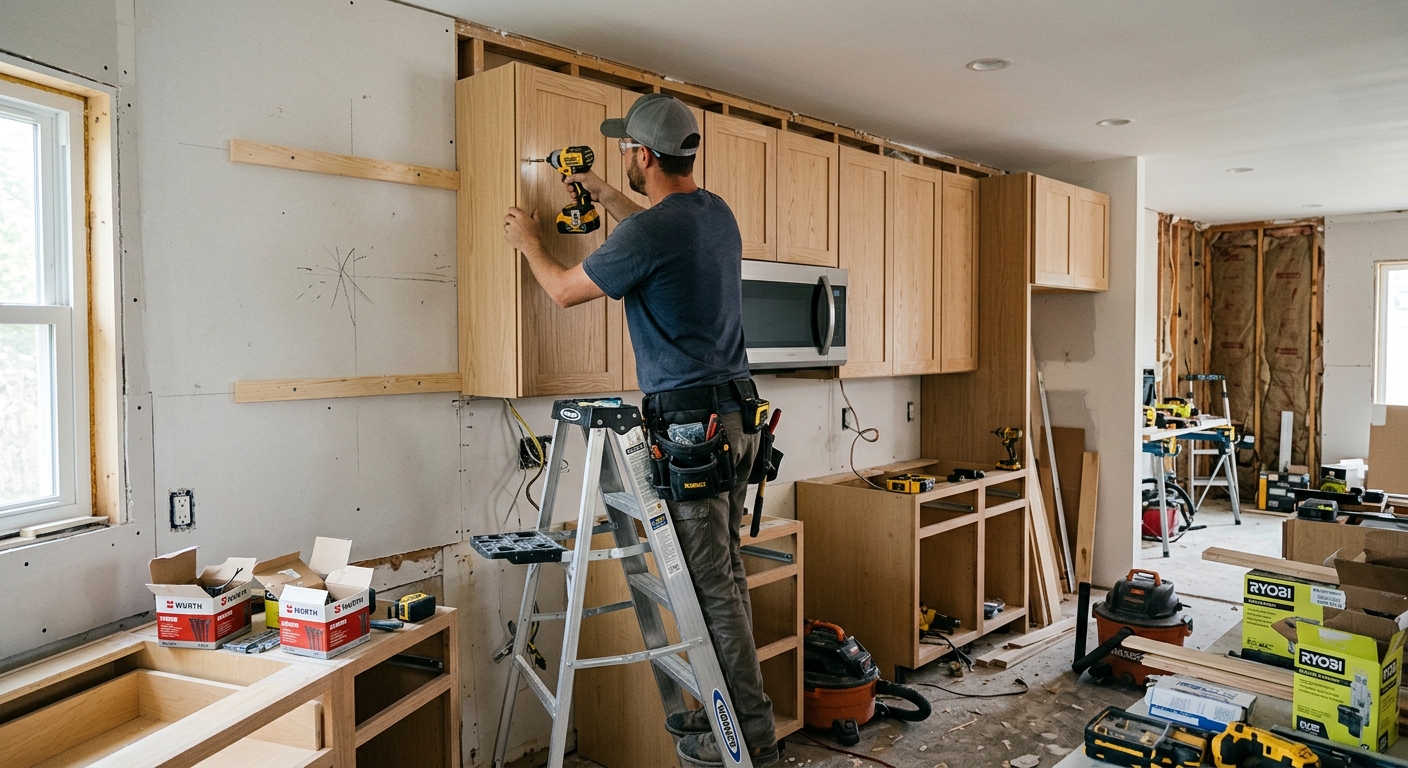
Collingdale kitchen renovation prices by scope — 2026
A kitchen renovation in Collingdale requires budgeting that fits your home and ownership goals. With a median household income of $49,819 and a homeownership rate of 57.7% (U.S. Census Bureau, ACS 2024), kitchen choices here need to reflect both investment value and how long you intend to stay. Most Collingdale kitchens are in homes built before 1980, so the chances are you’ll be working with a 1950s galley kitchen—with few owners simply swapping cabinets and calling it a day. Layout changes—sometimes just to fit today’s appliances or open up a space—are common costs, as is addressing what’s behind the walls.
The number one reason kitchen budgets in Collingdale get blown is simple: homeowners price out a standard “pull and replace” scope, and only after demolition, realize their project is now a full gut with layout changes and all new mechanicals. Planning your scope—and knowing what it includes—matters more than the square footage of your space.
| Scope |
What's included |
Duration |
Price range |
| Full gut remodel, same layout |
cabinets, counters, appliances, flooring, lighting, fixtures |
6–10 weeks |
$29,000–$116,000 |
| Gut plus layout change |
all of the above plus moved plumbing, electrical, walls |
10–16 weeks |
$62,500–$116,000 |
| Cabinet replacement (stock to semi-custom) |
remove and install cabinets, hardware, patching |
1–3 weeks |
$6,800–$29,000 |
| Cabinet refacing |
new doors and drawer fronts, veneer, hardware |
3–6 days |
$6,800–$19,500 |
| Countertop replacement only |
template, fabricate, install, reconnect sink |
1–3 weeks |
$3,900–$15,500 |
| Kitchen flooring only |
remove existing, install new flooring |
3–6 days |
$4,800–$19,500 |
Estimates for a typical Collingdale kitchen. Cabinet grade and whether the layout changes move these figures more than square footage.
What's behind the walls in a Collingdale kitchen
With almost 95% of Collingdale homes built before 1980 (U.S. Census Bureau, ACS 2024), most kitchen projects here uncover the headaches of mid-century construction. Once cabinets are out, contractors often find out-of-plumb walls and sloped floors—installing new cabinets means shimming and scribing every other piece. Expect to find original wiring; it may be undersized, ungrounded, or patched together over the years. Galvanized steel supply pipes can be corroded, restricting water flow, while cast iron drains inside these homes may be cracked or rusted through. Upgrading these adds cost and time. It’s also common to open an exterior wall and find no insulation, so adding it—while the wall is open—avoids much higher heating bills later on.
Many Collingdale kitchens carry evidence of decades of DIY fixes. Previous unpermitted work, poorly joined outlets, or boxed-in plumbing are normal finds. When it comes to hazards, homes built before 1978 fall under the federal EPA Lead RRP Rule for any renovation—a certified professional must test and use safe work practices if lead paint could be disturbed. Old linoleum or tile flooring in these kitchens may contain asbestos; always test before removal. Remediating lead or asbestos can run from a few hundred dollars for safe handling to several thousand for full abatement, but skipping this step is never worth the risk or the resale penalty. Any surprise behind the wall—be it plumbing, wiring, or hazardous material—typically drives your kitchen budget up more than material upgrades.
Code requirements for Collingdale kitchens
In Collingdale and elsewhere in Delaware County, painting, hardware changes, cabinet refacing, and replacing countertops without touching the plumbing or wiring do not typically trigger building permits. But if your kitchen remodel involves new or moved electrical circuits, relocating plumbing lines, or removing structural or load-bearing walls, a permit is required. Mechanical work—like adding a vented range hood—can also prompt a permit. When your project includes any of these, township building departments will require a plan review and construction drawings before work begins. Skipping this step in Collingdale means risking failed inspections, fines, or even being forced to open up finished walls before you can sell.
Electrical inspections in Delaware County are often handled by third-party agencies approved by the township, rather than township staff themselves—this is the norm across many local municipalities, including those near Collingdale. When you hire a contractor for kitchen renovations over $500, they must hold a Home Improvement Contractor (HIC) registration from the Pennsylvania Office of Attorney General, which you can verify at hic.attorneygeneral.gov. If they bring workers, Pennsylvania law requires them to have workers’ compensation coverage, and you can verify this through the WCAIS system. Full compliance isn’t just a box to check; unpermitted work can derail a resale or insurance claim, especially with the high rate of older homes in Collingdale.
Who should run your Collingdale renovation
Choosing the right structure for your renovation in Collingdale—especially with its concentration of older homes—can make the difference between a manageable project and a dragged-out headache. A design-build kitchen firm handles everything from layout to installation under a single contract. This model costs the most, but it’s also the least work for you, and you have one party to hold accountable if something goes off track. A general contractor (GC) coordinates trades, schedules inspections, and keeps the project moving, but you or a designer still need to make many of the product choices. This approach lands in the middle on both cost and homeowner effort.
Owner-managed projects—where you hire each plumber, electrician, cabinet installer, and flooring pro yourself—offer the lowest possible cost, if and only if you already understand construction staging and have backup plans when trades reschedule. In Delaware County’s contractor-saturated market, managing these relationships and timelines isn’t for the faint of heart. If your scope triggers permits (like electrical or plumbing changes), and you have a day job or are new to construction, owner-management is not advisable. Finish-trade labor is tighter in western townships but follows Philadelphia metro trends overall, so Collingdale has a steady pool of qualified crews—the main limit is finding those who are available when you are ready to start. Unless project management is your profession, most Collingdale homeowners are best served by a reputable GC or kitchen firm familiar with local code and supply quirks.
Cosmetic, replacement, gut, or layout change?
“Kitchen remodel” means anything from a weekend paint refresh to gutting walls, so getting clear on your scope is critical in Collingdale—especially with so many modest galley kitchens and 94.8% of homes built before 1980. There are four main tiers. A cosmetic refresh focuses on paint, hardware swaps, a new backsplash, and lighting—no cabinet, appliance, or wall changes. This works if your kitchen is functional and you’re improving appearance on a tight budget.
Next is pull and replace—taking out old cabinets and counters, installing new ones, but leaving all plumbing and electrical where it is. This keeps construction time and cost in check and avoids most serious surprises. The third tier is a gut remodel, same layout—down to studs, updating wiring, pipes, and insulation, but everything goes back where it was. This fixes what’s lurking behind the walls, common in Collingdale homes, but doesn’t change function or flow.
The fourth tier—the cost cliff—is a layout change. Moving the sink, range, or removing walls almost always means permits, engineering, and longer schedules. This is where budgets double: moving services requires opening floors and walls, upgrading wiring and plumbing, and sometimes reconfiguring structure, especially in the classic small kitchens throughout Delaware County’s pre-1960s homes. Before calling any contractor, decide which tier you really need—a reliable pro simply cannot price your project without this clarity. Nail down this decision first, and you avoid change orders and inflated bids.
Cabinets: reface, stock, semi-custom or custom
Cabinets are the biggest swing in any Collingdale kitchen budget—and the most complicated decision for older homes. Refacing means keeping your existing cabinet boxes (they must be solid and square), then adding new doors and drawer fronts, plus a wood or laminate “skin.” This is far less expensive than replacement, but it locks you into your kitchen’s current layout and can’t add storage or solve poor flow. It’s a solid option if your boxes are decent, the layout works, and you want to update style on a limited budget.
Stock cabinets come in fixed, standard sizes—you pick from a limited menu and fill gaps with strips. This keeps costs down if your space is mostly square, but rarely fits perfectly in Collingdale homes built with non-standard dimensions. Semi-custom cabinets can adjust dimensionally, offering many more finishes and a better fit, at higher cost and longer lead times. With most local kitchens dating from a wave of construction between 1920 and 1960, semi-custom is often the best long-term solution when nothing here is quite square.
Full custom is for unique layouts or matching high-end built-ins, but cost and lead times jump considerably. Whatever the line, pay more attention to construction details: plywood boxes outlast particleboard, full-extension and soft-close hardware makes a big difference in daily use, dovetail drawers hold up far better than stapled, and face-frame is more forgiving for out-of-square rooms. Frameless looks modern but is less tolerant of crooked walls—which Collingdale has plenty of.
| Option |
Cost |
Best when |
Limitation |
| Painting existing cabinets |
$1,200–$3,500 |
boxes and doors sound, tight budget |
no layout or style change |
| Refacing |
$6,800–$19,500 |
boxes square and layout works |
storage unchanged |
| Stock cabinets |
$6,800–$29,000 |
standard dimensions fit |
filler strips, limited finishes |
| Semi-custom |
$19,500–$29,000 |
non-standard walls or finishes |
6–12 week lead time |
| Full custom |
$19,500–$29,000 |
unusual layout or high-end design |
longest lead, highest cost |
Electrical work in an older Collingdale kitchen
The most common source of a sudden budget jump in a Collingdale kitchen is bringing wiring to current code. Modern code expects multiple dedicated small-appliance circuits, GFCI outlets at every counter, spaced every four feet, and dedicated lines for each dishwasher, garbage disposal, and built-in microwave. An electric range requires a 240-volt line. Most kitchens here—dating from 1920 to 1960—have wiring that’s decades out-of-date. It’s typical to find one shared, ungrounded circuit running the lights and outlets, with overburdened panels offering no spare breaker spaces. Aluminum wiring, seen in a handful of late ‘60s homes, is even trickier and more costly to update properly.
Once you open walls, inspectors in Delaware County expect everything accessible to meet current Pennsylvania Uniform Construction Code standards; there’s no “grandfather clause” when you undertake a permitted remodel. Bringing kitchen electrical up to code in an average Collingdale house typically runs from $4,800–$19,500 depending on the home’s condition and needed panel upgrades. In post-1980 homes, wiring is often better but rarely meets today’s circuit count or GFCI requirements. Budget for this early if your kitchen is older—you will not get a final sign-off, or protect your investment, by skipping the electrical overhaul.
Frequently asked questions — kitchen renovation in Collingdale
Do I need to change my kitchen layout?
In Collingdale, most kitchens were built before open-concept layouts became popular, so many homeowners consider changing the layout to improve flow or fit modern appliances. However, you only need to change the layout if your current configuration seriously limits how you use the space—like forcing you to prep food on a remote countertop or thread around a tight galley. Simply updating finishes or replacing cabinets in the same footprint is much less expensive. When you move the sink or stove, you jump from a “pull and replace” scope to a full gut and layout change, which can push your costs into the $62,500–$116,000 range. Think carefully about the use cases that matter most and start your planning there.
Are Collingdale kitchens typically small galley layouts?
Yes, small galley-style kitchens are very common in Collingdale because much of Delaware County’s housing, including here, was constructed between 1920 and 1960. Homes from this era were built when closed-off kitchens were the norm, and few were designed for large appliances or open space. While some have been updated or expanded, most still follow the original galley or U-shaped footprint, which can limit layout flexibility during a renovation. Because of this, many Collingdale owners start with ambitions for an open plan but find it requires a larger investment—sometimes in the $62,500–$116,000 bracket for structural and mechanical changes.
What does a full gut kitchen remodel cost in Collingdale?
For a full gut remodel in Collingdale—meaning cabinets, counters, appliances, flooring, lighting, and fixtures, with everything taken back to the studs but leaving the original layout—expect to pay between $29,000–$116,000, with most projects landing around $62,500. The cost varies based not just on size, but on what you find behind the walls—old wiring, plumbing, and structural issues in 1950s kitchens quickly increase costs. Moving the layout, bumping out walls, or adding high-end finishes all push you to the upper end. Budget realistically and always include a contingency for older home surprises.
Should I hire a general contractor or a kitchen firm?
In Collingdale, your choice often comes down to time, stress tolerance, and project complexity. A kitchen firm manages design, ordering, subcontractors, and scheduling—expect to pay a bit more for fewer headaches. A general contractor coordinates trades and work but may have you pick and purchase some finishes. If your renovation is limited to a cabinet swap or countertop replacement—between $3,900–$29,000—either model works. For layout changes or full guts in these older homes, a GC with experience in Collingdale is essential. Only self-manage trades if you’re at home daily and ready to chase every phone call and inspection.
Do I need a permit for a kitchen renovation in Collingdale?
You typically do not need a building permit in Collingdale for painting, cabinet refacing, replacing countertops, or other purely cosmetic work. However, if your kitchen renovation includes new or relocated electrical circuits, changes to plumbing lines, or moving or removing walls, then a permit is required. Electrical inspections are often handled by private, township-approved agencies. Skipping permits here can cause major headaches at resale or with your insurance, especially given Collingdale’s older housing stock and how often renovations uncover previous unpermitted work. For any contract over $500, your contractor must be HIC registered.
Does a kitchen renovation increase home value in Collingdale?
A well-executed kitchen remodel in Collingdale can boost your home’s resale value—especially since most homes here date from before 1980 and many still have dated layouts and finishes. However, it’s important not to overspend relative to typical home prices in the area. A full gut remodel, even at the average $62,500 range, should be considered with your long-term stay or local comps in mind. If you plan to sell soon, lighter cosmetic upgrades—like painting cabinets and updating counters—can offer a fresher look without over-investing in major changes that may not be fully recouped at closing.
Should I order cabinets before demolition?
In Collingdale’s older homes, it’s almost always best to wait until after demolition before placing your cabinet order, unless your walls are square and your kitchen has been remodeled recently. Walls are rarely plumb, and opening the space often reveals framing changes, old pipes, or wiring that means your cabinet layout will need adjustment. Semi-custom manufacturers, in particular, want field-confirmed dimensions, not old blueprints. While it may add a few weeks to your timeline, this step can prevent costly re-orders or on-site modifications. On a typical cabinet replacement budget of $6,800–$29,000, a single mistake can be expensive.
Is laminate countertop a bad choice?
Laminate countertops are still a practical choice in Collingdale, especially for cosmetic upgrades or income properties. They remain the most budget-friendly option, with quick installation and a wide range of designs. In kitchens with heavy use or higher property values, homeowners usually lean towards stone or composite, but laminate works well for lighter traffic. For a straight countertop swap, you’re typically looking at $3,900–$15,500. The main drawback is that laminate is more susceptible to burns and dents, and it does not boost home value like granite or quartz. If staying under budget is the priority, laminate makes sense.
How much more does moving the sink and range cost?
Moving plumbing and electrical—especially for appliances like the sink and range—is the single biggest jump in a Collingdale kitchen budget. It means running new water supply, drains, gas or electric lines, cutting open floors and walls, and pulling permits. This pushes you from a pull-and-replace project to a full gut with layout change. In Delaware County, this typically moves you from the $29,000–$62,500 range all the way up to $62,500–$116,000 once finishes, inspections, and extra labor are included. Always weigh the daily benefit against the added cost—and factor in unplanned surprises, especially in an older home.