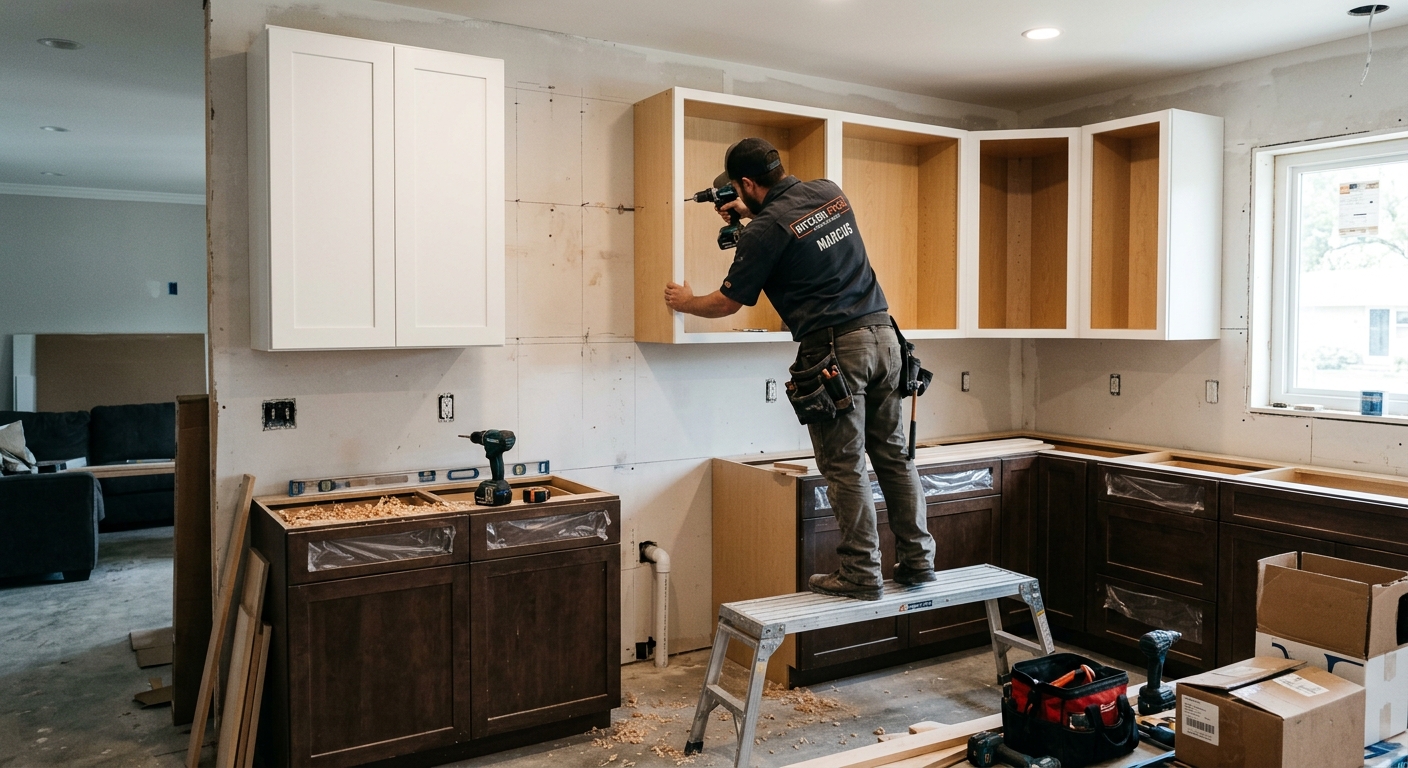
What a kitchen remodel costs in Chippewa
Kitchen renovation costs in Chippewa reflect both the high homeownership rate (84.0%) and the area’s strong median household income ($96,490), which gives many owners options, but also raises expectations. Many Chippewa kitchens are similar to Beaver Falls and Aliquippa, where a high percentage of homes were built between 1940 and 1960. These older kitchens often need more than just a refresh; wall moves or layout changes are common when opening a tight galley kitchen or improving flow, which increases cost and duration.
Most blown kitchen budgets in Chippewa result from homeowners pricing work at a basic replacement tier, then choosing options—like semi-custom cabinets, layout changes, or luxury finishes—that belong to a higher scope. Before you select materials or appliances, clarify the intended project: is it a true gut-and-replace, a cabinetry facelift, or a room reconfiguration? Each scope comes with different risks and rewards, and making changes mid-project can have real cost and schedule impacts.
| Scope |
What's included |
Duration |
Price range |
| Full gut remodel, same layout |
cabinets, counters, appliances, flooring, lighting, fixtures |
6–10 weeks |
$31,500–$127,000 |
| Gut plus layout change |
all of the above plus moved plumbing, electrical, walls |
10–16 weeks |
$68,500–$127,000 |
| Cabinet replacement (stock to semi-custom) |
remove and install cabinets, hardware, patching |
1–3 weeks |
$7,400–$31,500 |
| Cabinet refacing |
new doors and drawer fronts, veneer, hardware |
3–6 days |
$7,400–$21,000 |
| Countertop replacement only |
template, fabricate, install, reconnect sink |
1–3 weeks |
$4,200–$17,000 |
| Kitchen flooring only |
remove existing, install new flooring |
3–6 days |
$5,300–$21,000 |
Estimates for a typical Chippewa kitchen. Cabinet grade and whether the layout changes move these figures more than square footage.
Resale value and kitchen spending
Kitchen renovations in Chippewa often help a home sell, but rarely return their full cost—especially at the high end. Mid-range projects recoup a larger portion of what you spend, while luxury options commonly outpace what buyers in this area are willing to pay. It’s important to separate “renovate to sell” from “renovate to live in.” If you plan to move within a few years, focus on timeless finishes, a neutral palette, and avoid major layout changes. Spending in the mid-range—where most comparable Chippewa kitchens land—makes your home more competitive and attractive to local buyers.
On the other hand, if you intend to stay, invest in features that matter for your family’s daily life, not for someone else’s taste. Over-improving is a risk here: the local median household income ($96,490) provides context for what future buyers will expect. A $127,000 kitchen in a neighborhood of $240,000 homes may never pay you back, no matter how beautiful it is. Whenever you’re considering finishes or appliances above the mid-range, weigh what you enjoy versus what is likely to help in resale down the road. The safest return in Chippewa comes from well-executed, middle-of-the-road upgrades—not from spending beyond the local market ceiling.
Living through a kitchen renovation
Living in your Chippewa home during a kitchen renovation requires planning and patience—no matter how well the job is run. Most homeowners set up a temporary kitchen: move your fridge somewhere accessible (often the dining room or garage), use a folding table with a microwave and electric kettle, and plan on paper plates and slow-cooker meals. For cleanup, a laundry or bathroom sink is a tolerable substitute, but it only goes so far. Expect your grocery and takeout bill to rise for the length of the job. Over a typical 6–10 week full gut, extra meal costs regularly outpace what you budgeted for new flooring.
Dust control is crucial. Plastic sheeting and zip walls contain most of the mess, but expect fine dust to settle elsewhere, especially if plaster is coming down. Plan where the crew will park and put the dumpster—Beaver County driveways are sometimes tight, and material deliveries will need a spot. If you have pets, keep in mind the door will be open during demolition and deliveries, and plan where they’ll stay safely. Some families move out entirely for the main demolition week, especially if you’re sensitive to noise or dust. But most stay, with a bit of inconvenience and plenty of patience. Either way, be ready to spend more on dining out than you hoped—eight weeks of restaurant meals adds up fast.
Permits and inspections for a Chippewa kitchen
Cosmetic kitchen work in Chippewa—like painting, hardware swaps, cabinet refacing, or simply replacing a countertop in place—normally doesn’t require a permit. The line is drawn when work changes plumbing locations, moves or adds electrical circuits, relocates walls, or involves HVAC or venting changes. In Aliquippa, for example, removing or moving a structural wall during a kitchen remodel means pulling a building permit and often triggers a formal plan review. In Beaver Falls, you generally don’t need a permit to replace just the cabinet fronts as long as the layout stays the same.
Electrical inspections in Aliquippa are handled by a third-party agency approved by the City of Aliquippa rather than the city itself—a detail that surprises many homeowners on inspection day. Most other Beaver County municipalities operate their own code offices. For all kitchen jobs over $500, your contractor must hold Home Improvement Contractor (HIC) registration from the Pennsylvania Office of Attorney General, which you can verify online. Workers' compensation coverage is required for all employers and should be confirmed through WCAIS.
Skipping permits or using an unregistered contractor has real resale consequences. Work done without inspection will almost always need to be disclosed at closing, and lenders or buyers in Chippewa are increasingly diligent about code compliance. Unpermitted kitchen work may become a problem when you sell, not just when you remodel.
The biggest line item in your Chippewa kitchen
Cabinet decisions drive both the budget and the function of your kitchen remodel. In Chippewa, refacing is an appealing option if your cabinet boxes are sound, square, and the layout already works. You’ll get all new doors and drawer fronts for much less than a full replacement, but you can’t rework tight galleys or add storage. In an older home with 1940–1960 construction—common in Beaver Falls and Aliquippa—a full gut is often more practical because original boxes are seldom plumb or robust enough for refacing. Stock cabinets come in fixed sizes and designs, which means using filler strips when Chippewa’s non-standard walls disagree. Semi-custom cabinets bridge the gap, offering more sizing and finish options and working well when the house isn’t perfectly square or the owner wants a specific look. Full custom cabinets are for the rare cases where nothing standard fits or you want luxury finishes everywhere—budget and patience required.
Construction quality matters as much as price. Look for solid plywood boxes instead of particleboard, dovetail drawers instead of staples, and full-extension, soft-close mechanisms. Frameless (European-style) cabinets provide the most space but need highly skilled installation, while traditional face-frame options are usually more forgiving in older, out-of-square spaces.
| Option |
Cost |
Best when |
Limitation |
| Painting existing cabinets |
$1,200–$3,500 |
boxes and doors sound, tight budget |
no layout or style change |
| Refacing |
$7,400–$21,000 |
boxes square and layout works |
storage unchanged |
| Stock cabinets |
$7,400–$31,500 |
standard dimensions fit |
filler strips, limited finishes |
| Semi-custom |
$21,000–$31,500 |
non-standard walls or finishes |
6–12 week lead time |
| Full custom |
$21,000–$31,500 |
unusual layout or high-end design |
longest lead, highest cost |
Allocating a kitchen budget
Seeing how a Chippewa kitchen budget actually breaks down can help you avoid regret. The largest single cost is almost always cabinetry—often a third of the total. Labor and installation are next, especially as layout changes move you well beyond simple swap-outs. Countertops, appliances, and flooring round out the big-ticket lines, while lighting, plumbing, and fixtures may look small on paper but can add up fast (particularly in older homes needing new circuits).
The lines most homeowners forget are the ones you’ll wish you hadn’t: a contingency (for unknowns behind 60-year-old walls) is not optional, and permit/design/disposal costs belong in every plan. Splurge for quality cabinet construction or countertop materials you’ll use every day. On the other side, mid-range appliances in a well-built kitchen return better value than high-end appliances paired with entry-level finishes. Allocating an extra thousand dollars for drawers or pantry convenience nearly always trumps spending it on gadgetry that goes unused.
For a typical full gut renovation in Chippewa, here’s how the numbers actually fall:
| Category |
Share of budget |
Notes |
| Cabinetry |
25–35% |
the largest line and the longest lead time |
| Labour and installation |
20–30% |
rises sharply if the layout changes |
| Countertops |
8–15% |
material choice drives the swing |
| Appliances |
10–20% |
widest range of any category |
| Flooring |
5–10% |
|
| Lighting and electrical |
5–10% |
higher in older homes needing circuits |
| Plumbing and fixtures |
4–8% |
|
| Permits, design, disposal |
3–6% |
usually forgotten in early budgets |
| Contingency |
10–15% |
not optional in a pre-1980 house |
Electrical work in an older Chippewa kitchen
The most common budget surprise during a Chippewa kitchen renovation comes from electrical work, especially in homes built before 1980. Current code expects each kitchen to have two or more dedicated 20-amp small-appliance circuits, GFCI protection for any outlet near the sink, and proper spacing of outlets along counters (no point more than four feet from one). Major appliances—such as dishwasher, disposal, built-in microwave, and electric range—typically each need their own circuit. If you have an electric range, 240-volt service is needed.
The older-house reality in Beaver County is different: many homes in Beaver Falls, Aliquippa, and Chippewa have two-wire ungrounded circuits, all kitchen outlets on a shared breaker, and electrical panels with no spare room. Sometimes, aluminum branch wiring is found as well. Once you open the walls, the inspector (especially when it’s a third-party agency as in Aliquippa) will expect newly run circuits to meet current standards—there is no “grandfathering” when it’s accessible and being altered. This upgrade often isn’t in the original budget and can range significantly depending on panel location, length of runs, and whether the panel needs upgrading itself. Plan for an electrical update cost in the range of $4,200–$17,000 as part of a comprehensive kitchen renovation.
Even a late-1990s kitchen can fall short of today’s required circuit spacing and dedicated lines. If you want a smoother project, have your contractor open the panel and outlets during planning—not after demo.
Frequently asked questions — kitchen renovation in Chippewa
Is lead paint a concern in Chippewa kitchen renovations?
Yes, lead paint is a definite concern in Chippewa if your home was built before 1978, which includes many in Beaver Falls and Aliquippa. The federal EPA Lead RRP Rule applies to all such projects, and Chippewa's housing stock is over 60% pre-1980 (U.S. Census Bureau, ACS 2024). Any kitchen renovation that disturbs painted surfaces—demolition, sanding, or cutting—requires contractors certified in safe work practices for lead. This adds some steps and cost, but it protects your family's health, especially if there are kids or pregnant women at home. Expect lead-safe practices to be factored into bids in the $31,500–$127,000 range for gut remodels, and never agree to shortcuts, even if it means taking a bit longer. You can check for certified contractors at the EPA’s website before hiring.
What is a change order and how should it work?
A change order is a written adjustment to your original kitchen renovation contract—covering any work, material, or cost that wasn't included at the outset. In Chippewa and the rest of Pennsylvania, the Home Improvement Consumer Protection Act (HICPA) requires that all kitchen jobs over $500 be under a written contract, and change orders are part of that paper trail. Typical reasons for change orders include hidden water damage, electrical code surprises, or last-minute upgrades in cabinets or counters. Good contractors will write up costs and details in advance, and both parties sign before work changes. You should review every line, ask questions, and understand how it affects your total—especially since change orders contribute to projects ballooning from a basic $7,400–$31,500 cabinet job to something much larger.
Why is there a gap after cabinets are installed?
Finding a gap after new cabinets go into your Chippewa kitchen is common, particularly in older homes with uneven floors, plaster walls, or past foundation settling. Many Beaver County homes, including in Aliquippa and Beaver Falls, date from 1940–1960, so the walls rarely meet at right angles. Installers often use filler strips to close these gaps, or may need scribing and trim for a tight fit. These measures are standard, not a mistake, and are reflected even in full gut remodel budgets around $31,500–$127,000. When starting your design, discuss whether you prefer tighter lines (which may push you toward semi-custom or custom cabinets for a precise fit) or can live with standard fillers.
Should I reface or replace my kitchen cabinets?
In Chippewa, refacing makes sense if your existing cabinet boxes are solid, square, and correctly positioned. You’ll get new fronts, hardware, and a fresh look for less—expect $7,400–$21,000 versus a full replacement. But it won't let you add storage, move walls, or fix bad layouts—a common issue in 1940–1960 homes like those in Beaver Falls or Aliquippa. Replacement is the better call if you want to modernize storage, change your kitchen’s configuration, or if the boxes are failing. Always have a professional verify the suitability of your existing cabinets before making this decision, as some boxes that look fine won’t hold the new hardware long-term.
Who inspects kitchen electrical work in Chippewa?
Electrical inspections in Chippewa are jurisdiction-based. In Aliquippa, inspections are performed by a third-party agency that’s approved by the city—not by a municipal inspector. Other nearby Beaver County towns and boroughs operate their own code offices for this purpose. This can surprise homeowners used to a single city inspector handling everything. Whoever does the inspection, their focus is on ensuring upgrades—especially in pre-1980 homes—bring wiring up to the current Pennsylvania Uniform Construction Code (UCC) standard and that all circuits, outlets, and GFCIs are up to code. For typical updates and inspections included in a $31,500–$127,000 full kitchen remodel, allow time in your schedule for inspector availability, since Beaver County leads are longer than Pittsburgh proper.
Is laminate countertop a bad choice?
Laminate countertops sometimes get a bad reputation, but for many Chippewa kitchens they remain a smart, budget-friendly pick. Laminate holds up well when installed with care, resists stains, and costs significantly less than stone—budget somewhere in the $4,200–$17,000 range for countertop replacement. For homes where resale is not the primary driver, or for secondary kitchens and rentals, laminate frees up money for better cabinets or appliances. That said, it won't deliver the same prestige or heat and scratch resistance as granite or quartz, which may matter for long-term owners or if you routinely entertain. Choose based on your actual habits, not just what’s trending.
How much more does moving the sink and range cost?
Moving your sink or range in a Chippewa kitchen isn't a small bump. Relocating these fixtures means new plumbing and electrical work, possible wall and subfloor repairs, and reconciling venting or gas lines if you’re switching orientations. This jump—from a “same layout” to a “layout change” gut—pushes your project into the higher end of the range: expect to spend at least $68,500–$127,000 for a full kitchen remodel with major layout changes in Chippewa. If your house is older (common in Beaver County), budget extra for the surprises that always seem to emerge once walls are open.
How much does a kitchen renovation cost in Chippewa?
In Chippewa, a full kitchen gut renovation with the same layout typically lands between $31,500–$127,000, with most projects clustering around $68,500. Cabinet-only replacements using stock or semi-custom products run from $7,400–$31,500, while simply replacing your countertop could fall in the $4,200–$17,000 range. Final cost depends on whether you move walls, upgrade to custom cabinets, or add new appliances. Watch out for budget drift—from code-required electrical upgrades or hidden water damage—especially in homes built before 1980, which are common locally (U.S. Census Bureau, ACS 2024).
What adds the most resale value in a kitchen?
The upgrades adding the most resale value in Chippewa are functional rather than flashy: quality mid-range cabinets, durable countertops (quartz or granite over luxury exotic stone), and efficient lighting and appliances. Stick with neutral finishes; buyers here prefer a kitchen that looks ready to move in, not an ultra-personalized space. Extra investment in semi-custom cabinets for a good fit—especially in an older Beaver County home with squarish issues—is more likely to pay off than spending big on the latest gadgets. Resale-minded owners should keep renovation costs below the upper local limits; mid-range projects around $31,500–$68,500 return a larger share than high-end ones, and help your home sell faster in Chippewa’s mostly owner-occupied market.