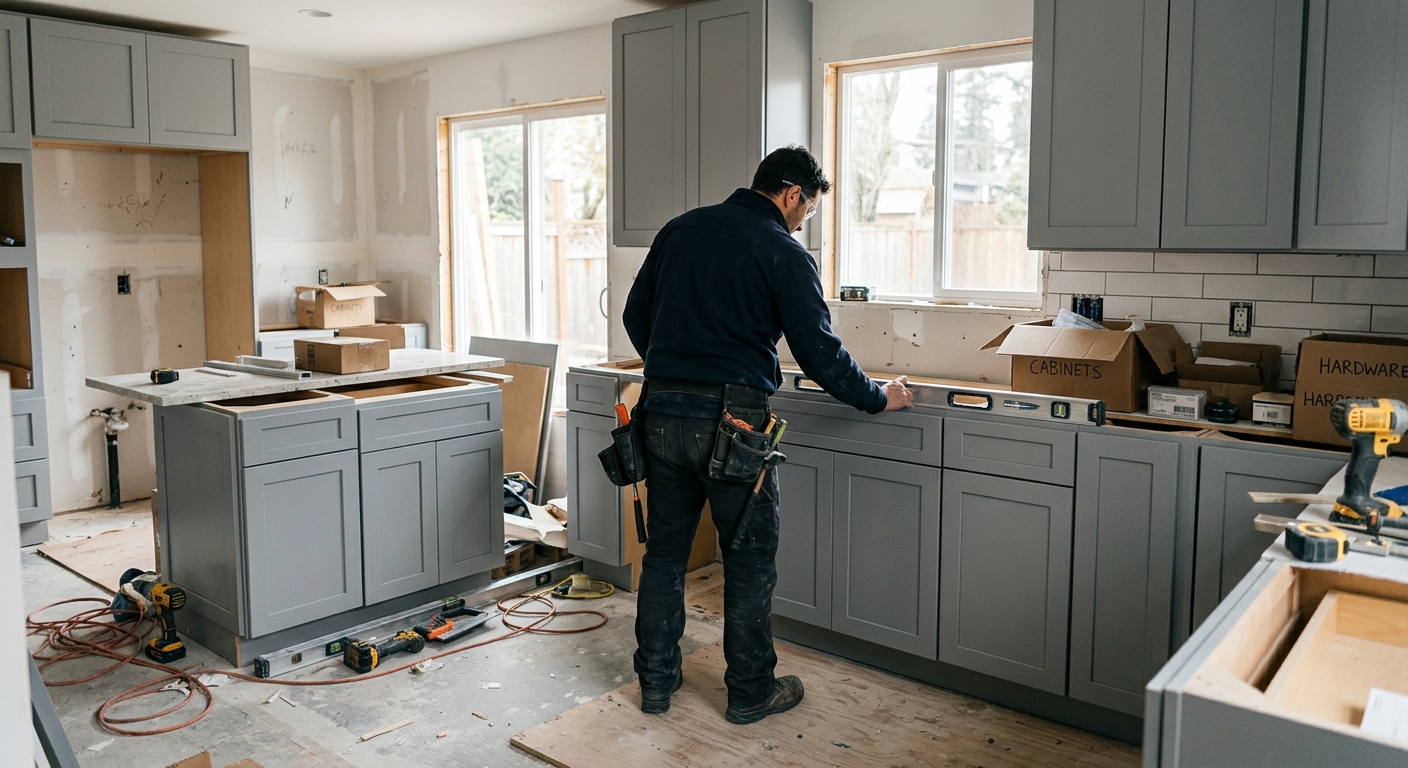
What a kitchen remodel costs in Penn
Penn, like much of York County, sees a wide range of kitchen renovation costs. With a homeownership rate of 83.2% and a median household income of $78,299 (U.S. Census Bureau, ACS 2024), most homeowners here approach kitchen updates as a major investment in their property, not just a cosmetic upgrade. In neighborhoods developed after World War II, especially Springettsbury and West Manchester, many houses have outdated kitchen layouts and lack the electrical capacity today’s appliances demand. These tract-built homes often still have the 1950s–1970s galley-style kitchens that drive requests for wall removal and better lighting.
The biggest budget mistake I see in Penn is when a homeowner prices out a basic cabinet or countertop replacement, then starts making choices—like moving walls, switching the range from gas to electric, or upgrading to semi-custom cabinets—that move their project into a much more expensive tier without realizing it.
| Scope |
What's included |
Duration |
Price range |
| Full gut remodel, same layout |
cabinets, counters, appliances, flooring, lighting, fixtures |
6–10 weeks |
$30,000–$119,500 |
| Gut plus layout change |
all of the above plus moved plumbing, electrical, walls |
10–16 weeks |
$64,500–$119,500 |
| Cabinet replacement (stock to semi-custom) |
remove and install cabinets, hardware, patching |
1–3 weeks |
$7,000–$30,000 |
| Cabinet refacing |
new doors and drawer fronts, veneer, hardware |
3–6 days |
$7,000–$20,000 |
| Countertop replacement only |
template, fabricate, install, reconnect sink |
1–3 weeks |
$4,000–$16,000 |
| Kitchen flooring only |
remove existing, install new flooring |
3–6 days |
$5,000–$20,000 |
Estimates for a typical Penn kitchen. Cabinet grade and whether the layout changes move these figures more than square footage.
Eight weeks without a kitchen
Few Penn homeowners really enjoy the weeks when their kitchen is torn out. Making it manageable starts with planning a temporary kitchen. If you have space in a dining room or basement, set up your fridge, a microwave, and a kettle on a folding table. A laundry or bathroom sink becomes your dish station—though most people fall back on paper plates and cups. Even so, plan on your food budget rising; eight weeks of eating out or ordering in for a family can match or exceed the cost of new flooring.
Dust control matters more than you might expect. Crews should seal off kitchen doorways with plastic sheeting and use zip walls if possible, keeping construction dust from drifting everywhere. The work will generate trash, so expect a dumpster in the driveway. Material staging—where the cabinets and flooring wait for installation—might take over a garage bay for several weeks.
Penn homes are full of pets, and with doors propped open during demolition and deliveries, you’ll need a plan to keep animals safe and contained. For the demolition week, consider staying elsewhere if you’re sensitive to noise or dust. The project will be disruptive even with the best crew, but good planning can make it survivable.
Planning appliances before cabinets
Appliances rule the cabinet plan in any Penn kitchen. Cabinets get built and installed around the size and style of the appliances, not the other way around. The sequencing trap is ordering cabinets before appliances are picked—leading to headaches when a fridge doesn’t fit the allocated spot or the wall oven is too tall for the cabinet cutout.
Start with your critical appliances: If you opt for a counter-depth refrigerator, know it sits flush with surrounding cabinets, but most standard models will protrude beyond cabinet faces. Slide-in ranges look seamless but need precise dimensions and countertops with finished sides; freestanding ranges are more forgiving. Decide early if you want gas or induction for your range, as induction requires a 240-volt outlet and often an electrical panel upgrade—an important point in many older Penn homes. Panel-ready dishwashers and built-in refrigerators can blend with cabinets, but cost more and require pre-planning.
Range hood venting should ideally be ducted outside. Recirculating (filter-only) hoods are a compromise and less effective at removing grease or odors. Outside venting can mean cutting into old masonry walls, so plan for extra work in pre-1980 houses. If you’re eyeing professional-grade appliances, recognize most of the premium is in finishing, styling, and sometimes additional capacity—not necessarily reliability. Finally, certain appliance models now have longer lead times than even custom cabinets—so lock down your choices early to keep your project moving on schedule.
Why the electrical line grew
Many Penn kitchen remodel surprises come from needing updated electrical work. Current code for kitchens in Pennsylvania expects dedicated 20-amp small appliance circuits, GFCI protection at all countertop outlets, regular spacing of outlets (no point along a counter more than 24 inches from an outlet), and separate wiring for dishwasher, garbage disposal, and microwave. An electric range or induction cooktop requires a new 240-volt circuit.
But in Penn, where nearly half the homes went up before 1980 (U.S. Census Bureau, ACS 2024) and much of Springettsbury or West Manchester was tract-built postwar, old kitchens often have just one or two ungrounded circuits running everything. The panel may lack room for new breakers, or you might find aluminum branch wiring from the 1960s–70s. Once the walls come down, inspectors expect the new work to fully meet current code—so simply patching in isn’t allowed. This is the moment when the budget jumps from a quick fixture swap to a full electrical upgrade.
For a typical Penn kitchen, expect to spend between $5,000–$15,000 for bringing the electrical to current code—especially where a new panel or service upgrade is required. It’s seldom optional and pays back in safety and future resale, even if it isn’t visible when the work is finished.
What requires a permit in a kitchen renovation
In Penn and across York County, cosmetic kitchen work—painting, changing hardware, refacing cabinets, or swapping out a countertop in place—typically does not need a permit. But as soon as your project calls for new or moved electrical circuits, changed plumbing, removing or moving walls, or adding a vent that requires ductwork, you’re in building permit territory. In York City, structural wall removal or any kitchen layout reconfiguration with new wiring or plumbing rough-ins is almost sure to require a building permit, and usually triggers a plan review. Some boroughs, like Dover and Red Lion, allow basic cabinet refacing with no new wiring or plumbing to move forward without a permit.
York County code enforcement varies by municipality. For renovations in York City, the Bureau of Permits, Planning and Zoning oversees the process. Electrical inspections in many municipalities, including York City, are performed by certified third-party agencies such as Commonwealth Code Inspection Service—which surprises some homeowners expecting a municipal inspector. In rural townships, plan review may be as simple as providing a sketch and brief scope, but bigger layout projects still draw close scrutiny.
Contractors working on jobs valued over $500 must be registered through the Pennsylvania Office of Attorney General Home Improvement Contractor (HIC) registry, and you can verify any pro at hic.attorneygeneral.gov. All employers are also required to maintain workers’ compensation coverage, which you can confirm through WCAIS. Skipping required permits is likely to cause headaches at resale, as unpermitted work can stall a sale or even require partial demolition for inspection.
Does a kitchen renovation pay back in Penn?
In Penn and throughout York County, kitchen remodels consistently make houses more appealing to buyers—but that doesn’t mean they pay back dollar for dollar. In practical terms, a well-done kitchen helps sell a house faster and can push up offers, but even mid-range jobs seldom recover their full cost on resale. The sweet spot in Penn is often a moderate remodel: new cabinets, counters, and appliances in a basic layout, using neutral finishes that appeal to the most buyers. Spending $30,000–$64,500 on a full gut remodel in a typical neighborhood with a median household income of $78,299 (U.S. Census Bureau, ACS 2024) makes sense. Spending into six figures on luxury upgrades rarely yields a matching return, since most buyers in Penn and similar areas are looking for move-in-ready, not showplace kitchens.
It’s worthwhile to distinguish between renovating to sell and renovating to live in. If you want to enjoy the kitchen yourself for five or ten years, spend on features that improve your daily life—such as layout changes or professional appliances—but ignore resale. If your timeline to sell is short, avoid personal design choices, skip complex layout reconfigurations, and stick with mid-range materials. Overspending compared to your neighborhood’s values is the classic way homeowners lose money on a remodel in Penn.
Four kinds of kitchen project, four budgets
When Penn homeowners call about a “kitchen remodel,” they often mean four very different things—each with its own price bracket and planning needs. Understanding which tier fits your intent can save you from wasting time and being shocked by estimates.
- Cosmetic refresh — This is paint, new hardware, updated light fixtures, and maybe a backsplash, with all your cabinets, counters, and layout staying the same. It doesn’t usually need a permit, skips the mess, and costs much less—but it is a facelift, not a solution to layout or storage issues.
- Pull and replace — Here you remove and replace cabinets and counters, but nothing moves location: the sink, range, and appliances all stay put. This tier, typically $7,000–$30,000 for cabinets and $4,000–$16,000 for counters, is popular in Penn’s post-war suburbs. It often skips big permit hurdles, unless you change wiring or plumbing.
- Gut, same layout — Everything comes out, down to the studs. The electrical and plumbing are brought up to modern code, but all fixtures and appliances go back in the same positions. Projects here run from $30,000–$119,500. This is the natural fit for older tract homes in Springettsbury and West Manchester needing thick dust control and real upgrades under the surface.
- Layout change — Here’s the cost cliff. Move a wall or change the location of plumbing or gas lines, and costs rapidly jump to the $64,500–$119,500 range. This scope means engineering, strict permitting, and longer timelines. It’s the right solution only when the flow, light, or function of the kitchen truly can’t be fixed any other way.
Your first decision should be which of these project types you really want. Until you’ve set the tier, no contractor can provide a meaningful quote, because each jump adds many layers of complexity and regulation. A good pro in Penn will start by asking which scope you're considering, and if they don’t, that’s a red flag.
Frequently asked questions — kitchen renovation in Penn
Which upgrades are not worth the money?
In Penn and across York County, highly specialized or luxury upgrades rarely pay back at sale—especially in neighborhoods with modest median incomes like Penn’s $78,299. Things like built-in refrigerated drawers, exotic wood countertops, or ultra-premium professional appliances often add $10,000–$30,000 to a kitchen’s price tag without boosting your home’s overall value by nearly as much. Custom cabinet inserts beyond simple pull-outs, wine fridges, and smart tech features are also hard to recoup. For most Penn homes, these investments only make sense if you’re planning to stay long-term and simply want them for your own enjoyment. If your goal is to sell in the near future, focus on quality finishes, mid-range appliances, and classic materials rather than premium add-ons that most buyers won’t pay extra for.
What is the cheapest way to update a Penn kitchen?
The best budget update for most Penn kitchens is a cosmetic refresh: new paint, cabinet hardware, modern lighting, and perhaps an affordable backsplash. Many kitchens built before 1980 still have solid wood cabinets underneath worn finishes—painting or refacing those cabinet boxes rather than replacing them can save thousands. Skipping new cabinets entirely and investing $7,000–$20,000 in professional refacing gives the room a new look for less disruption and no permit hassle. Swapping only the countertop (from laminate to a basic quartz or affordable granite) runs $4,000–$16,000 and makes a visible difference. These moves avoid the cost cliffs of layout change or gut renovations and actually deliver an impressive transformation without touching plumbing or electrical.
Why are kitchen quotes in Penn so far apart?
Kitchen quotes in Penn can differ by tens of thousands because “kitchen remodel” covers everything from a quick refacing to a full gut-and-rebuild. Penn’s market is dominated by smaller, specialized contractors, so pricing depends on the scope, the type of cabinets (stock versus semi-custom), and whether the layout or wiring changes. For example, a cabinet-only job is often quoted at $7,000–$30,000, but adding electrical upgrades or moving walls can send the total over $60,000. Labor lead times in York County run a little tighter than bigger cities nearby, which can also affect price. Before comparing bids, be sure all contractors are quoting on the same exact scope. The biggest jumps come from hidden conditions—like needing a panel upgrade or running into pre-1980 wiring issues.
What should I expect in a pre-1980 Penn kitchen?
Older Penn kitchens, especially those built before 1980 (which is 44.4% of the housing stock), usually need behind-the-walls updates far beyond what you see on the surface. Expect limited electrical capacity—sometimes only a couple of ungrounded circuits, which will need to be brought up to modern code for any major remodel. Knob-and-tube wiring or aluminum branch circuits pop up in these houses and require replacement, especially if insulation or wall framing is exposed. Plumbing may be original copper or even galvanized steel, with possible corrosion. Lead paint is a real concern in pre-1978 homes, and federal rules require EPA Lead RRP-certified contractors for disturbance. Plan on part of your budget—often $10,000–$20,000—going to upgrades no one will see, but which are necessary for safety, code compliance, and resale.
What does a full gut kitchen remodel cost in Penn?
For a full gut remodel in Penn—meaning everything goes down to the studs, and you get new cabinets, countertops, flooring, lighting, appliances, and updated wiring—the price lands between $30,000–$119,500. Most people see jobs clustered around $64,500, unless layout changes or high-end appliances are involved. This scope includes modern GFCI-protected circuits, new plumbing fixtures, and often minor layout tweaks. The price increases quickly if you change the room’s footprint, move plumbing, or install professional appliances. In Penn’s modest-income neighborhoods, ultra-high-end options rarely add resale value, so most homeowners rehabilitate for comfort and function instead of luxury. Planning a budget at the lower end of the range is more realistic for smaller kitchens without major wall or electrical work.
How far ahead should I book a contractor in Penn?
In Penn, it’s smart to book a kitchen contractor at least three to six months before you hope to start work. York County’s finish-trade labor pool isn’t as deep as nearby metros, so the best pros, especially those specializing in kitchens, often schedule projects months out. Locking in early is especially important if you need a full gut remodel or must coordinate custom cabinets and appliance deliveries—certain models now have lead times as long or longer than cabinets themselves. For smaller cabinet replacement or countertop installations (typically $7,000–$16,000), the wait may be shorter, but plan ahead for your best shot at preferred timing and prices. If you hear a contractor can start immediately, ask why; it sometimes means there’s a reason others aren’t booking them.
What is a change order and how should it work?
A change order in a Penn kitchen renovation is a formal written amendment to your contract outlining any new work, materials, or costs not in the original scope. Under state law, any home improvement job over $500 (which covers all real kitchen work) must have a written contract, and any changes need to be documented—verbal promises are not enough. For instance, discovering unexpected old wiring that needs replacement could add $5,000–$15,000 to your kitchen cost. In Penn, your contractor should present you with a written explanation and ask for your signature on this addition before extra work goes ahead. Clear, upfront documentation on every change is vital to avoid disputes and keeps both sides protected under Pennsylvania’s Home Improvement Consumer Protection Act (HICPA).
Does replacing cabinets require a permit?
In Penn and much of York County, simply replacing kitchen cabinets with the same layout—meaning no new wiring, plumbing, or structural work—is usually permit-exempt. For example, swapping out old cabinets for new ones in the same spots, with no changes to the layout or services, falls within the $7,000–$30,000 range and doesn’t trigger city or township permit review. However, once you relocate the sink, add outlets, or move any walls, local authorities such as York’s Bureau of Permits will require a permit, likely a plan review, and possibly inspection by a third-party agency for electrical work. Always check with your specific municipality, as rules do vary, and keep paper trails—at resale, unpermitted work can become a major headache.
What flooring works best in a kitchen?
In Penn's climate, with pronounced freeze-thaw cycling and moderate winter humidity, the best kitchen flooring strikes a balance between durability, water resistance, and comfort. Luxury vinyl plank (LVP) has become extremely popular, as it handles spills and temperature swings well and costs between $5,000–$20,000 installed in a typical kitchen. Porcelain tile is another safe choice for longevity and is easy to clean, but it’s colder underfoot (good news for radiant heat). Traditional hardwood is less common these days, as moisture and dropped pans take their toll, though site-finished oak can still last if sealed properly. Skip laminate or soft woods—they don’t hold up to Penn’s winter boot traffic or kitchen messes. Consider how your family lives (pets, parties, wet shoes) and the look you want before picking a floor.