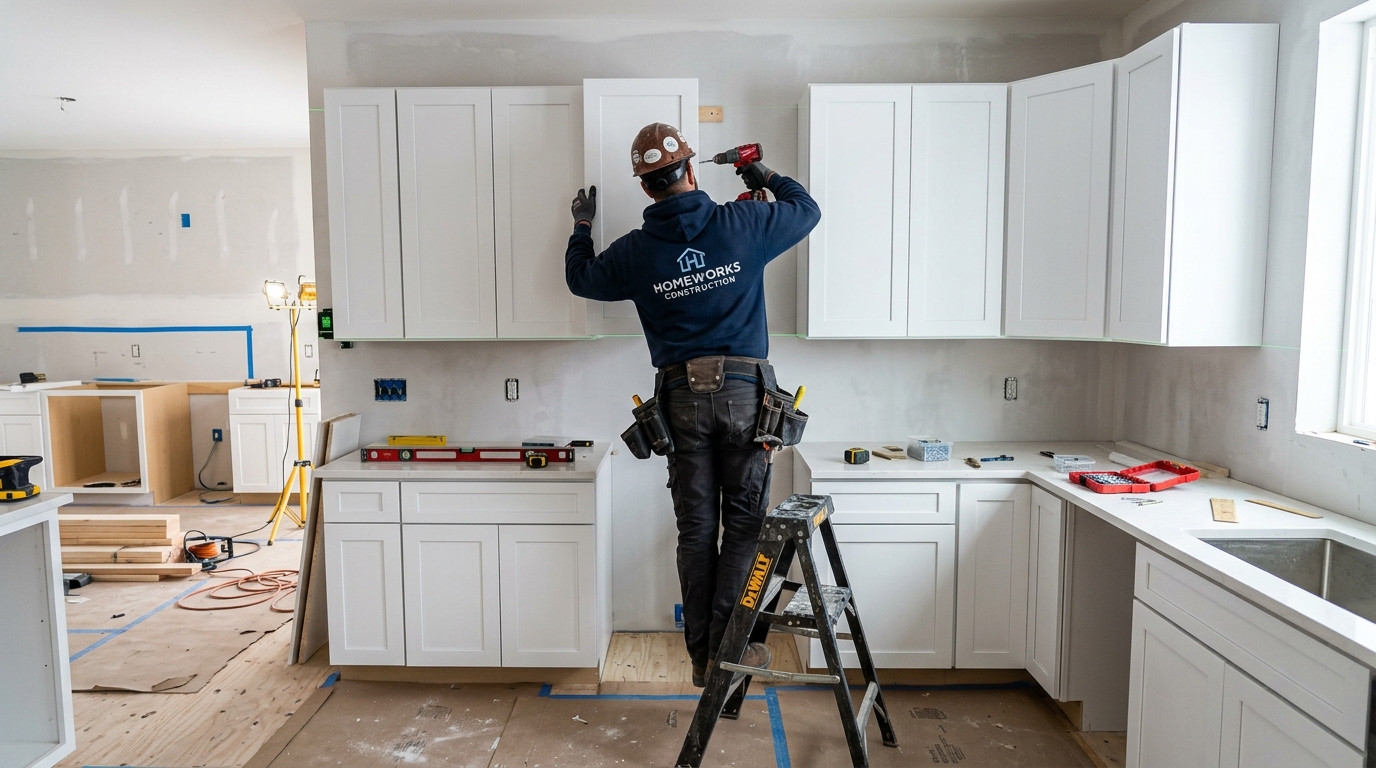
Kitchen renovation costs in Johnstown — 2026
In Johnstown, where the median household income is $33,466 and just over half of homes are owner-occupied (52.0% per U.S. Census Bureau, ACS 2024), kitchen renovation projects are weighed carefully against budget and likely return. The vast majority of local homes—over 92%—were built before 1980, with Johnstown and Westmont dominated by 1900–1940 housing stock. This means most kitchens are not only dated in style, but often cramped, outmoded layouts. Full-sized kitchens in these homes rarely fit today’s appliances and storage demands without some reconfiguring, meaning costs can quickly rise if you move beyond a straight replacement.
The biggest mistake I see locally is budgeting for a cosmetic upgrade, then deciding mid-way to move walls or change the layout—falling off a budget cliff. It’s the difference between thinking you’ll spend $18,000 and ending up at $58,500 or more by the time the dust clears. Labor and travel surcharges are also a reality in the Johnstown–Ebensburg area, with slower scheduling due to a thinner trade workforce compared to larger cities.
| Scope |
What's included |
Duration |
Price range |
| Full gut remodel, same layout |
cabinets, counters, appliances, flooring, lighting, fixtures |
6–10 weeks |
$27,000–$108,000 |
| Gut plus layout change |
all of the above plus moved plumbing, electrical, walls |
10–16 weeks |
$58,500–$108,000 |
| Cabinet replacement (stock to semi-custom) |
remove and install cabinets, hardware, patching |
1–3 weeks |
$6,300–$27,000 |
| Cabinet refacing |
new doors and drawer fronts, veneer, hardware |
3–6 days |
$6,300–$18,000 |
| Countertop replacement only |
template, fabricate, install, reconnect sink |
1–3 weeks |
$3,600–$14,500 |
| Kitchen flooring only |
remove existing, install new flooring |
3–6 days |
$4,500–$18,000 |
Estimates for a typical Johnstown kitchen. Cabinet grade and whether the layout changes move these figures more than square footage.
Choosing cabinetry
Cabinet choices set your entire kitchen budget and dictate what’s possible. In Johnstown’s older homes, refacing is genuinely worth considering if your cabinet boxes are solid, square, and the existing layout isn’t a pain to live with. Refacing swaps out doors, drawer fronts, and adds a fresh veneer—all at a fraction of the cost of full replacement—but it cannot give you a better layout or more storage. If the boxes are water-damaged, sagging, or poorly planned, it doesn’t make sense to reface.
Stock cabinets come in set sizes and finishes. They’re great where walls are square and standard, but Johnstown and Westmont’s early-1900s housing means few kitchens are “by the book.” That often pushes owners toward semi-custom just to get cabinets that fit even moderately crooked walls, match old ceiling heights, or fill awkward gaps. Semi-custom offers more dimensions and finishes, while full custom can make anything—at a price and with a longer wait.
Ignore price for a second—construction quality varies widely. Plywood boxes hold up better in humid seasons and to hard use; particleboard is fine in a dry, careful home but swells with leaks. Dovetail joints and full-extension soft-close hardware make drawers last and feel solid. Frameless cabinets maximize space but can be harder to install perfectly square, which matters in older Johnstown homes.
| Option |
Cost |
Best when |
Limitation |
| Painting existing cabinets |
$1,200–$3,500 |
boxes and doors sound, tight budget |
no layout or style change |
| Refacing |
$6,300–$18,000 |
boxes square and layout works |
storage unchanged |
| Stock cabinets |
$6,300–$27,000 |
standard dimensions fit |
filler strips, limited finishes |
| Semi-custom |
$18,000–$27,000 |
non-standard walls or finishes |
6–12 week lead time |
| Full custom |
$18,000–$27,000 |
unusual layout or high-end design |
longest lead, highest cost |
When a Johnstown kitchen needs walls moved
Moving walls, plumbing, or electrical is the pivot point that can double or triple your kitchen budget. Leaving the layout as-is keeps most projects in the $27,000–$108,000 range for a full gut remodel. Once you decide to knock down a wall or re-route plumbing, you’re now into the $58,500–$108,000 territory.
Relocating a kitchen sink or dishwasher sounds simple, but drain lines require a constant downward slope. In most Johnstown homes, moving a drain over a finished ceiling or slab can mean cutting or re-framing joists—never a small job. Adding electrical circuits seems easy until you open the panel and find there’s no extra capacity, especially in houses wired before the 1970s. Moving or removing a wall means you first have to determine if it’s load-bearing, which isn’t always obvious in these older houses. If it is, plan for an engineer’s plan and a permit from the City of Johnstown, plus inspections.
Even shifting a range hood means an exterior vent, punching through brick or old plaster—another cost and a possible permit. The bottom line: only move fixtures and walls if the current layout is truly unworkable, not just dated. Many satisfied kitchen owners in Johnstown made their existing galley or U-shape layout brighter, more efficient, and modern—without the jump in spend that comes from moving everything around.
Living through a kitchen renovation
Surviving a kitchen remodel is as much about daily routines as the work itself. In Johnstown, most owners set up a temporary kitchen—either in the dining room or basement. Plan a spot for the fridge, microwave, and a kettle or coffee maker on a folding table. In homes with only one kitchen sink, you’ll be washing dishes in a bathroom or laundry sink, so keep meals simple and lean on paper plates.
Dust is always worse than people think. A good crew puts up plastic sheeting and zippers (“zip walls”) to cordon off the work zone, but if your home’s layout is open or the kitchen is central, fine plaster dust can travel everywhere. The dumpster for demo debris will usually go in the driveway. Materials—cabinets, appliances, flooring—arrive early and need staging space. Plan ahead for pets (who tend to escape through open doors) and whether the noise and mess means you should move out for the week demolition happens.
The cost most folks forget is eating out—or buying prepared meals—sometimes for eight weeks. For many, that adds up to more than the flooring ($4,500–$18,000), so budget for it and don’t underestimate the disruption.
Why the contingency exists
With more than 92% of Johnstown homes built before 1980, surprises are almost guaranteed once you start removing cabinets and walls. Out-of-plumb walls and floors that aren’t level are the rule, not the exception, adding days of shimming and adjustment for new cabinets ($6,300–$27,000). Wiring is often a mix of old, ungrounded, or undersized circuits—extra runs and a new panel can quickly hit $2,000–$5,000. Water supply lines may be galvanized—corroded and due for replacement—or original cast iron drains, both of which should be upgraded for a modern kitchen.
Insulation can be missing entirely in exterior kitchen walls (common in Westmont and Johnstown houses). Unpermitted or DIY work from decades past—for example, a spliced wire hidden behind plaster—is a frequent and dangerous find. In homes built before 1978, any work that disturbs paint must follow the federal EPA Lead RRP rule. Testing for lead is a must before demolition; the same caution holds for old sheet flooring, some of which may contain asbestos.
If your home was built post-1980, the issues change: expect to hit the “builder-grade” wall—particleboard cabinets failing, not enough circuits for today’s appliances, original laminate counters reaching the end of their life.
Why appliance selection comes first
Appliance planning comes before anything else in a Johnstown kitchen renovation, and for good reason. The biggest mistake is choosing cabinets and only then going shopping for a refrigerator—or a slide-in versus freestanding range—finding out the hard way something doesn’t fit.
Standard-depth refrigerators stick out past the cabinets and are cheaper, but switching to a counter-depth model keeps lines cleaner. That choice must be made before the cabinets are ordered. Ranges also matter: slide-in and professional models require different countertop and cabinet cutouts. If switching from gas to induction or vice versa, check if your panel and wiring can handle the load—or if there’s a reliable gas line at all. Panel-ready dishwashers blend into cabinetry but demand early planning for correct panel size.
Range hoods that vent outside are much better at clearing smoke and odor, but they require a duct—sometimes impossible to add without significant wall or ceiling changes. Recirculating models are a compromise, but they’re sometimes the only viable choice in apartments or rowhouses.
Professional-grade appliances offer higher heat, larger ovens, or heavier construction, but the price premium is often for finish and aesthetics. Another real challenge: appliance lead times now sometimes exceed cabinet lead times, so lock in your selections before approving cabinet drawings.
Code requirements for Johnstown kitchens
In Johnstown, the dividing line for permits is simple: refacing cabinets, painting, swapping out hardware, or replacing a countertop where the sink stays put generally does not require a permit. Once you change the kitchen’s wiring—new or relocated circuits—or move plumbing, or make any structural change such as removing or moving a wall, you trigger a building permit. In the City of Johnstown, a formal plan review is often required for full-gut remodels with structural changes.
For electrical inspections, many Cambria County municipalities—including Johnstown—use third-party agencies like the Middle Department Inspection Agency, not just city inspectors. This extra step can add a few days to inspection timelines but is standard practice here.
Contractors must be registered with the Pennsylvania Office of Attorney General’s Home Improvement Contractor (HIC) registry if the contract is over $500. You can verify a contractor’s registration at hic.attorneygeneral.gov. All employers must carry workers’ compensation, verifiable at WCAIS (wcais.pa.gov).
If work is completed without permits where required, homeowners can face delays and expense at resale or refinance. Unpermitted renovations are a frequent reason for contracts to fall through here in Johnstown.
Frequently asked questions — kitchen renovation in Johnstown
What does a full gut kitchen remodel cost in Johnstown?
A full gut kitchen remodel in Johnstown—where most homes date from 1900 to 1940—ranges from $27,000–$108,000, with most projects landing near $58,500. This wide band reflects not just your finish choices, but how far you go in changing the layout or correcting old issues like wiring and plumbing. In Johnstown’s older neighborhoods, it’s common to find walls are not square, floors need leveling, or electrical supply is lacking. All these factors add real dollars to the budget. It pays to get a detailed written proposal—including allowances for surprises—because costs can rise quickly once demolition begins.
Can I cancel a renovation contract in Pennsylvania?
Yes, in Pennsylvania, you have a right to cancel a home improvement contract within three business days after signing, thanks to the Home Improvement Consumer Protection Act (HICPA). This rule protects homeowners in Johnstown and all of Cambria County—especially important for big-ticket projects like kitchen remodels, which often run from $18,000–$58,500 or more. The law specifically requires contractors to provide you with a written contract and notice of your right to cancel. This window gives you time to reconsider or get a second estimate if you feel rushed. Just be sure to notify the contractor in writing—email, letter, or the form often provided with the contract—to make it official.
How much does a kitchen renovation cost in Johnstown?
The cost of a kitchen renovation in Johnstown depends on the project’s scale and the age of your home. Cabinet refacing or painting might only run $1,200–$18,000, while replacing cabinets with semi-custom units pushes most budgets to $18,000–$27,000. Full gut remodels, especially in Johnstown’s older homes, go from $27,000–$108,000, with a typical spend near $58,500. The single biggest budget jump comes from changing the kitchen layout or moving plumbing and electrical, which also triggers permitting and inspections. Always ask for a detailed line-item quote and set aside a contingency, as surprises are not rare in a local housing stock that’s mostly pre-1980.
Does a kitchen renovation increase home value in Johnstown?
A kitchen renovation can improve both your home’s value and marketability in Johnstown, especially since most homes are over 80 years old and buyers expect modern kitchens. Projects in the $18,000–$58,500 range—like cabinet replacement or a modest gut remodel—often recoup a larger percentage of cost at resale compared to ultra-high-end projects. The return on investment depends heavily on local home prices and the quality of the finished work. But don’t expect every dollar spent to come back; kitchens increase appeal more than appraised value. Proper permits and code compliance matter—unpermitted work is a red flag that can kill a sale, a common problem in Johnstown’s older housing market.
What is the cheapest way to update a Johnstown kitchen?
The most cost-effective ways to freshen up a Johnstown kitchen are painting existing cabinets ($1,200–$3,500), swapping out hardware, and possibly replacing just the countertop ($3,600–$14,500). These stay well below the cost of full cabinet replacement and often make the kitchen feel new. Many Johnstown kitchens have sturdy (if plain) cabinet boxes from earlier eras—even if the doors look tired. Refacing is the next step up, still much cheaper than a full replacement, if the boxes are in decent shape. Unless your layout is a daily frustration or the cabinets really are falling apart, you rarely need to spend more.
How far ahead should I book a contractor in Johnstown?
In the Johnstown–Ebensburg area, finish-trade labor is in shorter supply than in metro areas, so you should plan to book your kitchen renovation contractor at least 2–4 months in advance—especially if you’re aiming for a spring or summer start. Lead times for semi-custom cabinets can reach 6–12 weeks ($18,000–$27,000), and appliance backorders sometimes run even longer. Factor in time for permitting and plan review if you’re renovating in the City of Johnstown. The earlier you lock in materials and trade schedules, the smoother your project will go. Last-minute jobs end up delayed or using “whoever’s available,” usually at a premium.
Can I live in the house during a kitchen renovation?
Most Johnstown homeowners do stay in their homes during a kitchen renovation, but you should go in with realistic expectations. If your remodel is a full gut job ($27,000–$108,000), expect at least 6–10 weeks without a proper kitchen. Many set up a microwave and fridge in a spare room, but washing dishes moves to the bathroom or laundry. Dust control is crucial in these older houses where walls are rarely airtight between rooms. The noise, dust, and constant crew access can wear on everyone—if you or family members are sensitive to disruption, consider moving out for demolition week. And do budget for more meals out—everyone does it, and the costs add up fast.
Do older Johnstown homes need electrical upgrades for a kitchen?
Yes—upgrading electrical is common in Johnstown, where nearly all homes are pre-1980 and many are much older. Modern kitchens need more circuits (dedicated lines for microwaves, dishwashers, and countertop appliances), and older wiring often isn’t grounded or is undersized. Full gut renovations ($27,000–$108,000) almost always include electrical upgrades for safety and to meet Pennsylvania Uniform Construction Code standards enforced locally. Have a licensed electrician review your panel—sometimes service upgrades are needed, especially when switching to induction ranges or adding high-powered appliances. Don’t skip this: it’s a safety issue, and shoddy wiring is the biggest red flag for local home inspectors.
What flooring works best in a kitchen?
In Johnstown kitchens—often located over old, sometimes uneven subfloors—flooring durability and water resistance matter most. Today’s top picks are luxury vinyl plank (LVP) and porcelain tile, both in the $4,500–$18,000 range installed. LVP handles water, pets, and temperature swings and can bridge minor dips or uneven areas. Porcelain tile is almost indestructible but needs a solid, level base—a challenge in many older homes, sometimes requiring costly prep. Solid hardwood isn’t recommended unless you’re prepared to stay vigilant about moisture. For budget jobs, sheet vinyl is still around, though today’s products look and wear better than what’s under those 1950s Johnstown cabinets.