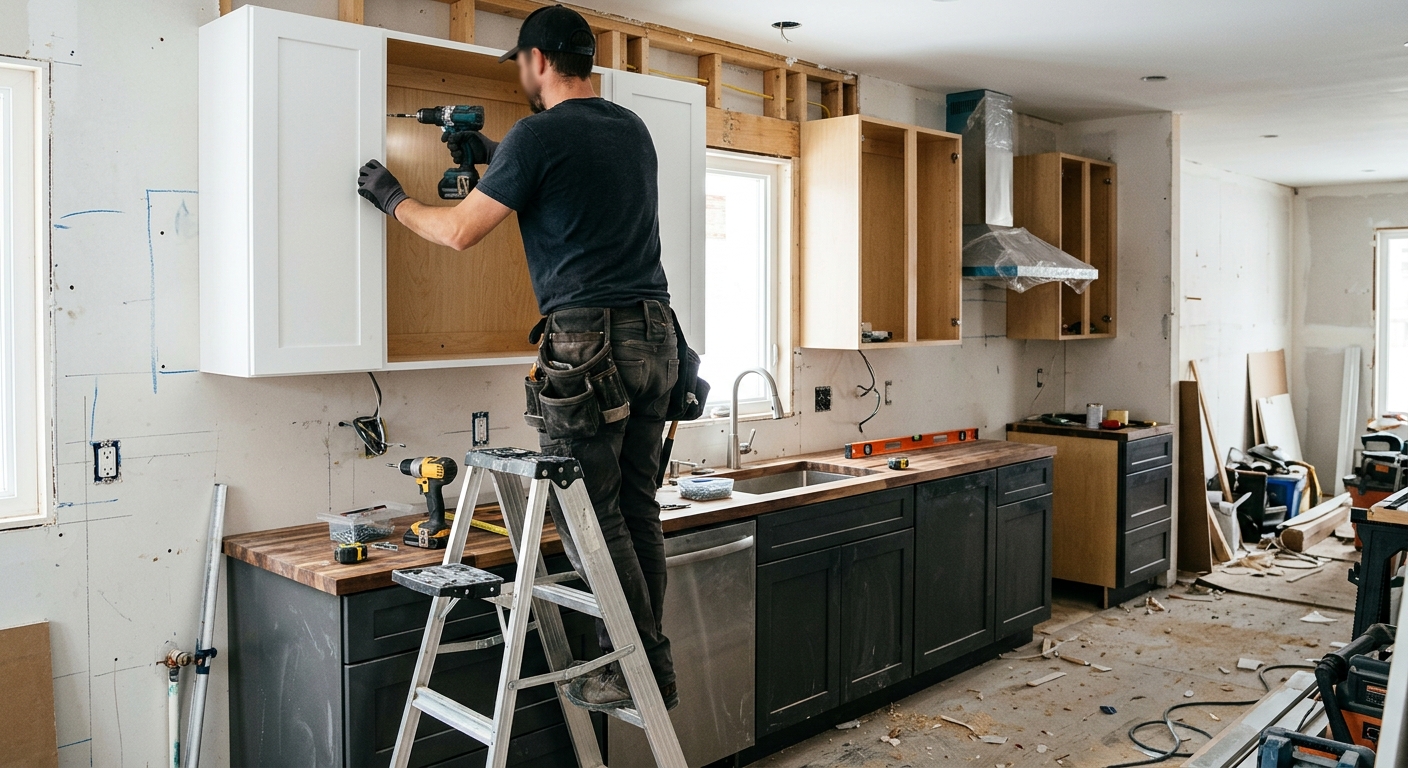
What a kitchen remodel costs in St. Thomas
St. Thomas kitchen remodel costs are shaped by high homeownership rates and the area’s typical home values. With a homeownership rate of 79.8% and a median household income of $57,186 (U.S. Census Bureau, ACS 2024), most local renovators are owners planning to stay for years, not investors flipping properties. That changes how local budgets are set: owners weigh daily quality against cost, especially when comparing a minor refresh to a full gut remodel.
The housing in Franklin County, including St. Thomas, is heavily weighted toward post-1960s suburbs along US-11 and I-81. This means most kitchens fall into two groups: mid-century galley spaces possibly needing wall changes, or larger but aging late-1990s layouts that are more about finishes than floorplan. The gap between these projects can triple your outlay.
The most common pitfall here is pricing a basic replacement, then slipping into layout changes or higher cabinet lines, which blows the budget. Decide if you’re moving plumbing, changing cabinet grade, or sticking to cosmetics before you get estimates. Below is a realistic range of project types with timeframes and price bands for St. Thomas:
| Scope |
What's included |
Duration |
Price range |
| Full gut remodel, same layout |
cabinets, counters, appliances, flooring, lighting, fixtures |
6–10 weeks |
$28,000–$111,500 |
| Gut plus layout change |
all of the above plus moved plumbing, electrical, walls |
10–16 weeks |
$60,500–$111,500 |
| Cabinet replacement (stock to semi-custom) |
remove and install cabinets, hardware, patching |
1–3 weeks |
$6,500–$28,000 |
| Cabinet refacing |
new doors and drawer fronts, veneer, hardware |
3–6 days |
$6,500–$18,500 |
| Countertop replacement only |
template, fabricate, install, reconnect sink |
1–3 weeks |
$3,700–$15,000 |
| Kitchen flooring only |
remove existing, install new flooring |
3–6 days |
$4,600–$18,500 |
Estimates for a typical St. Thomas kitchen. Cabinet grade and whether the layout changes move these figures more than square footage.
Lead times, sequencing and why it takes longer
The main frustration for St. Thomas homeowners doing a kitchen remodel is timing. What looks like a two-month project often stretches longer, and it's rarely contractor padding—it's sequencing and real-world lead times in Franklin County's rural market. Most finishes trades here are busy, so labor is tight and manufacturers or fabricators can add weeks.
The process kicks off with design and precise measurements, nailing down the cabinet layout and appliance specs. Only then should cabinets be ordered. Never wait for demolition to order—lead times for semi-custom cabinets regularly run 5–9 weeks in Franklin County due to thinner supplier networks and frequent rural travel surcharges.
Once cabinets arrive, demolition starts. Next is rough-in for plumbing and electrical (and any inspections), often a 1–2 week stretch. Once the walls and floors are ready, cabinets are installed—a process that may take several days for a large kitchen. The critical path kicks in here: countertop fabricators can't even measure (template) until cabinets are set and secured. This is a dead week that almost nobody anticipates—fabricators will only schedule templating after installation, not off a drawing, and then add up to 2–3 weeks for fabrication. If you rush this, you'll get a poor fit.
Once countertops are in, the remaining tasks—backsplash, flooring, trim, and fixtures—tend to move quickly. In St. Thomas, expect the unexpected: labor scheduling, inspections, and supplier slowdowns are more likely here than in metro Harrisburg due to a thinner trade pool. Planning cabinet orders before swinging a hammer is the surest way to keep your timeline in check.
Choosing a countertop for a St. Thomas kitchen
Picking a countertop in St. Thomas is mostly about how you use your kitchen, not just what you see in a showroom. Quartz remains the most popular choice: engineered, non-porous, very stain-resistant, and no need for sealing, but it is more sensitive to heat—placing a hot pan directly on quartz can leave a permanent mark. Granite is natural, unique in pattern, and resists abuse, but it needs periodic sealing and staining is possible if spills sit too long.
Laminate deserves more respect than it gets: today’s options are far from the scratched-up material you remember from decades past. It can look sharp, is easy to maintain, and is a smart, cost-effective choice in lower-priced or rental St. Thomas kitchens. Don’t write it off as a compromise; it’s often the right move.
Butcher block adds warmth and is a favorite in farmhouse kitchens, but it demands regular oiling and is quick to stain. Solid surface (like Corian) is repairable and seamless for undermount sinks, but suffers from heat sensitivity and scratching. Look at these not just as decor, but as daily tools—think about stains, knife marks, and cleaning.
Fabrication and install costs jump with complex edge profiles, extra cutouts, or long, visible seams. Templates are always done in person after cabinets are installed—no reputable fabricator will fabricate from measurements alone, especially given St. Thomas’s older homes and sometimes out-of-level walls.
Permits and inspections for a St. Thomas kitchen
In St. Thomas and Franklin County, a kitchen project crosses the permit line when you start changing plumbing, electrical circuits, or structure. If you’re just updating cabinets, painting, replacing counters in place, or refacing, no permit is generally needed. But relocating the sink, adding outlets, or removing a wall means you must apply for a permit. In nearby Chambersburg, a building permit is typically required for structural changes or moving electrical or plumbing in a kitchen, with a plan review for larger alterations.
Electrical inspections in Franklin County are often performed by third-party agencies like Approved Code Services or Commonwealth Code Inspection Service, not by the township itself. This catches many off guard—if anything fails, you’re repeating work until it passes. Plan for these inspections, especially if electrical or plumbing is moving.
Any contract over $500 for kitchen work requires your contractor to hold a Home Improvement Contractor (HIC) registration from the Pennsylvania Office of Attorney General. You can check this at hic.attorneygeneral.gov. If your contractor brings employees, workers’ compensation coverage is mandatory, and you can check this via the WCAIS system (wcais.pa.gov).
If you skip the permit where needed, you’ll almost always be caught at resale—unpermitted kitchens raise red flags in buyer inspections and can force costly after-the-fact fixes.
Cosmetic, replacement, gut, or layout change?
Not all “kitchen remodels” are created equal. In St. Thomas, the smart move is to define your remodel tier before calling anyone for an estimate, because pricing a “kitchen job” can mean anything from a quick refresh to rebuilding half the house.
- Cosmetic refresh: Paint, new hardware, lighting, a backsplash, maybe new flooring. No cabinets or layout change. This approach is economical, quick, and doesn’t require permits, making sense in a lower-value or rental home where a full redo isn’t justified.
- Pull and replace: All new cabinets and countertops, often with new appliances and fixtures—but everything stays where it was. Plumbing and electrical don’t move. This is the bread-and-butter job for most St. Thomas homeowners looking to modernize a worn-out 1990s kitchen.
- Gut, same layout: Everything comes out to the studs, letting you update insulation, electrical, plumbing, and straighten crooked walls—but you’re not changing the footprint. This step makes sense in mid-century homes with dated wiring but functional layouts.
- Layout change: Walls moved or removed, plumbing or gas lines rerouted, maybe adding an island or expanding the footprint. This is where costs climb sharply—moving the sink or range triggers extra design, permits, engineering, and a different class of trade contractor.
The real price cliff is between “gut, same layout” and “layout change.” Once mechanicals move, costs and complexity double, and in Franklin County, you’ll hit stiff permit and inspection requirements. Get clear on your tier first—no contractor can give a meaningful estimate before knowing if you want a cosmetic fix or plan to knock down walls.
Does a kitchen renovation pay back in St. Thomas?
Be realistic: in St. Thomas, a kitchen renovation almost always helps your home sell more quickly, but rarely pays back its entire cost in resale value—especially if you go high-end. A typical full gut remodel in St. Thomas runs $28,000–$111,500, and there’s little chance of recouping that upper end in a market where the median household income is $57,186 (U.S. Census Bureau, ACS 2024).
If your plan is to sell, focus on mid-range upgrades: modern cabinets, durable counters, and neutral finishes that appeal to buyers. Skip major layout changes and bold color choices. These “safe” projects not only cost less, they recover a greater share of what you invest. Going above the standard for this area—imported stone, chef’s appliances, or custom layouts—rarely returns its cost, and can actually make your house harder to price if it’s out of sync with the rest of the neighborhood.
If you’re renovating to live in the home, put your money where you’ll appreciate it daily—workflow, storage, lighting—not where a real estate agent insists. Mixing resale and personal enjoyment is the surest way to overspend and under-recover.
Why the electrical line grew
The most common reason a St. Thomas kitchen renovation blows past its original number is the electrical. Current code expects more from kitchens than anything built before 1980: multiple small-appliance circuits with GFCI protection at all countertop receptacles, tight spacing so outlets are always within reach, plus dedicated lines for dishwashers, disposals, built-in microwaves, and 240 volts if you want an electric range.
Franklin County’s kitchen stock is dominated by post-1960 homes, but with 63.1% built before 1980, a surprising number still have just one or two ungrounded circuits feeding the entire kitchen—totally inadequate by today’s safety and performance standards. Even in a 1990s kitchen, it’s not unusual to find too few circuits to add a second oven or large microwave. Once your kitchen walls are open—whether for insulation, plumbing, or layout—the inspector will expect you to upgrade to current code, and there’s no legal workaround. If your electrical panel is small or out of capacity, costs rise sharply.
Bringing an older St. Thomas kitchen’s wiring to code typically adds $3,700–$15,000 to your budget, depending on the panel situation and how much the layout is changing. It’s nearly always money well spent for safety and resale, but rarely a cheerful surprise.
Frequently asked questions — kitchen renovation in St. Thomas
How do I verify a kitchen contractor in Pennsylvania?
In Pennsylvania, every kitchen contractor doing a job over $500 must have Home Improvement Contractor (HIC) registration, issued by the Pennsylvania Office of Attorney General. This is true anywhere in Franklin County, including St. Thomas. You can verify a contractor’s HIC registration by searching hic.attorneygeneral.gov — look for a current registration linked to a real address, not just a cell phone. If a contractor brings employees to your job, they’re also required to carry workers’ compensation insurance, which you can check at wcais.pa.gov. Expect to see both certificates before you pay any deposit. For a major St. Thomas kitchen job in the $28,000–$111,500 range, due diligence upfront is your protection against problems or liability later on.
Do I need to change my kitchen layout?
Most St. Thomas kitchens don’t need the layout changed unless you can point to a daily frustration—like a 1950s galley that’s too tight or a stove in a corner you can’t stand. Franklin County homes built after 1960 along US-11 and I-81 usually have serviceable layouts, where “pull and replace” is the better value. Moving plumbing or walls drives costs steeply higher, often adding tens of thousands. For reference, a pull-and-replace remodel sits in the $6,500–$28,000 bracket, while changing the layout knocks you into the $60,500–$111,500 range—often with longer timelines and new permitting. In most cases, sticking to the original footprint pays off in both money and simplicity.
Does a kitchen renovation increase home value in St. Thomas?
Updating your St. Thomas kitchen does make your house more attractive to buyers and can help it sell more quickly, but it rarely recoups 100% of the cost—especially if you choose top-tier finishes or completely re-work the space. In a market based around a median income of $57,186, over-investing won’t be reflected in the resale price. Smart spending—a mid-range gut remodel in the $28,000–$60,500 range—improves appeal and avoids pricing your home out of its neighborhood. If you’re renovating to sell, stick to neutral tones, durable counters, and avoid drastic layout changes. Renovating for yourself? Spend on what actually makes your life easier, resale aside.
What is a change order and how should it work?
A change order in a Pennsylvania kitchen remodel is a written agreement between you and the contractor for any work, material, or layout change that wasn’t in the original contract. For St. Thomas and elsewhere in the state, the Home Improvement Consumer Protection Act (HICPA) requires contracts over $500 to be in writing, and that extends to change orders—no legal handshake deals. A clear change order should name what’s happening, what it will cost, and impact on schedule. If you’re deep into a gut remodel—say in the $28,000–$111,500 range—capture each decision with a written change, signed by both parties, before extra work gets underway. This avoids disputes later and protects both sides.
What is a realistic contingency for a St. Thomas kitchen?
Contingency is what you put aside for unknowns—surprises behind the drywall, hidden water leaks, or electrical that has to be upgraded. In a typical St. Thomas gut kitchen project, plan for a 10–20% contingency above your base contract. That means if you’re looking at a $28,000–$60,500 remodel, keeping $2,800–$12,000 reserved will let you absorb the unexpected without freezing the project. This is especially wise given the 63.1% of local homes built before 1980—older houses here turn up surprises at a higher rate than recent builds.
How far ahead should I book a contractor in St. Thomas?
In the St. Thomas area, with its thin rural labor pool, you’ll usually wait longer than in bigger cities for a proven kitchen remodeling crew. Expect reputable contractors to be booked 2–4 months out, especially for larger projects. If your remodel is in the $28,000–$111,500 band, start your search as early as possible: good trades fill up fast, and cabinetry and countertop orders can add weeks before a hammer even swings. For small jobs—like a modest cabinet swap in the $6,500–$18,500 zone—you might squeeze in sooner, but planning ahead saves you from picking a contractor out of desperation rather than quality.
Is induction worth it over gas?
Induction cooking is growing in popularity in St. Thomas, especially in newer remodels that upgrade electrical panels and wiring. Induction is faster and far more energy-efficient than gas, with instant temperature response and an easy-to-clean glass surface. The downside: you’ll need compatible cookware, and your kitchen must have a 240V line—sometimes missing or full in older electrical panels, which can add $3,700–$15,000 if your service needs upgrading. For many Franklin County owners with post-1960 kitchens, adding induction is practical and future-proof. If you love gas for pan work, stick with it, but for safety, speed, and ease, induction is worth considering in a new kitchen layout.
What does a quartz countertop cost in St. Thomas?
Quartz countertops for a typical St. Thomas kitchen run within the project band of $3,700–$15,000, depending on the slab brand, edge style, and number of cutouts required. Simple kitchens with straight runs and modest selections can be at the lower end, while larger kitchens with specialty edge profiles and more cutouts (for an undermount sink, for example) push you closer to the top. Quartz is a non-porous and low-maintenance option, great for busy family kitchens, and is considered a smart upgrade over laminate in Franklin County’s post-1960 housing stock.
Are St. Thomas kitchens typically small galley layouts?
The St. Thomas market is heavy on post-1960 single-family homes, so you see a mix: some 1950s-60s galley kitchens still need opening up, but most homes, especially those built along US-11 and I-81, have larger kitchens with standard layouts that don’t need walls moved to function well. Remodel projects in older galley layouts can require more investment (pushing from the $28,000–$60,500 range up if you’re moving walls), but most St. Thomas houses have enough space to stay within a pull-and-replace or same-layout gut. Don’t assume yours needs major changes—have a pro assess before planning layout moves.