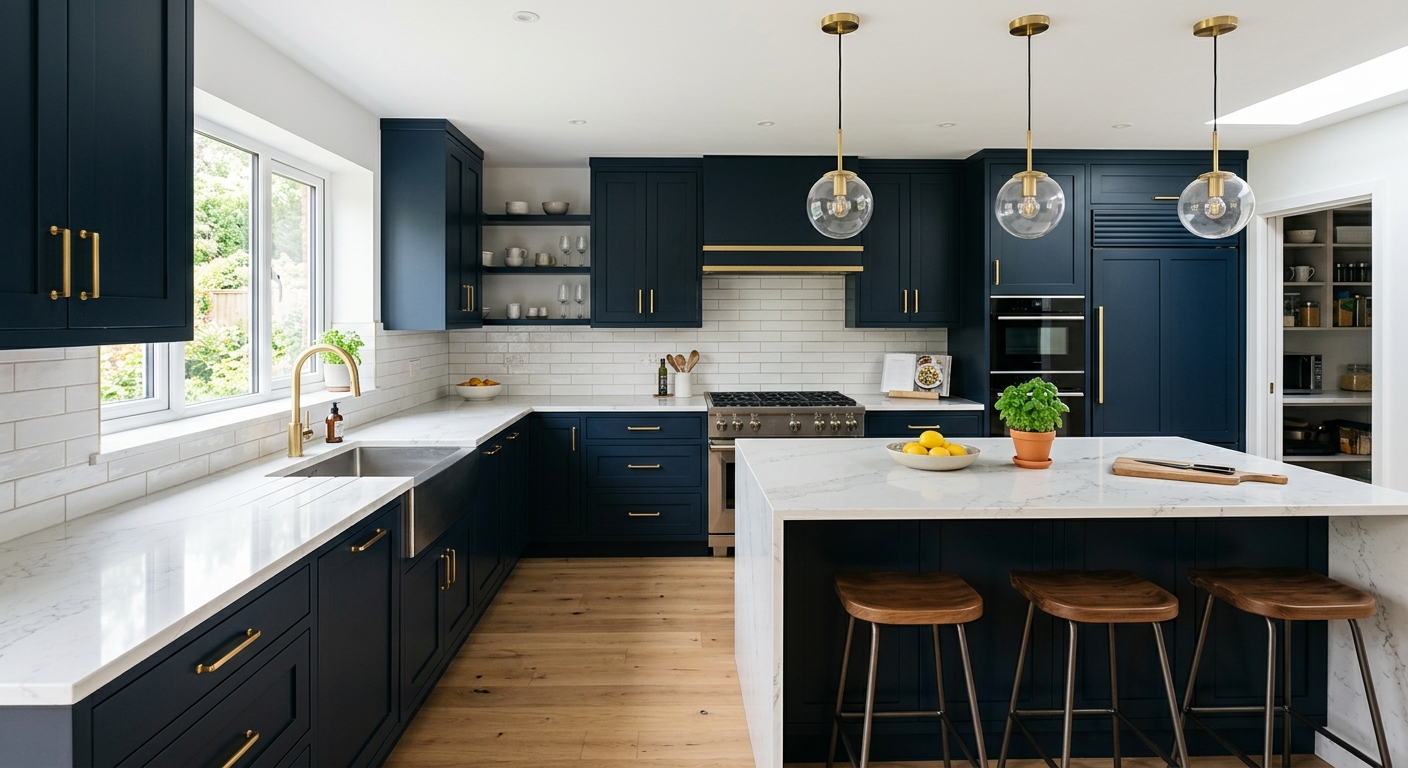
North East kitchen renovation prices by scope — 2026
North East homeowners approach kitchen renovations with the highest homeownership rate in Erie County at 86.6%, and a median income of $73,810 (U.S. Census Bureau, ACS 2024). Most kitchens here aren’t new—over 63% of homes were built before 1980, and pre-1950 Erie housing dominates. That means you’re likely dealing with legacy wiring, old plaster, and tight galley layouts. These homes often have kitchens that aren’t ready for a quick facelift; what starts as a simple cabinet swap can quickly become a gut job when hidden issues appear.
The most common way budgets get blown apart is a mismatch between the intended scope and the final specification. Homeowners use online “kitchen cost” calculators for a facelift, but pick selections—like a full rewire or layout changes—that actually belong to a far more expensive, invasive remodel. Make sure you're pricing the right tier for your goals and house type.
| Scope |
What's included |
Duration |
Price range |
| Full gut remodel, same layout |
cabinets, counters, appliances, flooring, lighting, fixtures |
6–10 weeks |
$29,500–$117,500 |
| Gut plus layout change |
all of the above plus moved plumbing, electrical, walls |
10–16 weeks |
$63,500–$117,500 |
| Cabinet replacement (stock to semi-custom) |
remove and install cabinets, hardware, patching |
1–3 weeks |
$6,800–$29,500 |
| Cabinet refacing |
new doors and drawer fronts, veneer, hardware |
3–6 days |
$6,800–$19,500 |
| Countertop replacement only |
template, fabricate, install, reconnect sink |
1–3 weeks |
$3,900–$15,500 |
| Kitchen flooring only |
remove existing, install new flooring |
3–6 days |
$4,900–$19,500 |
Estimates for a typical North East kitchen. Cabinet grade and whether the layout changes move these figures more than square footage.
Electrical work in an older North East kitchen
In North East, running into old wiring is the fastest way for your kitchen remodel to get more expensive. Most homes here were built before 1980, and a significant share have pre-1950 legacy wiring and odd wall framing. Kitchens from those eras often have two-wire ungrounded circuits, maybe a single shared circuit running lights, outlets, and sometimes the fridge. Many panels don’t have spare space, and once in a while, we still see aluminum branch wiring from the 1960s or 1970s. Once those walls are open, you can count on the inspector requiring everything to meet today’s code.
Current code under the Pennsylvania Uniform Construction Code (UCC) expects:
- Dedicated 20-amp small appliance circuits (at least two)
- GFCI protection at any countertop outlet
- Receptacle spacing every 4 feet on countertops
- Dedicated circuits for dishwasher, garbage disposal, and built-in microwave
- 240-volt circuit for an electric range if present
In houses built in the last 25 years, you still sometimes find kitchens with too few circuits — a 1990s remodel might be short two or three dedicated lines. Once you go to pull a permit or get an inspection, grandfathering only applies to untouched areas. Upgrade work must meet 2026 code, which can mean a rewiring bill you didn’t expect.
Bringing kitchen electrical to code in North East generally adds $4,800–$15,500 to the project, depending on existing wiring and panel capacity.
Eight weeks without a kitchen
If you plan a full gut remodel, expect to do without your kitchen for 6 to 10 weeks. In North East, most homeowners set up a temporary kitchen in the dining room, basement, or even the garage. You’ll want your fridge plugged in nearby, a microwave and kettle on a folding table, and a stash of paper plates and utensils. For washing up, most settle for the laundry sink, bathroom sink, or a big plastic tub. You quickly get used to simple meals, but there is no avoiding the spike in takeout and prepared food spending—over two months, eating out can easily cost more than new vinyl flooring.
Dust is everywhere unless the crew sets up plastic zip walls and keeps demolition sealed off from the living space. Expect foot traffic, noise, and material staging somewhere—usually the garage or driveway, with a dumpster taking up part of your parking for most of the job. Pet owners should plan: someone is always coming and going, and doors are open more than usual.
A lot of families move out for week one—demolition is the loudest, dustiest, and least compatible with daily living. After that, many stay put. Build in the extra food cost—it’s not small, and it’s never optional on a big job.
Choosing a countertop for a North East kitchen
In North East, practical daily use should drive your countertop choice as much as looks. Quartz has taken most of the market—it’s durable, non-porous, and very stain resistant, but it can crack with a hot pan and cannot be repaired if damaged. Granite is more heat tolerant and has natural variation, but it requires sealing once or twice a year and can be stained by oil or wine if neglected. Laminate, often overlooked, is far better than its reputation; it can last decades, resists most stains, doesn’t need sealing, and works well in rentals or modest kitchens. Butcher block is warm and inviting but needs oiling and can show water rings or scratches; expect upkeep. Solid surface (like Corian) blends seams and can be sanded out if scratched or chipped, which makes it a durable, lower-maintenance option.
Fabrication and installation costs depend on edge profiles, sink cutouts, seam placement, and whether the fabricator visits for a physical template instead of working from drawings—templates are the norm in this area to account for out-of-square walls and irregular framing. An extra seam or tricky fit in an older house can add to the cost, even if you start with a modest material.
Don’t feel pressured to overspend on granite or quartz in a rental, starter home, or lower-value North East property. Laminate or refreshed solid surface may make more sense and, for $3,900–$15,500, delivers plenty of function and style without blowing the budget.
Lead times, sequencing and why it takes longer
A North East kitchen often takes longer than expected, especially in the moderate-density Erie County market where finish crews focus on larger Erie and Millcreek jobs. The biggest delays come from cabinet and countertop lead times—not demolition or tile. Here is the usual sequence:
- Design finalized and accurate measurement on site
- Cabinet order placed—lead time on semi-custom can be 4–12 weeks
- Demolition only begins once cabinets are on order, not before
- Rough-ins for electrical, plumbing, any necessary inspection
- Cabinets installed
- Countertop templated—cannot be done off a blueprint, as walls and cabinets are never perfect in older Erie County homes
- Countertops fabricated offsite (1–3 weeks), then installed
- Flooring, backsplash, and trim work completed
Most homeowners are surprised by the unavoidable “dead week” or longer after cabinet install but before countertops arrive. No reputable local shop will template tops before cabinets are locked in, because the slightest installation issue throws the fit off. Trying to trim time by scheduling flooring or tile before the counters just creates rework. Avoid the urge to start demolition before you have cabinets on order—it’s the number one regret among North East kitchen clients.
What requires a permit in a kitchen renovation
In Erie County, a kitchen renovation does not need a permit for paint, hardware, refacing, or swapping a countertop if nothing new gets cut in. Permits are required for nearly any new or moved electrical, new plumbing lines, relocated walls, and for adding or upgrading mechanical ventilation. Cosmetic projects fly under the radar, but once you involve structural elements or circuit changes, you’ll need municipal permitting—usually handled by the City of Erie Department of Codes and Permits if you’re in city limits.
Inspections follow the same authority—municipal inspectors check structural, electrical, and mechanical work. For substantial projects, expect a plan review if you move walls, plumbing, or anything load-bearing. Skipping a required permit is often caught on resale when disclosures and title checks flag unpermitted work.
Every contractor on site must hold Pennsylvania Home Improvement Contractor (HIC) registration for contracts over $500 (verify at hic.attorneygeneral.gov). Any employer must show workers' compensation compliance in Pennsylvania; this is checked via the WCAIS system (wcais.pa.gov).
Do not gamble on permits to save a bit up front—a violation can tie up a future sale and undo thousands of dollars of finished work.
Three ways to organise the project
You have three main options for running a North East kitchen remodel. The simplest but priciest is hiring a design-build kitchen firm. They’ll handle design, cabinets, and project management under one contract. This route is best when you want a one-stop shop and minimal involvement—though you’ll pay a premium for the convenience and accountability, and in Erie County, these firms are busiest in Erie and Millcreek, which may stretch timelines in North East.
A general contractor works as a coordinator: you (or perhaps your designer) select the finishes and appliances, while the GC lines up the plumber, electrician, and finish crew. This is the best compromise for most North East homeowners—it balances cost with expertise, letting you stay involved in decisions without running the job day to day. The tighter finish labor market here may mean a little more flexibility on scheduling and a need to get on a GC’s calendar early in season, as crews cluster closer to Erie.
Owner-managed is the cheapest but hardest route. You hire trades, schedule inspections, and handle sequencing. Some folks succeed, but unless you’re retired or can take the summer off, it’s easy to lose weeks to a missed delivery or a flaky subcontractor. If your job triggers permits, the margin for error shrinks: missed inspections or scheduling failures lead directly to lost time and blown budgets. For anyone with a day job or who wants an on-time completion, leave owner-managed to very light cosmetic projects.
Frequently asked questions — kitchen renovation in North East
Should I reface or replace my kitchen cabinets?
In North East, the choice between refacing and replacing depends on the cabinets’ structure and your budget. If your cabinets are solid and the boxes are made from plywood or thick particleboard—as is common in pre-1980 Erie County housing—refacing can make sense. You keep the frames but get new doors, drawer fronts, veneer, and hardware. It’s faster and less disruptive, costing $6,800–$19,500, and often done in less than a week. Cabinet replacement starts at $6,800–$29,500 for stock to semi-custom but is more invasive, may uncover wall framing issues in older homes, and delivers layout flexibility. If your cabinets are sagging, have water damage, or you want big changes (like new cabinet heights or moving appliances), replacement is the way to go. For many North East homes with sturdy structures but dated finishes, refacing is a sound investment.
What does a full gut kitchen remodel cost in North East?
A full gut kitchen remodel in North East, keeping the same basic layout, runs from $29,500–$117,500, with most jobs landing around $63,500. That figure assumes you’re replacing cabinets, updating appliances, resurfacing floors, and bringing lighting, outlets, and fixtures to current standards. If you add a layout change—moving major plumbing or walls—the bottom of the range moves north to $63,500 and finishes can push up towards the maximum in older homes with challenging wiring and framing. For local context, North East’s median income is $73,810 and most homes are owner-occupied; investing in a proper gut remodel can make sense if you plan to stay but is a big leap for a flip or rental. Always get a written scope line-by-line.
Who inspects kitchen electrical work in North East?
In North East, electrical work in a kitchen renovation is inspected by municipal authorities—specifically by the City of Erie Department of Codes and Permits if you’re within Erie. If you hire a contractor for a remodel that includes circuit changes (which, in older Erie County kitchens, is almost always the case), expect an inspector to check that you have the proper number of dedicated small-appliance circuits, GFCI outlets, and overall compliance with the Pennsylvania Uniform Construction Code. If you plan a major electrical upgrade as part of a full gut job—costing between $29,500–$117,500 for the total renovation—the inspector is the person who determines when you can close up walls and move on. Passing inspection is not optional; work done without a permit or inspection will cause headaches at resale.
How far ahead should I book a contractor in North East?
In North East’s tighter labor market, especially for finish crews, you should contact and select your kitchen remodel contractor three to six months before you want work to begin. Many finish crews are scheduled out in Erie and Millcreek and have limited windows for smaller North East jobs. If your project is a full kitchen gut with a budget in the typical $63,500 range, start planning early: you’ll need time for design, ordering semi-custom cabinets (which can take up to 12 weeks), obtaining permits, and sequencing subcontractors. Waiting until spring or summer to book will only delay your start date. If you want the project completed before a major holiday or event, add a buffer for cabinet delivery and countertop fabrication, which routinely add weeks to the process in this market.
How should renovation payments be scheduled?
Pennsylvania’s Home Improvement Consumer Protection Act (HICPA) requires a written contract for kitchen remodels over $500. In North East, standard practice is a deposit at signing (often 10–20%), a payment when cabinets or major materials are ordered, a draw at the start of on-site demolition, another after rough-in inspections, and a final payment at completion. For a full kitchen gut costing $29,500–$117,500, never pay for all labor or materials up front. Payments should be tied to progress milestones outlined in your contract. By law, you have a three business-day right to cancel the contract. Never allow a contractor to front payment for insurance deductibles—a prohibited practice. Schedule payments to protect yourself and keep the job moving; reputable North East contractors expect this arrangement.
What is a realistic contingency for a North East kitchen?
In North East, especially with so many homes built before 1980, a 15–20% contingency on top of the project total is realistic—and sometimes necessary. Hidden legacy wiring, out-of-plumb wall framing, undersized subfloors, or patchy insulation can all add expenses once demolition starts. For a $63,500 typical kitchen gut, you’ll want to reserve at least $9,500–$13,000 for unforeseen conditions. Skimping on contingency means decisions get rushed or quality compromised later. This market’s older housing stock is full of surprises; a padded contingency keeps your project from stalling if your electrician or carpenter finds a must-fix problem behind the cabinets.
Do older North East homes need electrical upgrades for a kitchen?
Yes, most kitchens in North East’s pre-1980 housing stock will need significant electrical upgrades to meet code during renovation. It’s common to open up plaster and lath walls and discover a kitchen running on two-wire, ungrounded circuits, sometimes with too few outlets or a single shared circuit. Pennsylvania Uniform Construction Code requires dedicated, grounded, GFCI-protected circuits for modern kitchens—which means new wiring back to the breaker panel and a possible panel upgrade. Budget for an added $4,800–$15,500 just for electrical updates, depending on house age and panel capacity. If this work is skipped, the inspector will not sign off, and you’ll have problems at resale or with insurance. Make electrical a planning point, not an afterthought.
Can I over-improve for my North East neighbourhood?
Absolutely—it’s easy to renovate beyond what the local market will support, especially in North East where the housing is mostly older and modest values are common. Spending the high end of $117,500 on a giant kitchen in a modest three-bedroom home almost never brings a dollar-for-dollar return, and can even complicate resale if your home now sits far above neighboring properties in finish and price. Think about the overall neighborhood value, your future plans, and local comps. Many North East owners sensibly choose a durable, midrange remodel in the $29,500–$63,500 range. Stick with practical improvements—the best payback comes from fixing wiring, fixing the floorplan, and keeping finishes in line with other owner-occupied homes here.
What is the difference between stock and semi-custom cabinets?
Stock cabinets are manufactured in standard sizes and finishes, shipped quickly, and cost less—closer to the $6,800 entry point for replacement. Semi-custom cabinets let you make adjustments to height, width, finish, and some features, which is useful in older North East homes with irregular wall framing and out-of-square spaces. Expect a lead time of 6–12 weeks and a higher price—often around $19,500. Semi-custom is a popular option here because few kitchens are a perfect fit for stock. If your kitchen is a straightforward layout and you’re on a budget, stock works. In most pre-1980 Erie housing, the best fit and appearance often involve semi-custom, but that does come with extra wait time and cost.