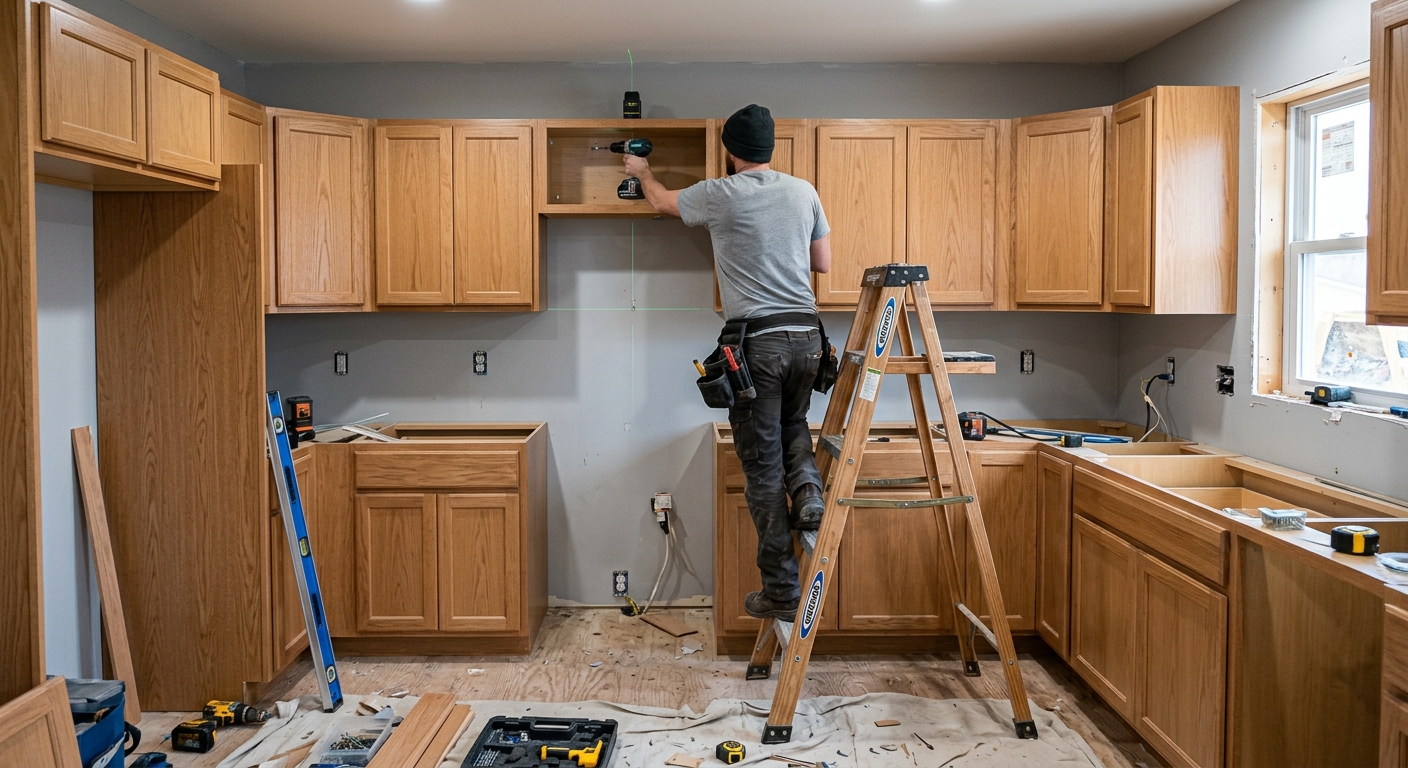
Kitchen renovation costs in Frankstown — 2026
In Frankstown, kitchen renovation budgets are shaped by a high rate of homeownership (81.7%) and a median household income of $92,156 (U.S. Census Bureau, ACS 2024), both of which put more owners in a position to invest in significant upgrades. The dominance of early-1900s housing in Altoona and Hollidaysburg means many kitchens start with inefficient layouts or outdated wiring, nearly always demanding more than simple finish changes. About 54.6% of homes were built before 1980, so don’t be surprised if something seemingly straightforward, like new cabinets, becomes a more involved job requiring layout tweaks or a complete rewire.
The single most common budgeting mistake is planning for a surface-level renovation—just cabinets and counters—and discovering you’ve committed to a more invasive scope when an old wall comes down or the original wiring can’t legally stay. Always price your actual scope before demo.
| Scope |
What's included |
Duration |
Price range |
| Full gut remodel, same layout |
cabinets, counters, appliances, flooring, lighting, fixtures |
6–10 weeks |
$31,500–$125,500 |
| Gut plus layout change |
all of the above plus moved plumbing, electrical, walls |
10–16 weeks |
$68,000–$125,500 |
| Cabinet replacement (stock to semi-custom) |
remove and install cabinets, hardware, patching |
1–3 weeks |
$7,300–$31,500 |
| Cabinet refacing |
new doors and drawer fronts, veneer, hardware |
3–6 days |
$7,300–$21,000 |
| Countertop replacement only |
template, fabricate, install, reconnect sink |
1–3 weeks |
$4,200–$17,000 |
| Kitchen flooring only |
remove existing, install new flooring |
3–6 days |
$5,200–$21,000 |
Estimates for a typical Frankstown kitchen. Cabinet grade and whether the layout changes move these figures more than square footage.
General contractor, kitchen firm, or manage it yourself?
Homeowners in Frankstown considering a kitchen renovation should decide early how much responsibility—and risk—they want to assume. A design-build kitchen firm handles everything: design, cabinetry, installation, and project management under one contract. This is the highest cost but comes with the least hassle: you get a single point of accountability and the job moves steadily, which can matter when local finish-trade labor is in thin supply compared to places like State College.
A general contractor will coordinate trades like plumbing, electrical, flooring, and cabinetry installation. They’ll manage the schedule and make sure work passes inspection, but you’ll need to bring a designer or make all the finish and appliance selections yourself. This path sits in the mid-range for cost and effort. It adds some flexibility but can stall if a trade gets delayed, which happens in Blair County's market where subcontractor lead times tend to stretch.
Owner-management is the lowest cash outlay but demands the most: you hire every trade, chase quotes, and solve schedule conflicts yourself. In this area, with labor spread thin, a late plumber or electrician can set your project back weeks. You should not self-manage if you have a full-time job or are planning a project that triggers permits (anything involving new circuits, major plumbing, or walls coming down). Scheduling and code compliance issues land squarely on your back, and in an older Frankstown kitchen, they’re common.
Electrical work in an older Frankstown kitchen
For most older kitchens in Frankstown—where more than half the housing was built before 1980—electrical is the single biggest reason projects go over budget. The Pennsylvania Uniform Construction Code (UCC), based on the IRC, sets modern requirements: kitchens must have dedicated 20-amp small-appliance circuits, GFCI protection at all countertop outlets, receptacles no more than 4 feet apart, and separate circuits for dishwasher, disposal, and microwave. Electric ranges demand a dedicated 240-volt line.
But in many houses from Altoona, Hollidaysburg, and by extension Frankstown, the original kitchen wiring is ungrounded, has undersized or overloaded circuits, and often no capacity in the panel for new breakers. It’s common to open up a wall and discover knob-and-tube or aluminum wiring—neither of which will clear a modern inspection. Once you open a wall, inspectors expect any electrical work to bring the entire kitchen to current code. There are no grandfathered exceptions for partial upgrades.
For a typical Frankstown kitchen, bringing electrical fully up to code falls in the range of $7,300–$31,500 as part of a gut remodel. Panels that need replacement, or homes that need new service, will run higher within this range. If you’re budgeting for the low end, expect a surprise if your home hasn’t had a major electrical upgrade since the 1980s.
Quartz, granite, laminate or butcher block
In Frankstown, countertop choices matter more for function than for show. Quartz is engineered stone—a non-porous surface that resists stains and doesn't need sealing. It is, however, sensitive to heat: hot pans can scorch or crack it, so always use a trivet. Granite is natural, with unique patterns and period charm, but requires periodic sealing to fend off stains. It tolerates heat better than quartz and can be repaired, but it’s not impervious.
Laminate has moved on from the era of lifted edges and burns. Today’s material resists stains and comes in a range of colors and patterns, including some that mimic stone. For rental properties or modest kitchens, choosing laminate keeps costs in check without sacrificing day-to-day durability. Butcher block brings a warm, tactile quality—ideal for prepping food or making an old house feel welcoming—but it does need regular oiling, and it will show scratches and stains. The trade-off is that sanding can usually restore its surface.
Fabrication cost isn’t just about material. Complex edge profiles, undermount sink cutouts, and seam placement all affect the final price. A template visit is essential: installers create a physical or digital template after lower cabinets are installed. Don't skip this step, as forcing countertops to fit a drawing leads to errors and expensive rework.
Laminate remains a sensible first choice for many Frankstown kitchens. Don’t let anyone shame you out of it—especially in a home where the rest of the finishes aren’t at a luxury level.
Lead times, sequencing and why it takes longer
For homeowners in Frankstown, the time kitchen renovations take—often longer than you’d expect—reflects both the nature of the work and regional realities. In Blair County, finish-trade labor is in short supply, so delays are more common than in larger metros. Here’s the typical flow: designing your kitchen and measuring existing space comes first, followed by placing the cabinet order. Don’t rip out your kitchen until cabinets are on order, because in this area, lead times can stretch from six to twelve weeks even for semi-custom cabinets.
Once the cabinets are ordered, demolition happens, and rough-in work for electrical and plumbing can begin. An inspection usually follows if permits are triggered. Cabinets are installed next, but this only starts once drywall is up and the space is ready—something that’s easy to misjudge if you’re juggling trades yourself. After lower cabinets are in place, only then can the countertop fabricator create a precise template. This step is unavoidable; templating from a plan, not physical cabinets, risks expensive mistakes.
There is always a gap—sometimes a week or two—between cabinet installation and countertop templating, as fabricators are often backlogged. Add another one to two weeks for fabrication, then installation, before flooring and final trim can wrap up the job. Nobody mentions this downtime, but it’s real and difficult to accelerate in Frankstown’s market. To save time, always finalize and order your cabinets before any demolition begins.
Why appliance selection comes first
In Frankstown, choosing your appliances before designing or ordering cabinets is non-negotiable. Cabinets must be built (and installed) to fit the precise appliance dimensions—especially for refrigerators, ranges, and dishwashers. Pick appliances late, and the odds are high you’ll face costly delays or modifications when a 36-inch fridge doesn’t slot into a 33-inch hole.
Refrigerators come in standard and counter-depth models. Counter-depth gives a cleaner look and prevents the fridge from jutting past the cabinets, but may offer less capacity and usually costs more. Ranges break down into slide-in (no back panel, fits flush with counter) and freestanding (with a back panel; fits almost anywhere). Changing from gas to induction or vice versa demands either new electrical circuits or a gas line, both of which may require permits and rework. Panel-ready dishwashers can blend in, but only if you specify them before cabinets are built.
Never overlook venting: ducting a range hood to the outside is much more effective than a recirculating type that traps grease and smells in the house. Professional-series appliances deliver higher power and a keen sense of style, but their premium is often more about aesthetic and brand cachet than necessity—especially given Blair County's typical cooking routines.
Finally, appliance lead times (especially on sought-after models) can now exceed those for cabinets, so order as early as possible.
Code requirements for Frankstown kitchens
Cosmetic upgrades—like paint, hardware swaps, cabinet refacing, or direct countertop replacement—typically don’t require a permit in Frankstown and the surrounding Blair County municipalities. However, once your project involves structural changes, new or relocated plumbing, or any new electrical circuits, a permit is required. Plan reviews are mandatory in neighboring Altoona when a remodel alters load-bearing walls or re-routes plumbing stacks, and it’s the same story in most local townships.
Electrical inspections are not handled by the local municipality in Altoona; instead, third-party agencies approved by the Altoona Code Enforcement Office perform these. This often surprises homeowners used to municipal inspections. For work above $500, Pennsylvania requires any contractor you hire to be registered with the Home Improvement Contractor (HIC) program administered by the Office of Attorney General. You can verify a contractor’s status at hic.attorneygeneral.gov. All employers must carry workers’ compensation insurance, which you can check through WCAIS (wcais.pa.gov). For homes built before 1978, lead-safe certification for renovations is federally required.
Unpermitted work can derail a future home sale if code compliance can’t be documented or permitted later. Always ensure you and your contractor pull the correct permits—especially for anything involving electrical, plumbing, or walls.
Frequently asked questions — kitchen renovation in Frankstown
How does Frankstown's housing stock affect cabinet fit?
In Frankstown, most homes date to before 1980—often much earlier—and that means walls aren’t always square, floors are rarely level, and “standard” sizes rarely fit as planned. Any cabinet installation, whether replacement or refacing, tends to need site-specific adjustments and sometimes custom fillers. The odds of opening a wall and finding old wiring or plumbing needing upgrade are quite high. If you’re budgeting for a cabinet replacement project, allow for both minor framing repairs and unplanned patching. A typical cabinet replacement in Frankstown falls between $7,300–$31,500. Older houses demand more from both your installer and your budget than a modern subdivision kitchen.
What does a quartz countertop cost in Frankstown?
Quartz countertops in Frankstown kitchens generally run from $4,200–$17,000 installed, with the majority of projects landing close to the $9,400 mark for an average-size setup. Pricing includes template creation, fabrication, installation, and reconnecting the sink. More elaborate edges, undermount sinks, and cutouts drive costs upward. It’s important to remember that a significant portion of Frankstown’s kitchens are non-standard in size or layout due to the age of the housing stock, which pushes some jobs slightly higher than the national average. Always get a local fabricator to measure after cabinets are in—you can’t safely reuse old numbers from an existing countertop.
What happens if previous work was unpermitted?
Unpermitted work in a Frankstown kitchen almost always becomes a headache at resale. Title companies and buyers can require documentation of permits and final inspections, especially for electrical or plumbing changes found during an appraisal or home inspection. If unpermitted work comes to light, you may be required to open walls and bring everything up to current code for final approval. Sometimes, that means you end up paying for the same wiring, plumbing, or venting work twice. For projects valued over $7,300–$31,500 (the common range for new cabinets or major work), always secure and keep all permit documentation.
What countertop material is best for a family kitchen?
For busy Frankstown families, quartz is usually the best fit: it resists staining, doesn’t need sealing, handles dropped dishes better than stone, and generally looks great for years. Granite is a close second, but it demands resealing and shows water spots. Laminate, at $4,200–$17,000 installed depending on size and style, is fine for families where a little wear and tear doesn’t matter or in homes that don’t demand premium finishes. Butcher block brings warmth and is forgiving in terms of repair (light sanding erases stains and scratches), but it’s the highest maintenance and not ideal for families who want to set down a wet glass and forget about it.
Do I need to change my kitchen layout?
Not always. In Frankstown, a lot depends on what you start with. Early-1900s kitchens (which are common regionally) often feature cramped galley layouts and little counter space; gutting and reconfiguring makes sense only if you really want a different flow. For homes updated in the 1980s and later, keeping the same layout but updating finishes is typically simpler and less costly. Changing layout pushes your project into the $68,000–$125,500 band because of relocated plumbing, wiring, and walls. If the current space works, resist the urge to move things just to follow trends—you’ll save time and money.
What are cabinet lead times in Frankstown right now?
As of 2026, cabinet lead times in Frankstown and nearby Blair County typically run six to twelve weeks for semi-custom cabinets, sometimes longer for custom. This is slightly slower than larger metropolitan areas due to fewer local manufacturers and stretched install labor. For a standard replacement job (budgeted at $7,300–$31,500), always order as early as possible, and don’t schedule demolition until your delivery date is locked in. These lead times are the main reason kitchen projects in the Frankstown area can stretch out even when other trades are available.
How should renovation payments be scheduled?
In Pennsylvania—including Frankstown—payment schedules for home improvement contracts above $500 must be spelled out in writing under the Home Improvement Consumer Protection Act. Industry best practice is a percentage down (often 10–30%) at contract signing, one payment upon cabinet delivery, the next after countertop installation, and a final holdback until everything is completed and inspected. For a full kitchen gut running $31,500–$125,500, never pay more than a third up front on any phase, and avoid any contractor unwilling to document clear payment milestones in your contract.
Should I renovate before selling or let the buyer do it?
If your Frankstown kitchen is safe, clean, and functional—if old but not worn out—you may not recoup the full cost of a full gut remodel in most sales. A light cosmetic update (paint, hardware, maybe countertop replacement) in the $4,200–$17,000 band can freshen the look without burning your equity. Buyers for Blair County’s older homes often prefer to do a big kitchen overhaul themselves to suit their taste, unless the existing space is truly unusable or unsightly.
How much more does moving the sink and range cost?
Moving major kitchen fixtures—especially the sink and range—carries significant cost in Frankstown’s older homes due to the near-inevitability of opening walls and rerouting plumbing, gas, and electrical lines. On top of the standard full gut price of $31,500–$125,500, expect an additional $10,000–$20,000 if major relocation is involved, especially if the home has stone or block foundation walls or original piping. The bulk of this cost comes from labor and code upgrades triggered when moving these fixtures.