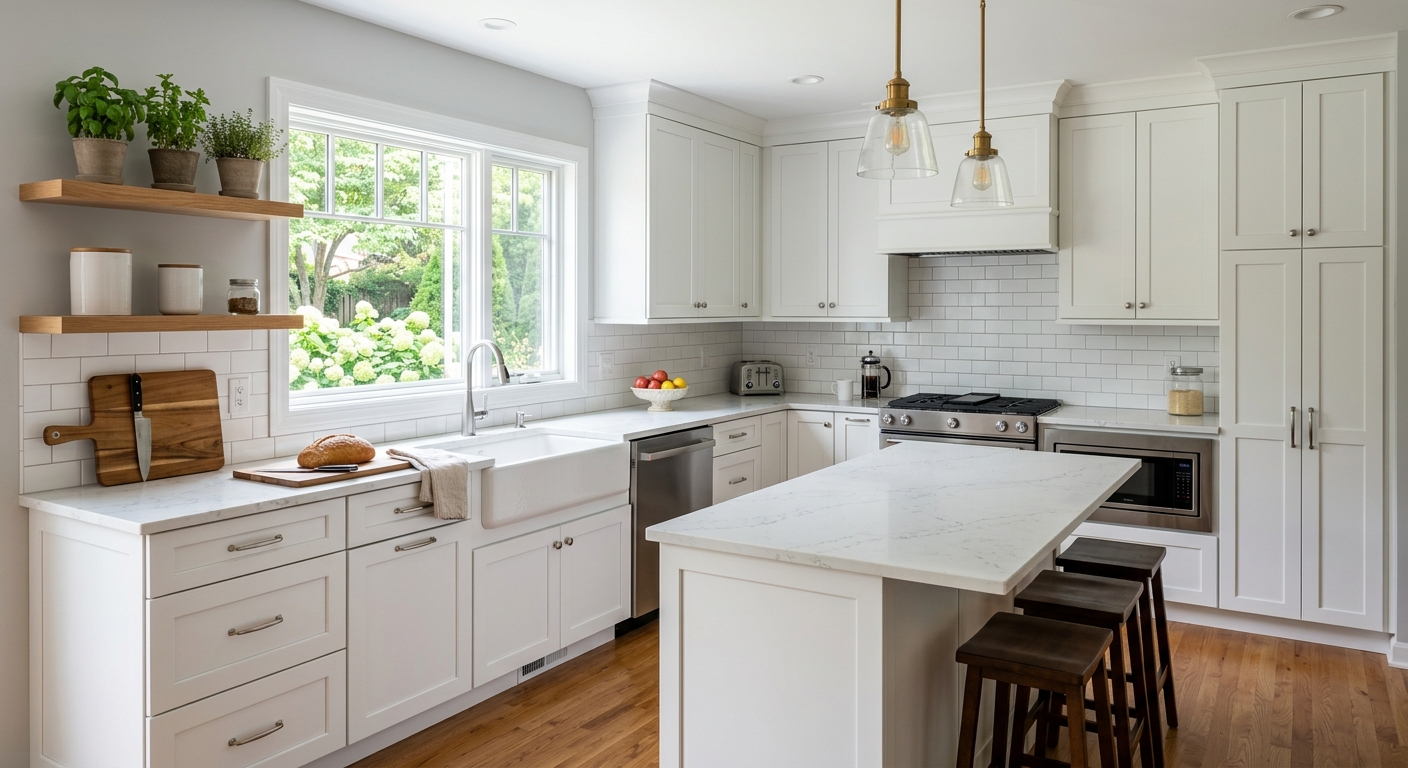
Allegheny kitchen renovation prices by scope — 2026
Homeowners in Allegheny face a wide range of kitchen renovation options, and the numbers can come as a surprise. Because 85.2% of households here own their homes, long-term upgrades are the norm, and kitchen projects often aim for lasting value rather than just a quick sale (U.S. Census Bureau, ACS 2024). With a typical household income of $79,323, it’s common to see projects that align with the upper half of the price ranges shown below. The housing stock in Westmoreland County is predominantly 1960s–1980s suburban — these kitchens frequently need significant layout changes or electrical updates, especially when tackling anything more ambitious than simple cabinet replacement.
The most frequent pitfall is pricing out a “pull and replace” (just new cabinets and counters) and then specifying changes—like moving the sink or removing a wall—that move the project into a much higher cost bracket. That’s where budgets spiral, and much of the sticker shock comes from this kind of scope shift.
| Scope |
What's included |
Duration |
Price range |
| Full gut remodel, same layout |
cabinets, counters, appliances, flooring, lighting, fixtures |
6–10 weeks |
$30,000–$120,000 |
| Gut plus layout change |
all of the above plus moved plumbing, electrical, walls |
10–16 weeks |
$65,000–$120,000 |
| Cabinet replacement (stock to semi-custom) |
remove and install cabinets, hardware, patching |
1–3 weeks |
$7,000–$30,000 |
| Cabinet refacing |
new doors and drawer fronts, veneer, hardware |
3–6 days |
$7,000–$20,000 |
| Countertop replacement only |
template, fabricate, install, reconnect sink |
1–3 weeks |
$4,000–$16,000 |
| Kitchen flooring only |
remove existing, install new flooring |
3–6 days |
$5,000–$20,000 |
Estimates for a typical Allegheny kitchen. Cabinet grade and whether the layout changes move these figures more than square footage.
Lead times, sequencing and why it takes longer
In Allegheny and across Westmoreland County, kitchen remodels reliably take longer than homeowners expect—especially with local labor shortages and longer cabinet lead times. The biggest surprises come from overlooked dependencies in the renovation sequence. First, there’s design, measurement, and firming up every detail of the cabinet order. Cabinets are often on an 8–12 week lead time here; do not wait until demolition is finished to order them.
Demolition comes next, followed by rough-in trades (electrical and plumbing) and their inspections. In Greensburg and Hempfield, inspections may be performed by certified third-party agencies, and can delay work by days if not scheduled carefully. Only once the inspections are signed off can cabinets be installed, and here’s the bottleneck: countertops cannot even be templated—let alone fabricated—until every cabinet is completely set and shimmed. No drawing or estimate substitutes for real, installed cabinets, which means there’s an unavoidable pause of a week (and often more) between cabinet installation and countertop template. That downtime frustrates homeowners, but it is built into the process.
After countertops are in, only then can sinks, plumbing fixtures, and appliances go in, followed by flooring, backsplash, and final trim. In a market where many contractors book out weeks in advance, simple delays can snowball. The key is to line up all your orders and trades before demolition and accept that the true critical path runs through the cabinet supplier, not just your general contractor.
Four kinds of kitchen project, four budgets
“Kitchen remodel” can mean anything from a $4,000 facelift to a $120,000 overhaul in Allegheny. For clarity—and honest budgeting—it pays to define your project clearly from the start. Here’s how most kitchen jobs in the Allegheny area break down:
- Cosmetic refresh: New paint, lighting, hardware, sometimes upgraded backsplash. No cabinet, countertop, or layout changes. Often under $10,000.
- Pull and replace: New cabinets and countertops, but everything goes back where it was. Plumbing and electrical almost always stay put. Typical range: $7,000–$30,000 for cabinets or $30,000–$65,000 when bundled with counters, fixtures, and flooring.
- Gut, same layout: Demolition to the studs, but services remain in place. All finishes (flooring, lighting, fixtures) are replaced, often needed in older Westmoreland County homes. Budget for $30,000–$120,000.
- Layout change: Moving the sink or range. Wall removal or structure changes, possibly opening to another room. Permitting, engineering, and service relocation push this dramatically higher: $65,000–$120,000.
The biggest cost jump is between gutting and changing the layout. That’s where minor adjustments (a moved appliance, a new island sink) suddenly trigger engineering, permits, and extra weeks of labor. Before you talk to any contractor, decide which tier you’re in—otherwise, any number you get will be meaningless. Most local firms simply can’t ballpark jobs without knowing if plumbing or walls are moving, because that changes the price class entirely.
What's behind the walls in a Allegheny kitchen
Renovating a kitchen in Allegheny means opening up walls built during Westmoreland County’s suburban boom from the 1960s to 1980s—55.9% of local homes are pre-1980 (U.S. Census Bureau, ACS 2024). Once demolition starts, expect to find a few typical surprises that affect both scope and cost:
- Unlevel floors and out-of-plumb walls: Cabinets require shimming; correcting structural issues can add $1,000–$3,000 to a budget.
- Old wiring: Often ungrounded or undersized for modern kitchens, meaning electrical upgrades are likely when replacing panels, circuits, or adding appliances.
- Galvanized supply lines or cast iron drains: Both can be corroded or near the end of their life; replacing kitchen supply and waste lines can run into the low thousands when the walls are already open.
- Exterior walls with no or insufficient insulation: Not uncommon in older homes, insulation should be added during a gut for comfort and code compliance.
- Previous unpermitted work: Hidden splices, missing junction boxes, or odd plumbing add-ons all need correcting to meet code during a permitted renovation.
- Lead paint or asbestos flooring: Pre-1978 homes fall under the federal Lead RRP Rule. Nobody should disturb painted surfaces or old vinyl until testing is done—the law applies, and legal renovators will handle this up front.
Newer suburban stock can bring builder-grade shortcuts: particleboard cabinets at end of life, minimal kitchen circuits, and laminate counters reaching their end together. If your home is in this latter wave, expect many elements to hit replacement age all at once—better to do it right than throw money at patching outdated materials.
What moving the sink really costs
Moving the sink—often done to open up space or create an island—comes with a real cost cliff. If you keep plumbing and electrical in their original locations, a “pull and replace” can be done quickly with little red tape. But as soon as you decide to move the sink, range, or take out a wall in your Allegheny kitchen, the project jumps into a new price tier: that’s when structural, plumbing, and electrical updates demand permits, engineering, and an expanded scope of work.
Relocating drain lines isn’t just about running longer pipe. Drainage in a kitchen requires the right slope, and if you’re over a finished basement or on a concrete slab, that can mean opening up ceilings or floors to make it work—costing several thousand dollars more than you’d expect. Moving electrical circuits means checking panel capacity (especially in pre-1980 homes), upgrading outlets to GFCI/AFCI, and possibly even a panel replacement. Wall removal can mean hiring a structural engineer (mandatory if it's load-bearing) and always triggers a building permit in Greensburg if structural walls or plumbing are involved. Relocating a range hood means cutting a new vent run through the exterior wall—never skip this step, as improper venting fails inspection and hurts resale.
The honest advice: unless your layout is truly dysfunctional, it rarely pays to move the sink for visual reasons alone. The cost difference between a gut remodel with the same footprint ($30,000–$120,000) and one that moves services or walls ($65,000–$120,000) is steep and permanent. Spend time evaluating whether a cosmetic update or just a cabinet replacement will achieve your goals before you cross that permit-and-engineering threshold.
Countertop materials compared
You’ll find more choice than ever when upgrading kitchen counters in Allegheny. Appearance is a personal decision, but daily-life durability, maintenance, and repairability matter most here—especially in busy family kitchens or rentals.
- Quartz: Engineered, non-porous, and low maintenance; stands up well to stains but is susceptible to heat damage (don’t put a hot pan directly on it). Seams are usually tight but visible on lighter colors. Not repairable if chipped or scorched.
- Granite: 100% natural stone, each slab unique. Needs periodic sealing to prevent stains. Good heat resistance but can chip at edges. Seams vary in visibility and are more pronounced in veined stones.
- Laminate: Far better than the old reputation suggests. Affordable and appropriate in many Allegheny kitchens—choosing durable edge profiles and modern patterns makes these nearly maintenance-free. Seam visibility is a fact, but it’s minor in practical terms. Damage is not repairable, but replacement cost is much lower.
- Butcher block: Adds warmth but needs regular oiling to avoid stains or warping. Scratches easily, but light sanding can repair most marks. Not for anyone who wants a low-maintenance surface around the sink.
- Solid surface (e.g., Corian): Seamless joints, homogenous color, and can be repaired if scratched or scorched. Not as heat-resistant as stone but ideal for integrated sinks and creative shapes.
Fabrication details add cost: premium edge profiles, undermount sink cutouts, and long or angled runs will move an install toward the high end of the $4,000–$16,000 price band. The template visit is always done after cabinets are fully installed and shimmed—there is no shortcut here. For rentals or modest homes, don’t discount laminate; it is not a second-rate choice when fitted and finished properly.
Code requirements for Allegheny kitchens
In Allegheny, code requirements for kitchen remodels are set by the Pennsylvania Uniform Construction Code (UCC) as adopted locally. Cosmetic updates—like painting, hardware replacement, cabinet refacing, and replacing countertops in their original locations—almost never require a permit. The line is drawn when your project involves new or moved plumbing/electrical, or any structural changes. In Greensburg, for example, removing a structural wall or relocating plumbing will require both a permit and, usually, a formal plan review. New circuits for appliances, significant HVAC work, or gas line changes also typically trigger a permit process in townships across Westmoreland County.
Electrical inspections, especially in Greensburg and Hempfield, are often performed by certified third-party agencies such as Code.sys. This isn’t something most homeowners expect—the inspection usually isn’t handled directly by the city or township.
Every contractor working on jobs over $500 must have Home Improvement Contractor (HIC) registration from the Pennsylvania Office of Attorney General—verify it at hic.attorneygeneral.gov. All employers must carry workers’ compensation insurance, which you can check through WCAIS (wcais.pa.gov).
The real risk of skipping permits or hiring unregistered contractors is that unpermitted work can become a deal-killer at resale. Local code offices can require you to expose, test, or even remove unauthorized work before closing.
Frequently asked questions — kitchen renovation in Allegheny
What should I expect in a pre-1980 Allegheny kitchen?
In a pre-1980 Allegheny kitchen, the odds are good you’ll encounter a mix of outdated wiring, old plumbing materials like galvanized pipes, limited insulation in exterior walls, and sometimes modest floor plans designed for a different era of appliances and kitchen use. About 55.9% of Westmoreland County homes were built before 1980, so you are not alone in facing these issues. If your kitchen hasn’t been renovated since it was built, everything from ungrounded electrical outlets to linoleum floors and older cabinets can be expected. Any painted surface in homes from before 1978 falls under the federal Lead Renovation, Repair, and Painting (RRP) Rule, so legal remodelers must check for lead paint before disturbing walls or trim. Surprises behind the walls—like unpermitted “fixes” from decades past—are a real cost wild card. If you’re aiming for a full gut remodel, budget at least $30,000–$120,000 for all the necessary updates.
Does replacing cabinets require a permit?
In most parts of Allegheny and greater Westmoreland County, simply replacing kitchen cabinets in their original locations does not require a building permit—as long as you’re not moving plumbing, electrical lines, or knocking down walls. For example, Hempfield Township often allows straightforward cabinet replacements to be done without municipal permitting, allowing work to proceed faster. However, in Greensburg, if your project includes moving a structural wall or relocating any plumbing (including the sink), you do need a permit and possibly a plan review. Always confirm with your local code office before starting, because rules are enforced at the municipal level. Even if a permit isn’t required, any project above $500 must be done under a written contract per Pennsylvania law, to protect both parties.
What does a full gut kitchen remodel cost in Allegheny?
A full gut remodel—where everything is taken down to the studs and replaced, but the layout stays the same—typically lands in the $30,000–$120,000 range in Allegheny for 2026. The typical project will hit around $65,000, especially if the homeowner takes the opportunity to upgrade electrical and plumbing systems common in Westmoreland County’s older homes. The upper end is driven by appliance upgrades, custom cabinets, and higher-end finishes. Moving walls or changing the kitchen footprint pushes the cost much higher, as it triggers engineering and permits. Always get itemized bids and verify contractor credentials with the Pennsylvania Office of Attorney General before making a commitment.
Does a kitchen renovation increase home value in Allegheny?
Renovating your kitchen in Allegheny can significantly boost resale appeal and market value, especially given that 85.2% of households own their homes locally. Kitchen renovations signal to buyers that the “heart of the home” is updated and functional—a key selling point in suburban Westmoreland County. However, recouped value depends on the quality and scope of the work. Over-investing far above neighborhood norms rarely pays back fully, so a typical midrange “pull and replace” (usually $30,000–$65,000) tends to offer the best return here. On the other hand, neglecting obvious problems—like old wiring or original laminate counters—can become a resale liability when buyers use inspection findings to renegotiate price or demand repairs before closing.
What countertop material is best for a family kitchen?
For a busy family kitchen in Allegheny, quartz is the most popular for its low maintenance and stain resistance, plus it stands up well to everyday wear—just keep in mind it can be damaged by direct heat. Granite is another strong choice for natural looks and heat tolerance but requires periodic resealing to stay stain-resistant. Solid surface countertops (like Corian) can be locally repaired and are seamless, making them great for busy households. Laminate has improved a lot over the years and is cost-effective for families wanting a lower-maintenance surface at the low end of the $4,000–$16,000 price band. Ultimately, the “best” surface balances your budget, your tolerance for maintenance, and the amount of abuse (and spills) your kitchen sees daily.
Should I hire a general contractor or a kitchen firm?
For most Allegheny homeowners, hiring a dedicated kitchen contractor or remodeler rather than a generalist is usually wiser—especially when your project involves specialty cabinetry, intricate design, or service upgrades typical in Westmoreland County’s older homes. Kitchen specialists have relationships with cabinet manufacturers, fabricators, and finish trades, so sequencing is smoother, especially when labor is tight. If your remodel is simple and doesn’t involve moving plumbing or major electrical changes, a small-scale general contractor may still be a good fit. For complex projects at or above $30,000–$120,000, a kitchen-specific firm is best positioned to prevent costly sequencing mistakes or code issues—which can otherwise cause major delays and budget creep.
Should I order cabinets before demolition?
Absolutely—ordering cabinets before beginning demolition is the best way to avoid costly downtime on your Allegheny kitchen renovation. In this market, cabinet manufacturers can take 8–12 weeks to deliver, and cabinet installation is on the critical path: counters cannot be measured or templated until every box is set and perfectly shimmed. Waiting until after demolition to place the cabinet order means your kitchen could sit idle for weeks. In Westmoreland County, where local labor is in high demand and finish trades are booked out in advance, delays quickly snowball. For almost every cabinet replacement or “pull-and-replace” project in the $7,000–$30,000 range, lining up all materials—including cabinets—before demo saves time and keeps your project moving predictably.
What is the cheapest way to update a Allegheny kitchen?
If your goal is to refresh your kitchen without a massive cash outlay, stick to cosmetic updates: new paint, modern hardware, backsplash, and better lighting make a remarkable difference in a Westmoreland County home. Laminate countertops are not the compromise they once were and can be changed for $4,000–$16,000, while leaving existing cabinets in place with a fresh coat of paint costs far less. Don’t replace cabinets unless they are broken or rotten—most suburban cabinets outlast changing styles. Focus your budget on visible, high-impact areas only. Avoid moving the sink, range, or any layout features, as this is where costs climb fast. In older Allegheny homes, simple updates go further than people think without running into permit hurdles or major downtime.
Why are kitchen quotes in Allegheny so far apart?
Kitchen quotes in Allegheny often vary wildly, and it is not just about contractor pricing “games.” First, local labor market tightness means some crews are booked out and charge a premium to fit jobs in—especially in Westmoreland County, where finish-trade availability is tighter than in Pittsburgh. Second, the scope of work homeowners request is rarely consistent: one quote may be for basic cabinet replacement ($7,000–$30,000), another for a full gut with wall changes and upgrades ($65,000–$120,000). Older homes drive up bids due to unpredictable wiring, plumbing, or code corrections. Finally, some contractors build in buffer for plan review and permit delays, which are real factors in Greensburg and other area municipalities. The spread reflects how easily scope and local variables change the true cost.